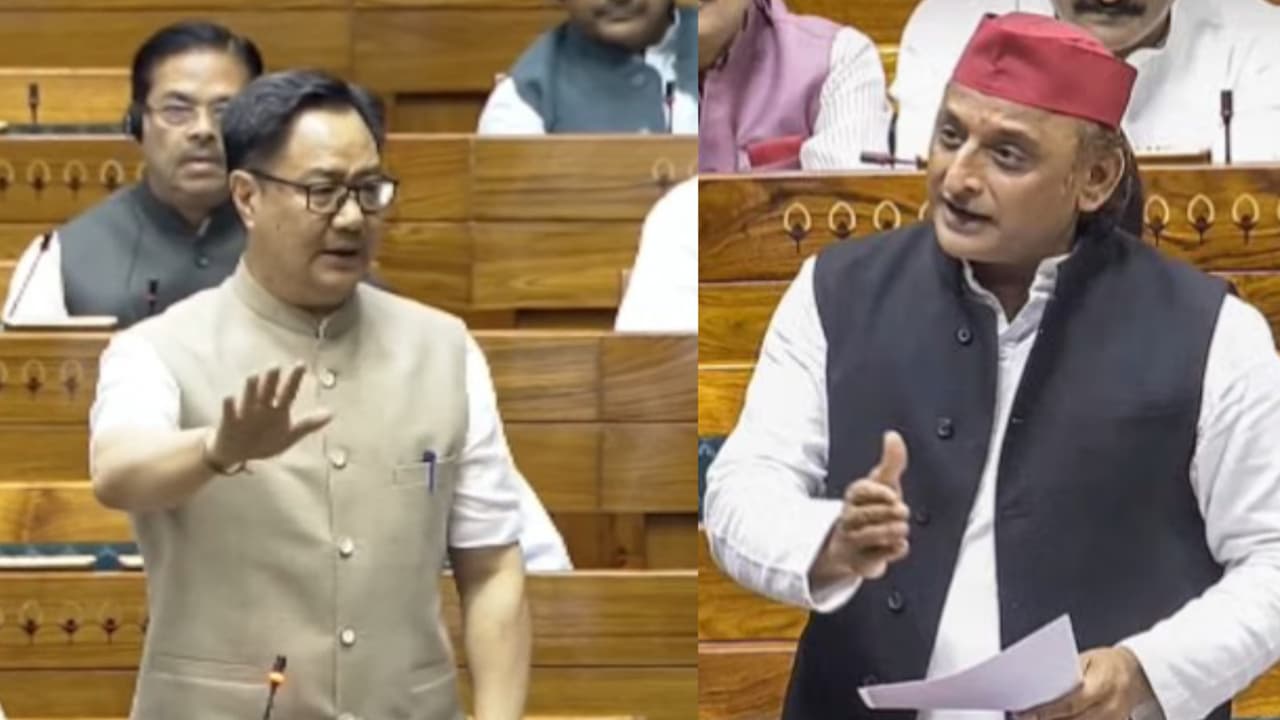
Both the government and the opposition are ready to discuss the paper leak issue in Parliament, yet the proceedings were adjourned for the third consecutive day. Know the full reason behind Rule 267, adjournment motion and non-debate in Lok Sabha and Rajya Sabha.
Parliament Paper Leak Debate: The issue of paper leak and alleged lathicharge on students in the monsoon session of Parliament overshadowed the proceedings of the House for the third consecutive day. Interestingly, both the government and the opposition have publicly expressed their desire to discuss this topic, but even before the discussion could begin, the proceedings of the Lok Sabha and Rajya Sabha have to be repeatedly adjourned. In such a situation, the big question is that when both the sides are ready for debate, then why is the deadlock not ending?
Government and opposition agree, but matter stuck on rules
Before the adjournment of the Lok Sabha proceedings, Speaker Om Birla said that both the government and the opposition want discussion, hence a way out should be found by reaching a mutual consensus. At the same time, Leader of the House in Rajya Sabha JP Nadda also reiterated that the government is ready for discussion.
Union Parliamentary Affairs Minister Kiren Rijiju says that the government is ready to debate the issue of paper leak from day one. On the other hand, Leader of Opposition in Lok Sabha Rahul Gandhi says that discussion is necessary, but before that Education Minister Dharmendra Pradhan should resign and the government should also tell what is its plan to stop paper leaks in future. Samajwadi Party chief and Kannauj MP Akhilesh Yadav also sought to make the alleged incidents with male and female students a part of the debate.
Also read: Who is Rahul Gandhi’s advisor and core team member? Spread across the country in two days of planning
Clash over different rules in Rajya Sabha and Lok Sabha
The biggest reason for the deadlock is believed to be disagreement over the method of conducting the discussion.
The opposition in Rajya Sabha wants discussion under Rule 267. In this process the entire agenda of that day is postponed and the concerned subject gets the highest priority. Also, the discussion starts with the statement of the concerned minister or Prime Minister.
At the same time, Congress is demanding a debate in the Lok Sabha under the Adjournment Motion. On acceptance of this motion, the normal functioning of the House is stopped and the related issue is immediately discussed. In the parliamentary tradition it is seen as an effective parliamentary tool to hold the government accountable. This is why both sides are adopting different stances on the format and process of discussion.
Why is debate considered important in Parliament?
Parliament is not only a forum for making laws but also the largest democratic institution for determining the accountability of the government. The complete record of the discussion in the House on any national issue is officially recorded. With this, the government presents its decisions and policies, while the opposition raises questions and demands answers.
For this reason, formal discussion in Parliament on a sensitive issue like paper leak is being considered important. However, unless the process and rules of discussion are agreed upon, it seems difficult to end the ongoing deadlock in Parliament.
Also read: NEET Protest: Clash in Parliament over Dharmendra Pradhan’s resignation, why did ruling party and opposition clash?