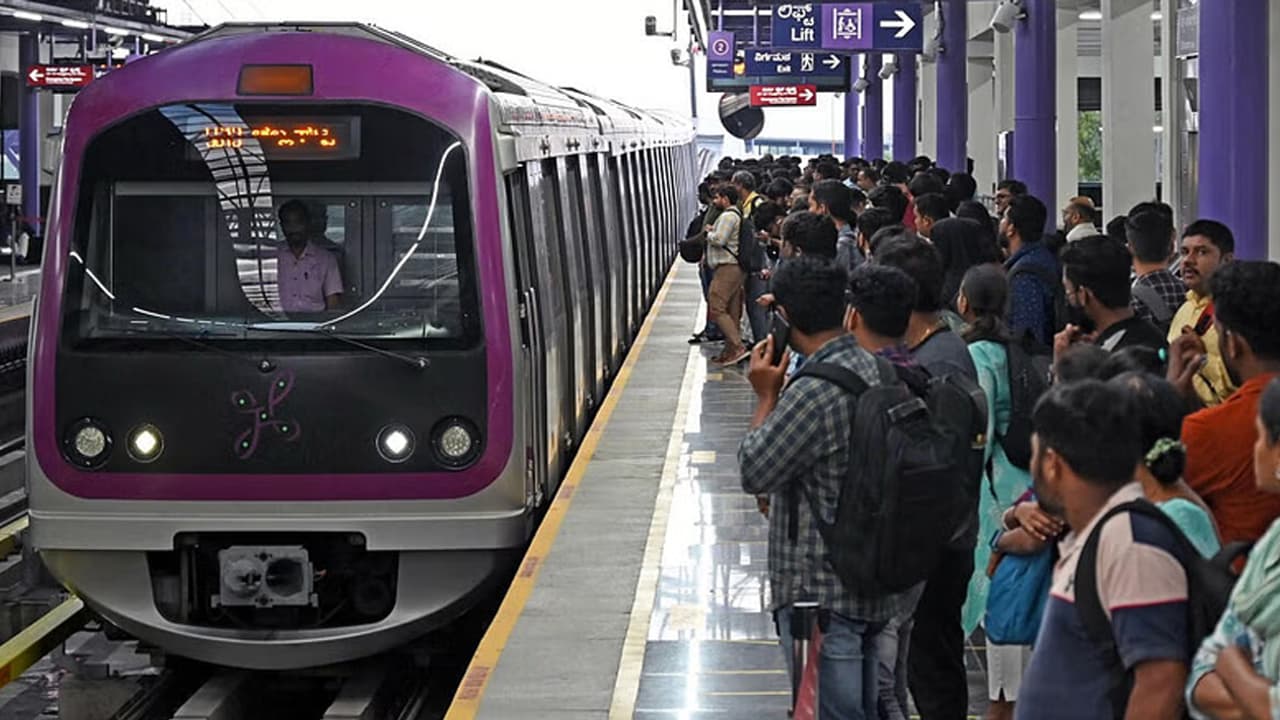
A Bangalore Metro commuter was injured when a grab handle snapped and hit him in the nose. Despite BMRCL denying responsibility and blaming the passenger, a consumer commission found the corporation liable for a deficiency in service. The commission ordered BMRCL to compensate the passenger for his broken glasses and other costs.
Grabbing a handle on a Metro coach for support turned painful for a commuter after it snapped, bloodying his nose mid-journey. The commuter filed a complaint with the consumer commission, which recently found Bangalore Metro Rail Corporation Ltd (BMRCL) responsible and mandated compensation, claiming that Metro authorities disregarded his complaint and refused to pay him.
The tale started on January 18, 2025, when Ganga Nagar Extension resident MG Nagaraju, 49, used his Metro card to board a packed train from Rajajinagar to KR Market. He stood using a grab bar for assistance since there were no seats available. The handle of the train abruptly snapped as it approached KR Market station, hitting him hard in the nose and causing major bleeding. His branded glasses, which cost Rs 3,000, were also broken by the hit, and he almost fell inside the moving bus before other passengers intervened to save him. When Nagaraju arrived at the station, he went up to the station controller, who allegedly ignored his complaint and only let him to record it after he persisted.
Nagaraju was told that no complaint had been filed when he contacted the Metro complaints cell four days later. Later on, he claimed, the station controller yelled at him and refused to assist.BMRCL denied liable for medical compensation in an email to Nagaraju on January 24, 2025. With no other choice, he filed a consumer complaint on February 10, 2025, requesting Rs 3,000 for his shattered glasses, Rs 1 lakh in compensation, and reimbursement of his medical costs.
BMRCL said in its written defence that it should not be subject to consumer law as it is a public utility business that is jointly owned by the Karnataka and Union governments and was established to offer safe, reasonably priced, and environmentally friendly transportation in Bengaluru.
It argued that the grab handle assembly, which consists of the handle, Kevlar rope, spring, and ceiling connection, is not made to hold a passenger’s entire body weight and is only meant to provide modest support. It stated that the complainant used both hands to hold the handle and applied all of his weight on it, causing the Kevlar rope to rupture, citing CCTV evidence. It insisted that the passenger’s abuse, not inadequate maintenance, was the cause of the disaster. According to the company, all train equipment is subject to rigorous daily and weekly inspections, and before to the event, the grab handle in issue was judged to be in good condition.
Additionally, it generated a job card indicating that the handle was changed at 11:05 a.m. that day. Additionally, BMRCL questioned the claim for broken glasses and refuted claims that authorities had declined to record the complaint, citing the purchase bill’s 2015 date. It asked for the lawsuit to be dismissed, citing unjust gain and a lack of medical evidence. The commission accused BMRCL of failing to support its case after reviewing the documents and hearing arguments from both parties. Despite the corporation’s repeated claims that CCTV evidence would demonstrate that the passenger had abused the grab handle by placing his entire body weight on it, the film was never shown to the commission.
The panel also saw that Nagaraju was using the handle properly and without any indications of abuse in a photo that was uploaded. Although BMRCL maintained that the grasp grips were solely intended for mild assistance, the commission noted that the company had never made such limits known to passengers through announcements, signboards, or guidelines. It stated that commuters on crowded carriages cannot be expected to understand the technical limitations of handles, calling the lack of communication a service fault.
The commission determined that the fare-collecting Metro operator is a service provider under the Consumer Protection Act of 2019, rejecting BMRCL’s argument that it was not covered by consumer law. On May 4, the commission bench, which included members Sharavathi SM and Jyothi N in addition to president Syed Anser Kaleem, ordered BMRCL to reimburse Nagaraju Rs 3,000 for the damaged glasses and Rs 2,000 for compensation and legal fees.