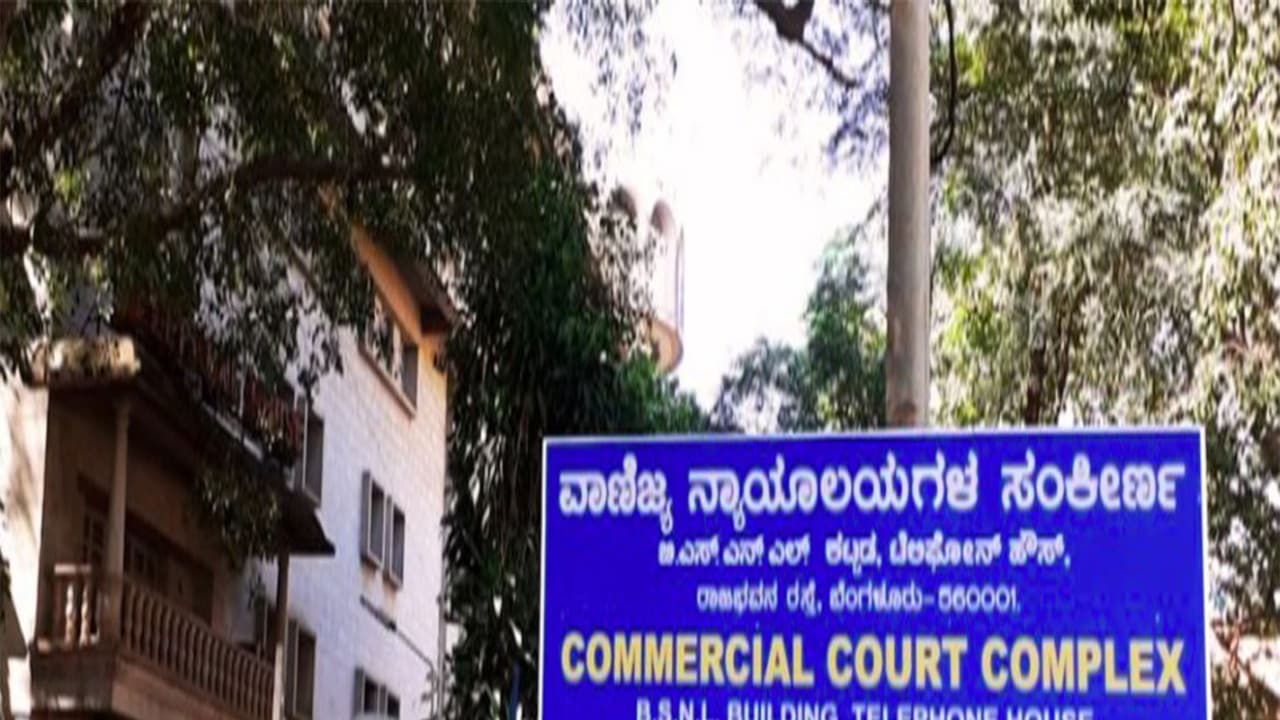
The Commercial Court of Bengaluru returned the petition of Singapore company Lee Kim Tah. The Court held that the alleged breach of their duties by company directors cannot be considered a “commercial dispute” under the Commercial Courts Act.
Bengaluru (Karnataka) [भारत]June 6 (ANI): A Bengaluru commercial court has returned a suit filed by Singapore-based construction company Lee Kim Tah Pte Ltd (LKT) against L&W Construction Pte Ltd nominee directors Yong Tiam Yoon and Yong Kon Yoon, saying the dispute does not fall within the category of “commercial dispute” under the Commercial Courts Act, 2015. The Court held that it lacked the subject matter jurisdiction to hear the suit and directed the return of the suit to the plaintiff along with all documents, so that it can be presented before the appropriate jurisdictional forum in accordance with law. The court also quashed the ex-parte interim order passed on May 2.
What were LKT’s allegations?
LKT had filed the suit alleging that both the nominee directors failed to discharge their fiduciary duties under Section 166 of the Companies Act despite being informed about the alleged financial irregularities and misappropriation involving the managing director of the company. According to the suit, the directors were repeatedly requested to initiate action against the managing director and recover the alleged losses, but they did not do so. LKT had sought a declaration that the directors had breached their statutory duties. Additionally, damages of ₹16.5 crore, recovery of 50 per cent of the salary paid to the managing director from the date the alleged irregularities came to the notice of the board and an injunction restraining the directors from entering into any transaction without placing it before the board of the company were sought.
What argument did the directors give?
Both the nominee directors had sought withdrawal of the suit under Order VII Rule 10 of the Civil Procedure Code. He argued that the suit was based on alleged breach of statutory duties under Section 166 of the Companies Act and does not fall within any category of “commercial dispute” under Section 2(1)(c) of the Commercial Courts Act. They also argued that disputes between Lee Kim Tah and Woh Hup Holdings Pte Ltd already existed before the suit and were the subject of arbitration proceedings in Singapore.
Opposing the application, LKT argued that the dispute arose out of the 50:50 joint venture and shareholders’ agreement between Lee Kim Tah and Woh Hup Holdings, under which the defendants were named as directors of the Indian company. He argued that the alleged inaction of the directors was intrinsically linked to the shareholders’ agreement and the joint venture arrangement and hence it was a commercial dispute. LKT further said that since the company is engaged in construction and infrastructure projects, the matter also falls under the ambit of the Commercial Courts Act.
Court rejected LKT’s arguments
Rejecting these arguments, the Commercial Court held that the gist of the suit related to the alleged breach of fiduciary duties by the directors under Section 166 of the Companies Act and not to the enforcement or breach of any shareholder agreement, joint venture agreement or construction contract. The Court held that there was no plea that the plaintiff and the defendant were parties to any shareholders’ agreement or joint venture agreement relating to L&W Construction Private Limited. It was observed that merely because the directors were nominated in accordance with a shareholder arrangement, allegations relating to their statutory duties could not be converted into a commercial dispute under the Commercial Courts Act.
The Court also rejected LKT’s argument that the dispute relates to construction and infrastructure contracts, noting that although L&W Construction Pvt Ltd is engaged in the construction business, the suit does not arise from any construction or infrastructure contract between the parties, but rather arises from allegations relating to the conduct of the directors.
Citing the Supreme Court case Ambalal Sarabhai Enterprises Limited vs. KS Infraspace LLP and other precedents, the Court reiterated that the definition of “commercial dispute” under the Commercial Courts Act must be strictly interpreted and only those disputes which fall within the categories specifically mentioned under Section 2(1)(c) can be heard by the Commercial Court. The Court further held that Section 166 of the Companies Act itself provides for consequences for breach of directors’ duties and held that, even if the plaintiff’s allegations are accepted as true, its remedy lies under the Companies Act and not before the Commercial Court.
Holding that the claims do not constitute a commercial dispute, the Court allowed the application filed by the two Nominee Directors, directed the remand of the suit with all documents to be presented before the appropriate jurisdictional forum, vacated the interim order dated May 2, 2026, and made no order as to costs. (ANI)
(Except for the headline, this story has not been edited by Asianetnews Editorial staff and is published from a syndicated feed.)