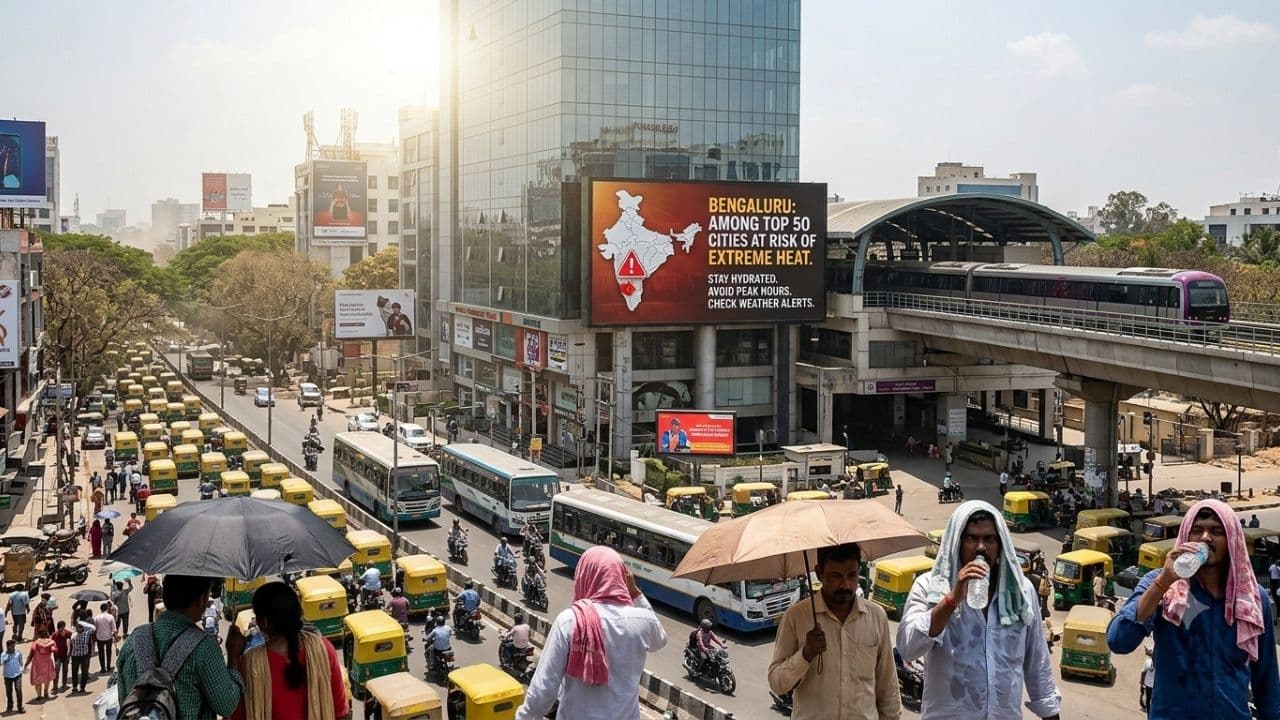
Bengaluru has been ranked among the world’s top 50 cities at risk of extreme heat, according to a new report. The study also lists 14 Indian cities among the most heat-vulnerable globally, highlighting the urgent need for climate-resilient urban planning.
A new study by researchers at the University of Oxford has highlighted the growing threat of extreme heat in urban areas, placing India among the four countries with the highest number of cities facing severe heat risk. According to the study, 14 Indian cities, including Bengaluru, feature among the world’s 50 most heat-vulnerable cities, underscoring the urgent need for climate-resilient urban planning and sustainable cooling solutions.
India Among Countries with Highest Heat Risk
The study assessed 205 of the world’s largest cities to evaluate their vulnerability to extreme heat. According to the findings, India, Pakistan, Nigeria and Ghana have the highest number of cities facing significant heat-related risks.
Researchers noted that more than 95 per cent of the cities identified as being at the greatest risk are located in South and Southeast Asia and sub-Saharan Africa.
Bengaluru Among 14 Indian Cities on the List
The study ranked Al Basra in Iraq as the world’s most heat-vulnerable city, followed by Ahmedabad in Gujarat.
Among the 14 Indian cities included in the global top 50 are Bengaluru, Nagpur, Pune, Madurai, Chennai, Kanpur, Lucknow and Jaipur, along with several other urban centres identified as being at high risk of extreme heat.
The report also highlighted that major cities such as Cairo, Bangkok and Hanoi are among those vulnerable to rising temperatures.
Researchers Call for Sustainable Cooling Solutions
The researchers warned that excessive reliance on air conditioners could contribute to higher energy consumption and further accelerate global warming.
Instead, they recommended adopting sustainable cooling measures such as passive cooling techniques, improved building design, enhanced ventilation, fans and other energy-efficient technologies to reduce heat exposure while minimising environmental impact.
The study emphasises the need for cities to strengthen climate adaptation measures as extreme heat events become more frequent and intense due to climate change.