China’s AI hardware push is gaining momentum as domestic chipmakers race to close the gap with Nvidia.
- The Zhenwu V900 delivers three times the performance of Alibaba’s previous-generation accelerator.
- Huawei and several other Chinese chipmakers are developing alternatives to Nvidia’s AI hardware.
- Alibaba is pairing its chip development with billions of dollars in AI infrastructure investment.
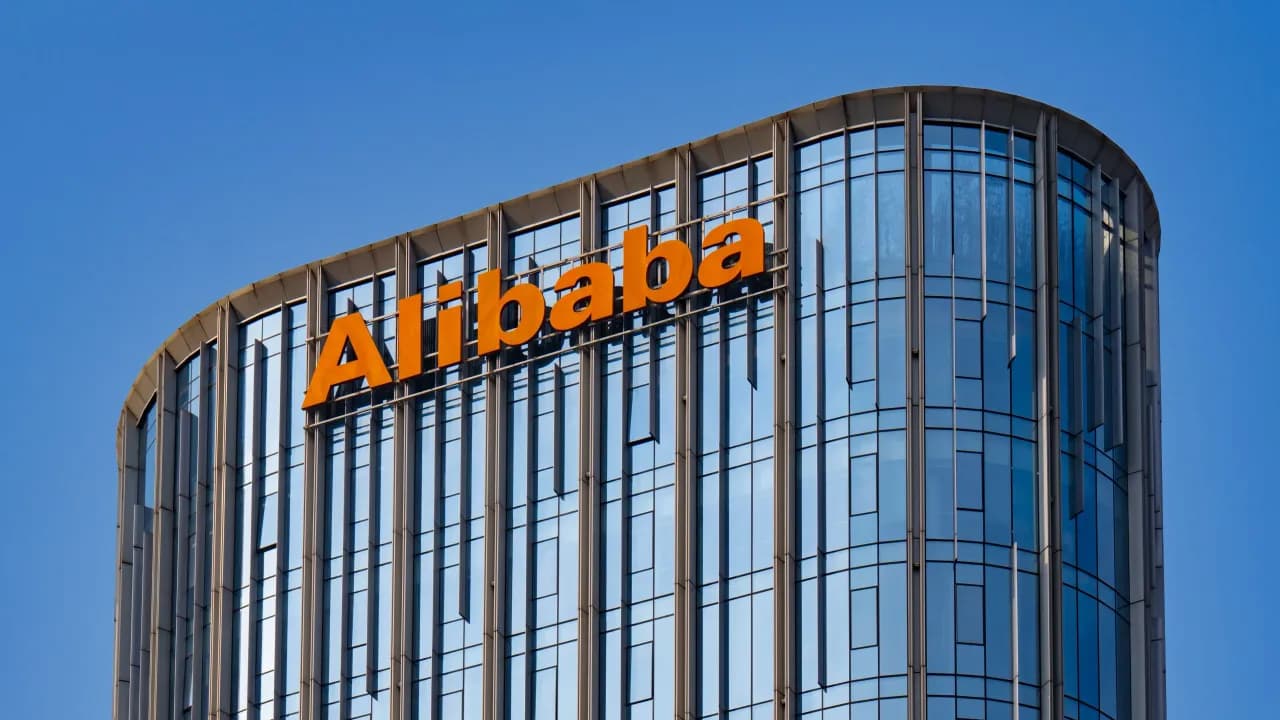
U.S.-listed shares of Alibaba Group Holding rose more than 2% in overnight trading late Monday after the Chinese tech giant unveiled a new AI accelerator that it says is China’s most powerful AI chip yet, intensifying competition with Nvidia as Beijing pushes to build a domestic alternative to U.S. technology.
Shares of the company were up nearly 3% in Hong Kong trading on Tuesday morning.
The company’s T-Head semiconductor unit introduced the Zhenwu V900, which Alibaba CEO Eddie Wu said delivers three times the performance of its predecessor. The accelerator can be deployed in clusters of up to 500,000 chips to support the training of large, frontier AI models. Reuters reported that the chip is expected to enter mass production in early 2027.
Nvidia Faces Growing Chinese Competition
The launch adds another potential challenge for Nvidia, whose high-end AI accelerators have become the industry standard for training and running advanced models but face export controls in China. NVDA stock was marginally higher in overnight trading late Monday.
Alibaba is simultaneously expanding its computing infrastructure, targeting more than 20 gigawatts of global data-center capacity by 2032. The company has committed more than $53 billion to AI capabilities over three years and plans to update its AI chip lineup annually.
That combination of increasingly capable domestic hardware and expanding cloud infrastructure could allow Chinese companies to develop and deploy AI systems with less reliance on Nvidia, particularly as U.S. export restrictions limit Chinese access to the most advanced American chips.
Huawei, Others Join Chip Race
Alibaba is far from alone in China’s AI chip push. Huawei is accelerating development of its next-generation Ascend 960 chips and is targeting commercial availability in the first quarter of 2027.
The company is also developing large-scale computing systems that can connect up to 1 million processors to compensate for the performance limitations of individual chips.
Other Chinese chipmakers, including Cambricon, Enflame, Moore Threads, MetaX and Iluvatar CoreX, are also developing alternatives to Nvidia.
BABA Stock Move, Retail View
Alibaba stock has been volatile but broadly higher over the past two months, driven largely by growing investor excitement around its AI and cloud businesses. The rally has been tempered by concerns over heavy AI infrastructure spending, profitability, and broader U.S.-China technology tensions. BABA shares remain 20.3% lower year to date.
On Stocktwits, retail sentiment for BABA rose in the last few days and was ‘bearish’ at the last check.
“$BABA oh if HK continues to buy, we are in for a fun ride. RIP shorts,” said a trader, while another forecast the stock to move past $150 on Tuesday.
The chip announcements were made at Alibaba Cloud’s 2026 Apsara Conference in Hangzhou, Alibaba’s flagship annual technology event, which runs Sept. 22–24.
Investors are also looking toward the Trump-Xi summit on Thursday for further cues on U.S.-China trade, semiconductor export restrictions and the broader AI technology rivalry.
For updates and corrections, email newsroom[at]stocktwits[dot]com.<