A total of 25.65 lakh sailors are employed all over the world.
An Indian crew member has been killed in the attack on a commercial ship MV Omorphy in Russian waters in the Black Sea. There were a total of ten crew members on board, out of which three were Indians. Just a day after this, four Indian crew members aboard the MV Golden Leo ship were killed in a Russian attack. The Indian government has reacted sharply to both the accidents. Urging to ensure maritime security, India has told the world that if we cannot do so, the entire supply chain may get disrupted. Keep in mind, India is the second largest country in the world in terms of workforce deployed on ships. Philippines is at number one. In recent times, questions are being raised due to the continuous attacks on sea vessels.
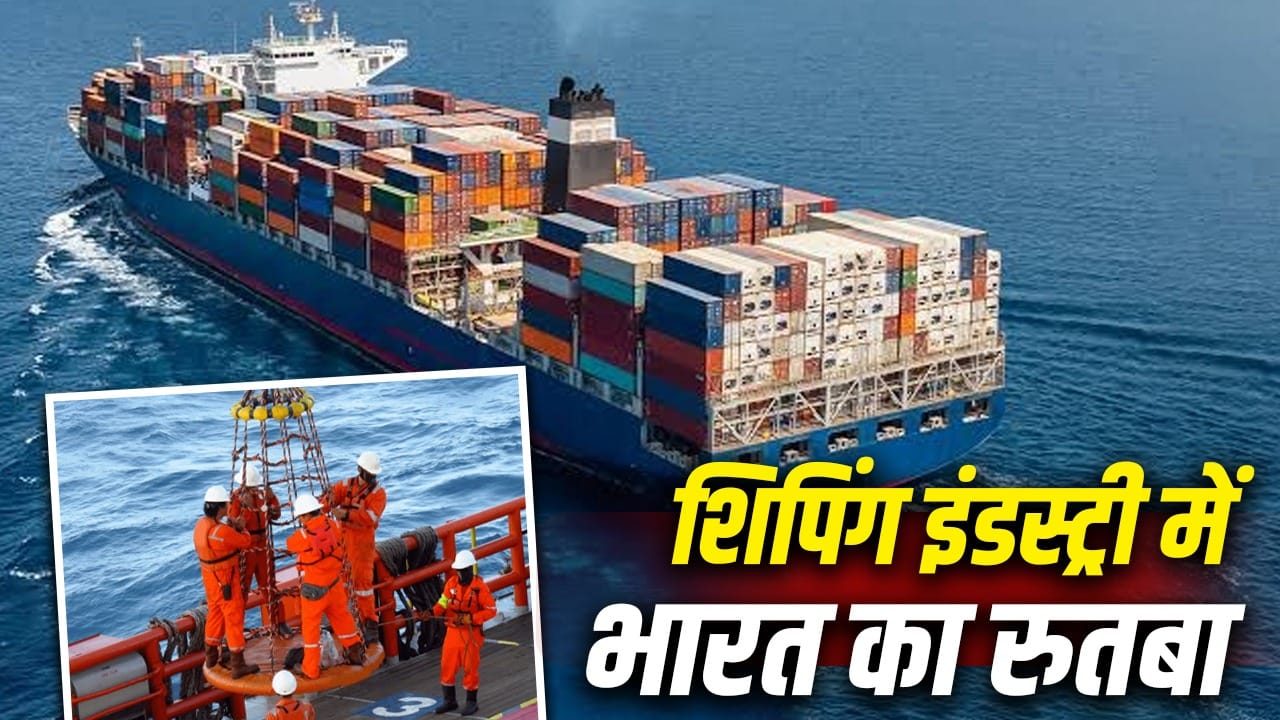
A total of 25.65 lakh sailors are employed all over the world. Of these, 10.49 lakh are officers and the rest are other members. The world’s top five countries together account for more than 56 percent of the seafaring community. According to the latest report for the year 2026 by the Baltic and International Maritime Council and the International Chamber of Shipping, the contribution of the world’s top five countries and their people in maritime services cannot be denied. Philippines, India, China, Russia and Indonesia are the countries that provide the largest number of sailors to the world.
Let us understand how India is the biggest talent pool of the world’s shipping industry? Why is India the largest supplier of sailors after Philippines?
Vast coastline and maritime tradition
India’s coastline is very long. States like Gujarat, Maharashtra, Goa, Karnataka, Kerala, Tamil Nadu, Andhra Pradesh, Odisha and West Bengal have a deep connection with the sea. The livelihood of many families in these areas is linked to the sea. Fishing, port work and maritime trade have been prevalent in India since ancient times. For this reason marine life is not new to Indian society. There is naturally more interest in working on ships among the youth of coastal areas.

There is naturally more interest in working on ships among the youth of coastal areas. Photo: Pexels
large youth population
India’s biggest strength is its young population. Every year a large number of youth in the country come out in search of jobs. Maritime sector becomes a good career option for them. Job on a ship is difficult. One has to stay away from family for many months. Working hours can be long. The sea weather is also challenging. Yet good income, international experience and career progression make this field attractive. Indian youth are ready to work in difficult conditions. This quality makes them the choice of global shipping companies.
Strong presence of Indians is also a reason
English is very important in international shipping. People from different countries work together on ships. The captain can be from any one country. The engineer may be from another country. Crew members may come from many other countries. In such a situation English becomes the common language.

Indian seafarers’ English comprehension and communication skills are generally considered good. The use of English is widespread in schools, colleges and technical institutions in India. This capability gives Indian sailors an edge over sailors from other countries. They can talk to foreign officials and port employees.
Strong maritime education system is also important
India has a good system of maritime education and training. There are many maritime training institutes in the country. Here, deck cadet, marine engineer, electro-technical officer, rating and other maritime professions are imparted education. In these institutes, students are taught ship operation, navigation, engine maintenance, safety and emergency management. They are also trained in fire at sea, accidents, abandonment of ship and use of life saving equipment. Indian institutions try to provide training as per international standards. This increases the acceptance of Indian sailors.
Advancement in technical skills takes Indians ahead
Modern ships are not driven by machines alone. They are equipped with digital systems, automation, electronics and advanced communication technology. The engine room contains complex equipment. Satellite, radar and electronic charts are used in navigation system. Indian youth have more interest in technical education. Youth studying engineering, computers, electronics and machinery also get opportunities in the maritime sector. For this reason, Indian marine engineers and technical officers are in special demand. Ship owners prefer people who understand technology and can quickly find solutions when problems arise.

India has a good system of maritime education and training. Photo: Pexels
Discipline and responsibility towards work
There is no room for carelessness in the sea. Even a small mistake can cause big damage. The safety of the ship, cargo, environment and crew is essential at all times. Indian sailors are known for their discipline and responsible behaviour. They follow the rules. They remain patient in difficult times. Every person on a ship has an important role. From the captain to the engine department and deck crew, everyone has to work together. Indian sailors adapt well to this team culture.
Increasing demand from Indian officials
Earlier the identity of Indian sailors was mainly in the crew and technical categories. Now Indian officers are also playing leadership roles on a large number of ships. Indian captains, chief engineers, deck officers and marine engineers are working on ships around the world. The reason for this change is better education and maritime experience. Indian seafarers are no longer just employees. They are also responsible for operations, security, maintenance and management. This is a positive sign for India’s maritime capability.
The allure of working abroad
Income can be good in a maritime job. Many sailors earn in foreign currency. This improves the financial condition of his family. This can become a life-changing opportunity for the youth of small towns and coastal districts. Working on ships also gives an opportunity to see the world. Sailors see different countries, cultures and ports. This experience makes them confident and practical. For this reason, many youth consider maritime career as a respectable option.
India still faces challenges
India’s position is strong, but there are challenges too. The quality of maritime training is not the same in every institute. Some youth have difficulty in getting jobs. The cost of training also becomes a big problem for many families. Mental health is also an important issue. Sailors stay away from their families for long periods of time. One may feel lonely in the sea. There is also work pressure. Companies and government will have to pay more attention to the welfare of seafarers. Opportunities for women in the maritime sector are increasing, but their numbers are still very low.
India’s role is important in the future
A large part of global trade takes place via sea. Oil, gas, grains, machines, clothes, medicines and containers are transported around the world by sea ships. Therefore, the need for skilled sailors will continue in future also. India has a strong base of young population, English ability, technical skills and maritime training. If the quality of training increases, employment system improves and attention is paid to the safety of sailors, then India can move forward. India’s position is stronger after Philippines. In the coming years, India can turn into the most important talent hub of the global shipping industry. Indian sailors are not just sailing ships. They are also advancing the country’s global identity and maritime economy.
Also read: Who is at the forefront in the race to become a nuclear power in the Middle East?