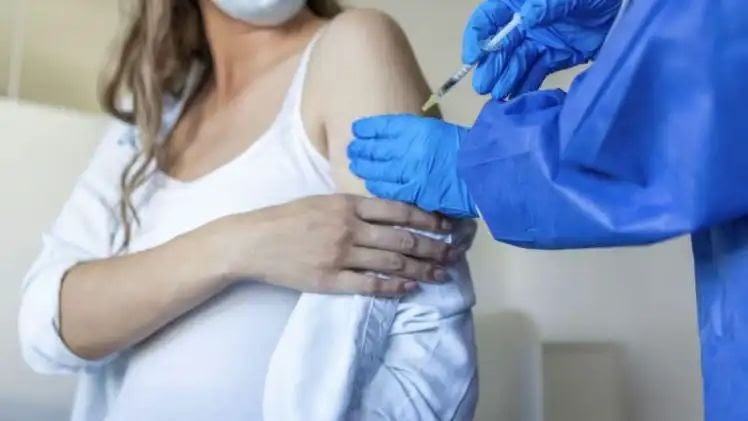
PM Modi has today started the nationwide HPV vaccination program for 14 year old girls from Ajmer. This campaign is not just a vaccination program, but a strong initiative to protect the coming generation from serious diseases like cervical cancer.
Every year thousands of women in India are affected by cervical cancer. The main cause of this disease is Human Papilloma Virus (HPV), which often enters the body without symptoms. The good thing is that now it is possible to prevent this virus and that too through free vaccination.
Why was the age of 14 years chosen?
According to the World Health Organization’s 2022 recommendations, the HPV vaccine is most beneficial when administered before exposure to the virus. At the age of 14, the body’s immunity gives a strong response, which provides long-term protection. According to WHO, in many cases even a single dose can provide adequate protection, which has been found to be as effective as two doses. However, for children whose immune system is weak, doctors may recommend two or three doses.
Where and how will the vaccine be administered?
The government has ensured that vaccination is available across various government health institutions in the country:
- Ayushman Arogya Mandir
- Community Health Center (CHC)
- District Hospital
- Government Medical College
Vaccination will take place at every vaccination center under the supervision of trained medical officers. It will be ensured that the entire process is safe and orderly.
What is the complete process of HPV vaccination? | What Is The Complete Process of HPV Vaccination?
1. Confirmation of eligibility
This campaign is mainly for 14 year old girls. Schools and local health departments will prepare the list of eligible girls.
2. Registration
The data of girls studying in schools will already be recorded. Girls who are not in school can go to the nearest government health center and get registered. It will be useful to keep Aadhar card or school ID with you.
3. Parental consent
Written consent of parents or guardian will be required before vaccination.
4. Vaccination Process
An injection will be given in the arm, the entire procedure is completed within a few minutes. Trained nurses or doctors will administer the vaccine.
5. Observation and Security
After vaccination, the child will be kept at the center for 15-30 minutes. This monitoring is important so that if any rare side effect occurs, it can be treated immediately. The government has made complete arrangements for emergency management at every centre.
Is it really free?
Yes. Under this national campaign, HPV vaccine will be given completely free of cost to daughters of eligible age group. This vaccine is already available in private hospitals, but its price there can be quite high. Therefore, it is wise to take advantage of the government campaign.
India now included in the global list
With the implementation of the HPV vaccination program, India will join the list of more than 160 countries that have already adopted this vaccine in their national programs. More than 50 crore doses have been given worldwide since 2006. Research shows that this vaccine has been found to be 93% to 100% effective. These data are proof that the HPV vaccine is safe and reliable.
Important things for parents:
- Avoid rumors and misinformation.
- Before vaccination, make sure to feed the child a light meal.
- If you have any kind of allergy or health problem, inform the doctor first.
- Keep the vaccination card safe.
Big step towards a secure future
HPV vaccination campaign is not just a government scheme, but is the foundation of a bright and healthy future for daughters. Timely vaccination will not only reduce the risk of cervical cancer, but will also move the country towards a healthy society.