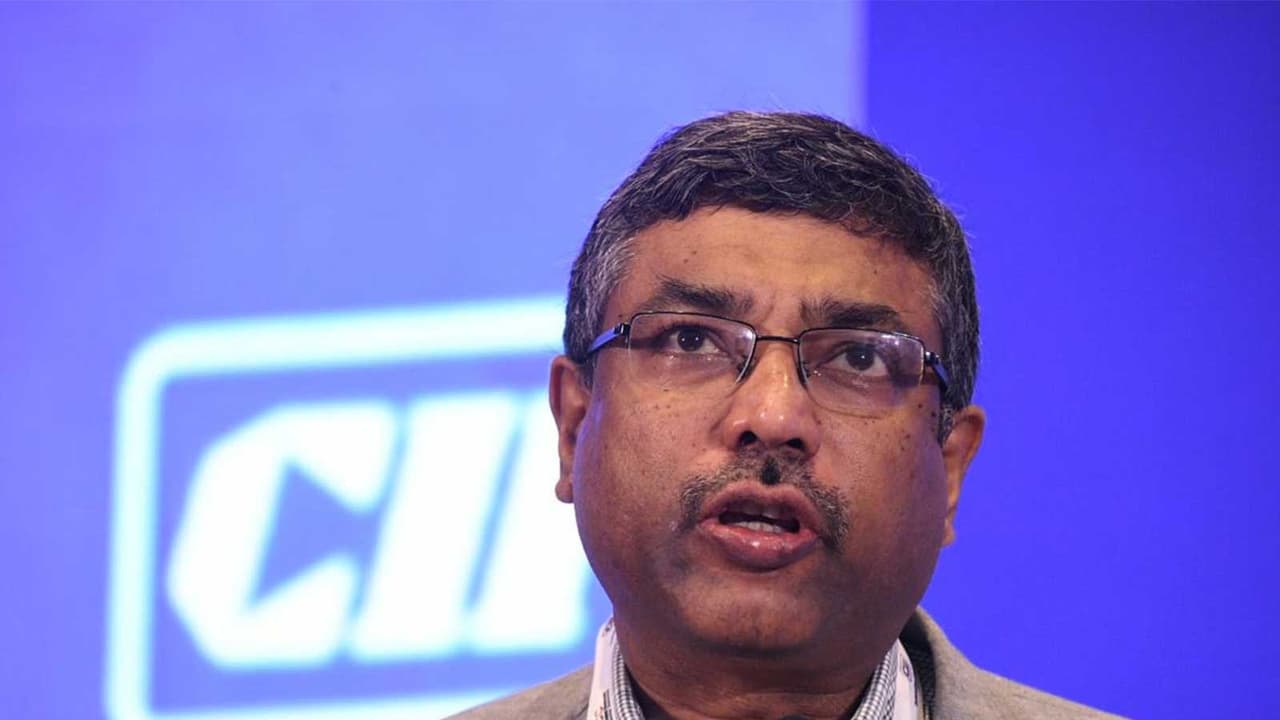
MeitY Secretary S. Krishnan said that India can become the office space of the world, which will also handle front-end operations beyond back-office. The country has half of the world’s GCCs and is expanding into smaller cities with the help of government policies and AI.
New Delhi [भारत]July 9 (ANI): India has the potential to become the office space of the world, expanding its role beyond traditional back-office operations to also handling front-end responsibilities. Secretary, Ministry of Electronics and Information Technology (MeitY) S. Krishnan said the domestic ecosystem now accounts for almost half of the world’s Global Capability Centers (GCCs) and their associated workforce.
Speaking at the GCC Business Summit organized by the Confederation of Indian Industry (CII) on Thursday, Krishnan said, “India has the potential to truly become the office space of the world! Not just a back office, but an office that actually drives front-end operations. This is an opportunity we should not miss.”
Regulatory changes boosted expansion
Krishnan highlighted that recent regulatory updates have made expansion easier. Government-led interventions in building, labor and taxation frameworks have addressed long-standing industry demands, setting the stage for rapid growth in smaller urban centers and high-value operations.
“I think the changes to taxation in terms of the safe harbor provisions and the way they operate are important and should really promote how more GCCs can come into the country,” Krishnan said. “I think now is the time to measure what kind of impact these changes have had and what the consequences have been, because a lot was promised as a result of some of these changes,” he said.
GCCs moving towards smaller cities
Central interventions as well as competing policies of various state governments have also brought much-needed administrative clarity. Changes in workforce preferences due to the pandemic are also driving the expansion of GCCs towards tier-II and tier-III cities, where lower real estate and talent costs provide functional advantages to global firms. Various states have launched targeted local policies such as Karnataka’s ‘Beyond Bangalore’ campaign, Tamil Nadu’s ‘Neo-Tidal Parks’ and dedicated incentive packages in Madhya Pradesh and Gujarat to catalyze rural and peri-urban development.
Artificial intelligence will bring growth
A key element of this structural shift is the integration of Artificial Intelligence (AI), which Krishnan sees as a growth opportunity rather than a threat for the currently estimated US$250 billion IT services export sector. Automation of lower-level tasks allows local operations to be turned toward complex assignments that require tight domain knowledge.
He further said, “How can India adopt AI and what can India contribute to this sector? And so the idea was that India really needs to become the application and AI-based solutions capital of the world.” “Deployment of AI can help you bring high-value work to the country and ensure that high-value added work is also added here,” he said.
Emphasis on skill development and training
To maintain this momentum, MeitY and India AI Mission are advocating comprehensive academic restructuring. Although AI tools are being introduced at all educational levels, it is essential to maintain deep proficiency in core domain knowledge to effectively manage automated workflows. The Ministry is currently working with industry bodies on targeted skilling programs to optimize the talent pool for higher-order management functions. (ANI)
(Except for the headline, this story has not been edited by Asianetnews Editorial staff and is published from a syndicated feed.)