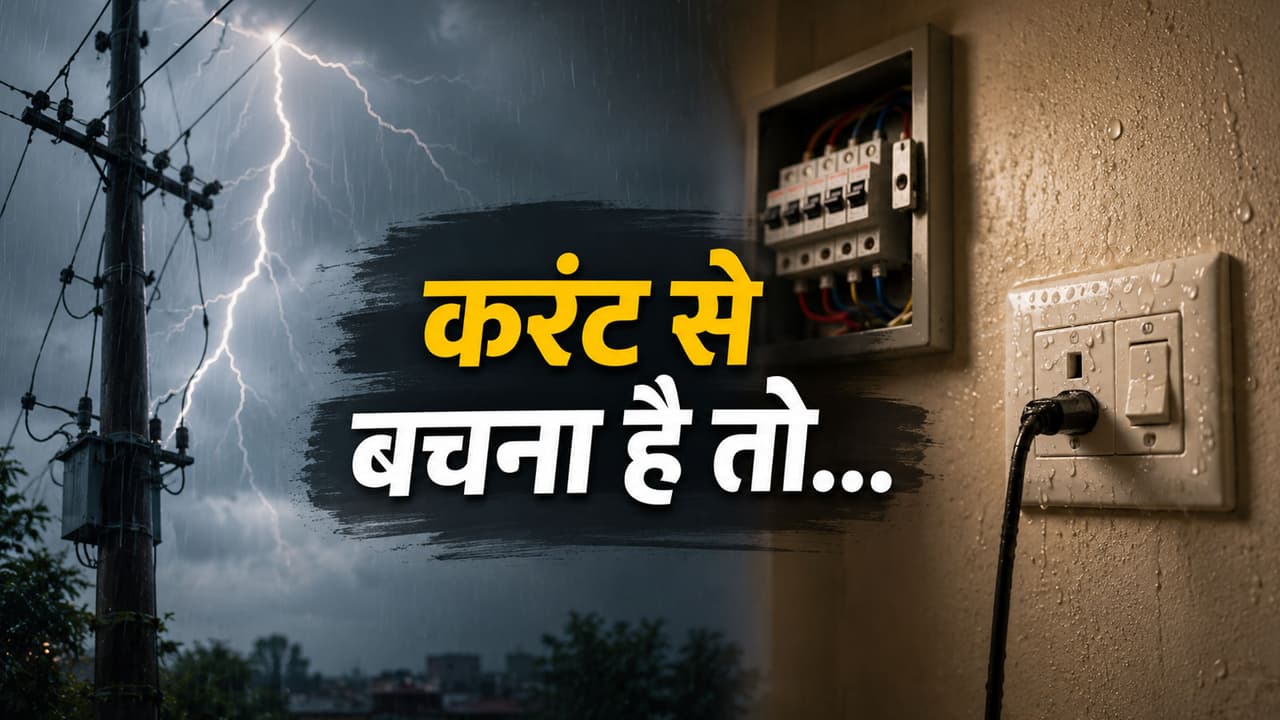
Monsoon Electric Shock Prevention Tips: The risk of electric shock in the house increases during the rainy season. To avoid this, some things must be checked.
Monsoon Home Safety Checklist: Monsoon has reached most parts of the country. The rainy season often brings relief, but it also comes with many dangers, some of which most people take lightly. Electric shock is also one such danger. Every year during the rainy season, incidents of short circuit and electrocution suddenly increase and in most of the cases, the reason is those small defects in the house which no one pays attention to. The good thing is that with a little caution and timely investigation, these accidents can be completely avoided. Know here 6 such things, which must be checked before or as soon as the rains start…
Why does the risk of electrocution increase in rain?
Water and moisture allow electricity to flow easily. The wires, switches or sockets which seem completely safe in normal times, become dangerous when they come in contact with moisture. Old wiring, loose switches and bad earthing, these three things may be ignored in normal days, but they become the biggest reason for electrocution during rains.
Which 6 things must be checked in the house?
1. Is the earthing of the house correct or not?
The job of earthing is to ensure that any extra flow of electricity goes safely into the ground. If the earthing is bad or loose, then this excess electricity remains in the appliances and switchboard instead of reaching the ground, which directly increases the risk of electric shock. Get the earthing of the house checked by a qualified electrician before or as soon as the monsoon starts.
2. Old wires and loose switches
In homes with very old wiring, the outer layer of wires weakens over time. When such wires come in contact with moisture, the risk of short circuit increases. Similarly, if any switch is loose or you feel even a slight shock when you touch it, do not ignore it at all. This is not a common problem, but could be a sign of great danger. In such a situation, immediately call an electrician and get it repaired.
3. Meter box and distribution board
If there are signs of moisture, rust or water on the meter box and distribution board of the house (from where the electricity of the entire house is controlled), then it is important to get it repaired immediately. This is the place where a little carelessness can become a threat to the entire house.
4. Open sockets and extension boards
If there is even the slightest possibility of water getting into the extension boards or open sockets lying on the floor, such as near the window, near the balcony or in the kitchen where water may splash, then immediately shift them to a higher and safe place.
5. Presence of MCB and ELCB
If MCB (Miniature Circuit Breaker) or ELCB (Earth Leakage Circuit Breaker) is not installed in the house, then it is wise to get it installed before monsoon. These devices immediately detect any abnormal leakage in electricity and automatically stop the supply, thereby averting a major accident.
6. Outside electric poles and exposed wires
If there is water accumulated around electric poles, dangling or broken wires or transformers outside the house, then maintain distance from there and also instruct children to keep them away from them. Walking barefoot on wet ground after rain should also be avoided, especially where electric poles or wires are nearby.
Take these precautions during a storm
Even inside the house cannot be considered completely safe during a lightning storm, because strong lightning can sometimes reach inside the house through the wiring and current can run in the appliances. Therefore, during a storm, it is safe to switch off appliances like TV, fridge, inverter, router and unplug them. Also avoid using electric geysers, showers or taps during this time, because both water and metal are good conductors of electricity.
What to do immediately if someone gets electrocuted?
If you see someone getting electrocuted, then first of all do not touch that person with your hands, because of this the current can reach you also. First of all switch off the main switch or if not immediately possible, isolate the person from the power source with a non-conductive object like a dry wooden stick or rubber gloves. After this, immediately call an ambulance and take him to the nearest hospital. The sooner medical help is received, the greater are the chances of survival.
Disclaimer: This article is for general safety information. This is not a substitute for testing by a professional electrician. Always get the wiring and earthing of the house thoroughly checked by a qualified and experienced electrician. This is a sensitive security topic. If any serious incident of electric shock has occurred, contact emergency services immediately.