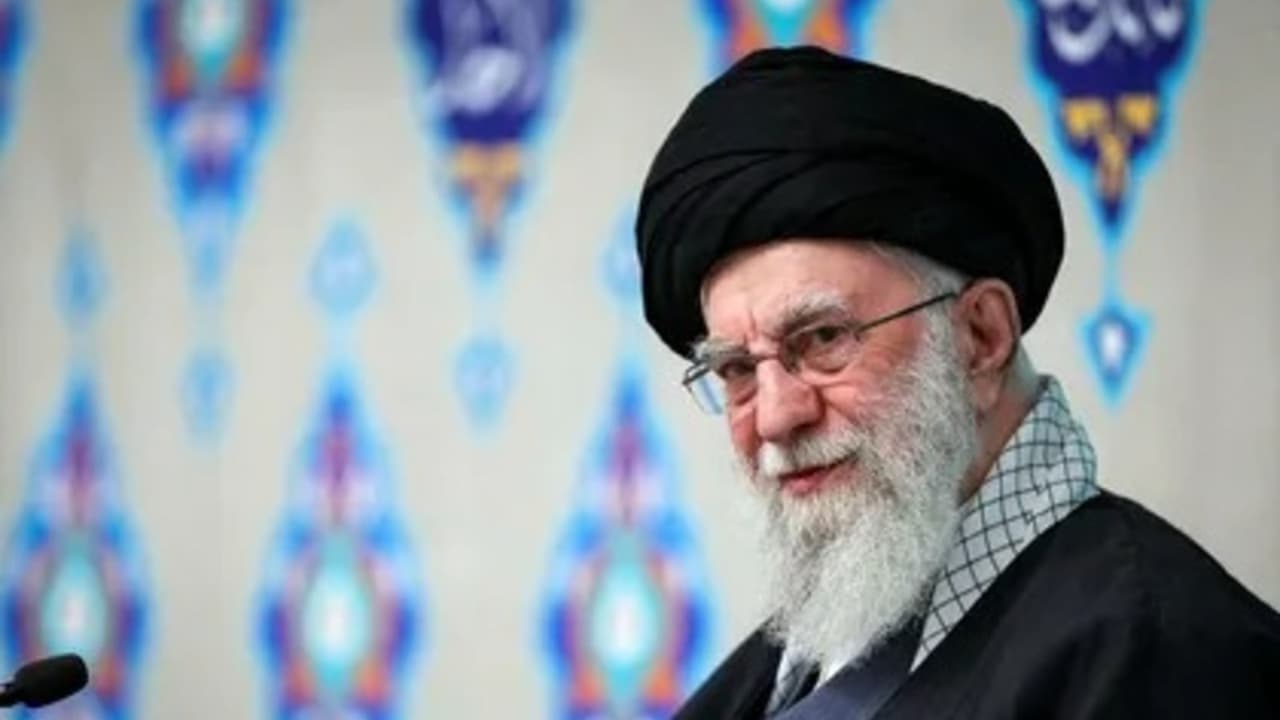
Iran’s former supreme leader Ayatollah Ali Khamenei will be buried in the city of Mashhad, four months after his death. It is being told that due to the war situation and the expectation of gathering of more than 2 crore people, the funeral has been delayed so much.
Tehran: Iran’s former supreme leader Ayatollah Ali Khamenei will be laid to rest in late June, nearly four months after his death. According to reports, according to Khamenei’s last wish, he will be buried in the city of Mashhad, where the shrine of Imam Reza, considered the holiest of Shia Islam, is located. The Islamic Revolutionary Guard Corps (IRGC) has given official information that Khamenei’s body is expected to be buried around June 21. Khamenei was killed in an airstrike on his home in Iran’s capital Tehran on February 28. This attack was carried out jointly by America and Israel.
Earlier, Khamenei’s official funeral was to be held on March 4, but it was postponed due to the war-like situation in the country. Now officials estimate that more than 20 million people could attend the final events in Tehran, Qom and Mashhad. The common people will be given three full days to pay their last respects to their leader.
Main rituals in Tehran: 24-hour procession
The main rituals of Khamenei’s funeral will take place in Tehran, which could last at least 24 hours. After this, his mortal remains will be taken to the religious city of Qom and from there finally to Mashhad. According to the IRGC announcement, he will be buried at the Imam Reza shrine complex in Mashhad. A Tehran municipal official said that before the burial, Khamenei’s funeral procession would be paraded through the main streets of Qom and Mashhad so that people could pay their last respects.
Will Khomeini’s record of 1989 be broken?
If officials’ estimates prove correct and 20 million people attend Khamenei’s funeral, it will become a new world record. This will break the previous record for the funeral of Ayatollah Ruhollah Khomeini, the founder of the Islamic Republic. About 10 million people attended Khomeini’s funeral in 1989, which was one-sixth of Iran’s total population at that time. It is still considered one of the largest funerals in the world. But there was such a crowd at that time that a stampede broke out, in which at least eight people died and thousands were injured.
This time, handling the crowd of double i.e. 2 crores and preventing any accident is a big challenge for the Iranian authorities. Especially when the country is recovering from the effects of war, organizing such a big event is a very difficult task.
Responsibility on the shoulders of the IRGC: This is rare in the Islamic tradition
Generally, according to Islamic tradition, a person should be buried within a day or two of his death. But Khamenei’s funeral being delayed by 4 months is a very rare and unusual phenomenon. Iranian officials have clarified that the reason for this delay is the expectation of huge crowds and the tense situation of war.
Mohammad Ali Tavakkolizadeh, deputy chief of social and cultural affairs of Tehran Municipality, has given information about the preparations. Speaking to Iranian state TV, he said there would be three days of public mourning and a funeral for Khamenei. He said this could happen at the beginning of ‘Muharram’, the first month of the Islamic calendar (around June 21). Iran’s army ‘IRGC’ has taken the entire responsibility of organizing this huge event.
Why is the burial being done in Mashhad city itself?
Mashhad is the country’s second largest city in the north-east of Iran and is an extremely holy and important religious center for Shia Muslims. The main attraction of this city is the Dargah of Imam Raza. He is the eighth Imam among the ‘Twelve Imams’ of Shia Islam. His tomb and Dargah complex is one of the largest religious places in the world, where millions of people from all over the world including Iran come every year. For this reason, by burying Khamenei in Mashhad, Iran wants to forever associate his name with the most respected religious leaders in the history of Shia Islam.