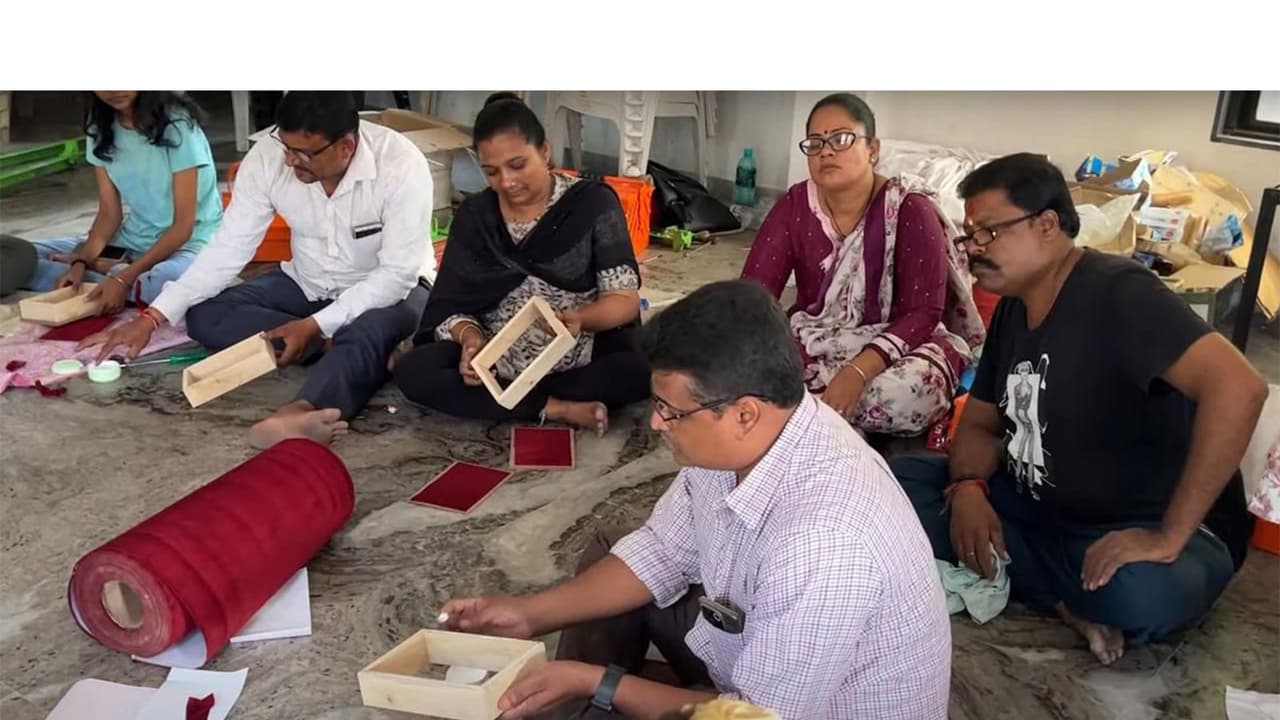
Gujarat’s Hastkala Setu Yojana, launched in 2020, has empowered over 21,690 artisans (82% women) with training and market access. The scheme has generated Rs 102.08 crore in sales, created over 50,000 jobs, and significantly boosted artisan incomes.
Gujarat’s rich tradition of handicrafts has held a distinct identity, both domestically and internationally, for centuries. In the context of a changing economic landscape and global competition, empowering these artisans has become a pressing necessity of the times. Prime Minister Narendra Modi has articulated a vision to provide maximum encouragement to this traditional artistic heritage through mantras such as ‘Vikas Bhi, Virasat Bhi’ (Development and Heritage), ‘Atmanirbhar Bharat’ (Self-Reliant India), and ‘Vocal for Local’.
In Gujarat, Chief Minister Bhupendra Patel is effectively carrying this vision forward. Keeping this vision of the Prime Minister, along with the specific needs of the traditional artistic heritage in mind, the Gujarat government, under the leadership of the Chief Minister, launched the ‘Hastkala Setu Yojana’ (HSY) in 2020. Today, this scheme has proven to be a robust bridge of economic support for artisans and craftspeople.
Scheme Implementation and Execution
Hastkala Setu Yojana has been implemented effectively across Gujarat, bringing about positive transformations in the lives of thousands of artisans throughout the state. The scheme is being executed by the Industrial Extension-Cottage (Indext-C), an entity functioning under the Commissioner of Cottage and Rural Industries, while the Entrepreneurship Development Institute of India (EDII) has played a pivotal role as the Knowledge Partner for this initiative, an official release said. Initially, this scheme was proposed for a period of three years, commencing from 2019-20; however, due to the COVID-19 pandemic, it was extended until 2025-26. The State Government has incurred an expenditure of approximately Rs 58 crore on this scheme.
Scope, Inclusivity and Training
The most significant feature of this scheme is its vast scope. It has been implemented across all 34 districts of Gujarat. Under this scheme, over 21,690 artisans have been registered to date, 82 per cent of whom are women. The scheme also holds significant importance from the perspective of social inclusivity, as the beneficiaries include artisans belonging to Scheduled Castes (21%), Scheduled Tribes (20%), and Other Backwards Classes (34%).
Under the Hastkala Setu Scheme, artisans have been provided not only with financial assistance but also comprehensive training aimed at making them self-reliant. Entrepreneurship development training has been imparted to 15,586 artisans, while 9,292 artisans have received specialised skills training relevant to their specific trades. A network comprising over 70 master trainers and 150 mentors has been established to provide continuous guidance to the artisans, the release said.
Strengthening Market Connectivity
Market connectivity constitutes the strongest aspect of this scheme. Approximately 9,300 artisans have been directly linked to the market through Business-to-Business (B2B) orders. Additionally, seven B2B meets and four fashion shows have facilitated the establishment of a robust dialogue between artisans and designers. In alignment with the digital era, over 2,000 artisans have received training in digital marketing and have subsequently been onboarded onto e-commerce platforms such as Amazon, Flipkart Samarth, Meesho, and Etsy.
Significant Economic Impact
The economic impact of this scheme has also been highly impressive. Under the scheme, total sales amounting to Rs 102.08 crore have been recorded to date, and over 50,000 new employment opportunities have been created. Furthermore, more than 5,900 existing artisans have received additional support and guidance. In terms of artisans’ income, prior to the Hastkala Seva Setu scheme, only 9 per cent of artisans were able to earn a monthly income exceeding Rs 15,000; today, however, this figure has risen to 50 per cent. The number of artisans who have adopted handicrafts as their primary source of income has also increased from 20 per cent to 45 per cent. Additionally, 73 per cent of artisans are now gaining direct market access through exhibitions and fairs, the release said.
Overcoming Implementation Challenges
However, the successful implementation of the scheme did face certain challenges. Prominent among these were a lack of documentation, delays in financial coordination, hesitation in adopting modern technology, and the absence of an effective marketing mechanism. Nevertheless, the Government of Gujarat prioritised technological upgradation, design innovation, market diversification, and Public-Private Partnerships to overcome these challenges.
The Hastkala Setu scheme is not merely a government programme; it has emerged as a revolutionary initiative that transforms the lives of artisans. This scheme has not only generated employment but has also secured a new identity for Gujarat’s cultural heritage on the global stage. This stride towards a “Local to Global” approach is playing a pivotal role in realising the dream of making India self-reliant. (ANI)
(Except for the headline, this story has not been edited by Asianet Newsable English staff and is published from a syndicated feed.)