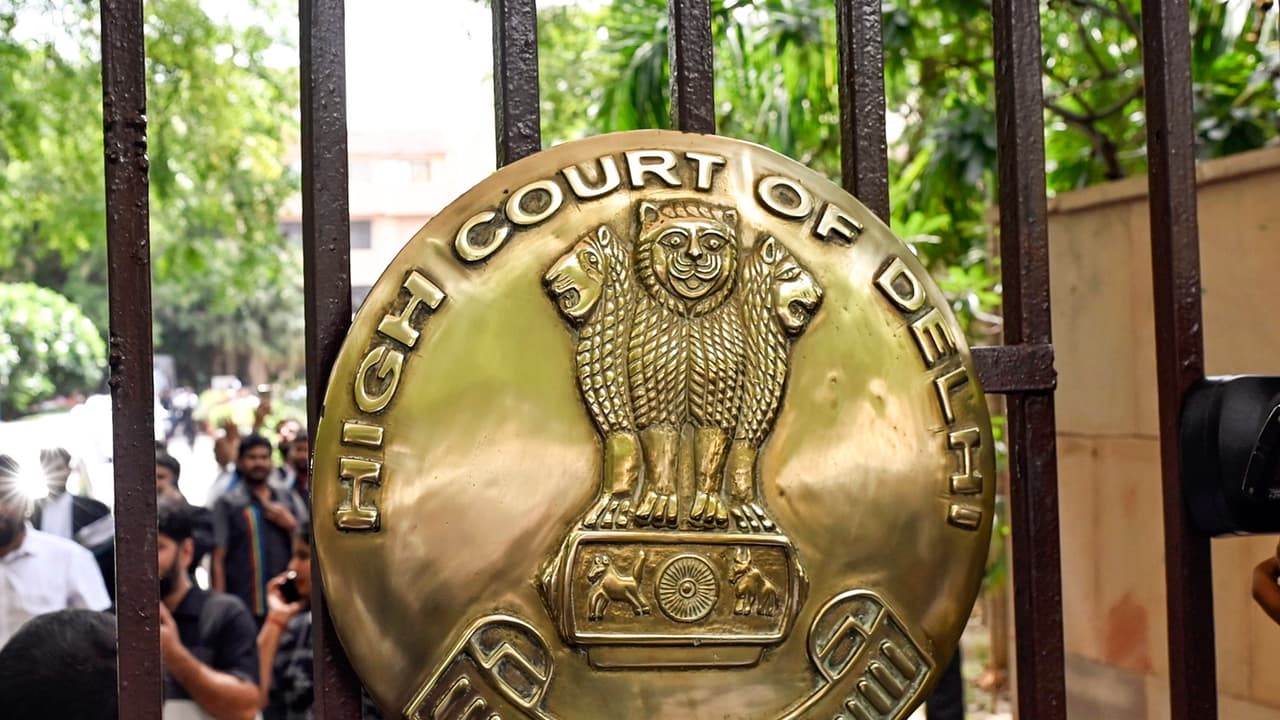
Delhi HC upholds the selection process for the Saksham Anganwadi and Poshan 2.0 nutrition scheme, dismissing NGO petitions. The court found no illegality or bias, stating it won’t interfere in administrative tender decisions without clear proof.
The Delhi High Court has upheld the selection process adopted by the Government of NCT of Delhi for implementation of a key nutrition scheme, observing that courts must exercise restraint in interfering with administrative decisions in tender matters unless clear arbitrariness or mala fides is established.
A division bench of Justice Anil Kshetrapal and Justice Amit Mahajan dismissed a batch of writ petitions filed by several NGOs challenging their exclusion from the final selection list dated February 20, 2023, issued by the Department of Women and Child Development for the supply and distribution of supplementary nutrition under the Saksham Anganwadi and Poshan 2.0 scheme.
Court Stresses Limited Judicial Review in Tender Matters
The Court held that the petitioners failed to demonstrate that the selection process suffered from illegality, irrationality, or procedural impropriety. It emphasised that judicial review in tender matters is limited to examining the decision-making process, not the merits of the decision itself. Relying on settled principles laid down in cases such as Tata Cellular v. Union of India, the bench reiterated that courts should not act as appellate authorities over administrative decisions or substitute their own views for those of expert bodies.
Challenge Against Presentation Stage Rejected
A key challenge raised by the petitioners was against the introduction of a presentation stage carrying 30 marks after the technical evaluation (70 marks). They argued that this stage was not envisaged in the Expression of Interest (EOI) and was applied arbitrarily. Rejecting this contention, the Court observed that the evaluation of NGOs for such large-scale welfare schemes cannot be confined to documentary scrutiny alone. It noted that assessing operational readiness, infrastructure, and execution capability through presentations was a legitimate administrative tool. “The allocation of marks for presentation formed part of an integrated evaluation matrix and was uniformly applied to all participants,” the court held.
The bench clarified that merely qualifying in the technical stage does not create a vested right to be selected. Participation in subsequent evaluation stages is part of a competitive process, and final selection depends on overall performance.
Allegations of Bias Found Baseless
Addressing allegations that certain selected organisations were favoured or allotted multiple projects despite lesser experience, the court found no material evidence to support claims of bias or mala fide intent. It observed that courts cannot undertake comparative re-evaluation of bidders and that generalised allegations without cogent proof cannot justify interference.
Court Addresses Non-Disclosure and Timeline Objections
On the issue of non-disclosure of presentation scores, the court held that transparency does not necessarily require disclosure of interim evaluation marks unless mandated by the tender conditions. In the present case, no such requirement existed, and therefore, non-disclosure alone could not invalidate the process.
The petitioners also argued that the selection list was issued beyond the prescribed 120-day validity period. The court rejected this ground, noting that such timelines are generally directory unless explicitly made mandatory. It further observed that the petitioners participated in the process without protest and raised objections only after being unsuccessful.
Public Welfare Scheme’s Importance Underscored
Significantly, the court underscored that setting aside the selection at this stage would disrupt a major public welfare scheme aimed at providing nutrition through Anganwadi centres. “Courts must avoid interfering in such processes unless illegality is clearly established,” the bench noted.
Concluding that no grounds for interference were made out under Article 226 of the Constitution, the Court dismissed the batch of petitions and upheld the impugned selection list. (ANI)
(Except for the headline, this story has not been edited by Asianet Newsable English staff and is published from a syndicated feed.)