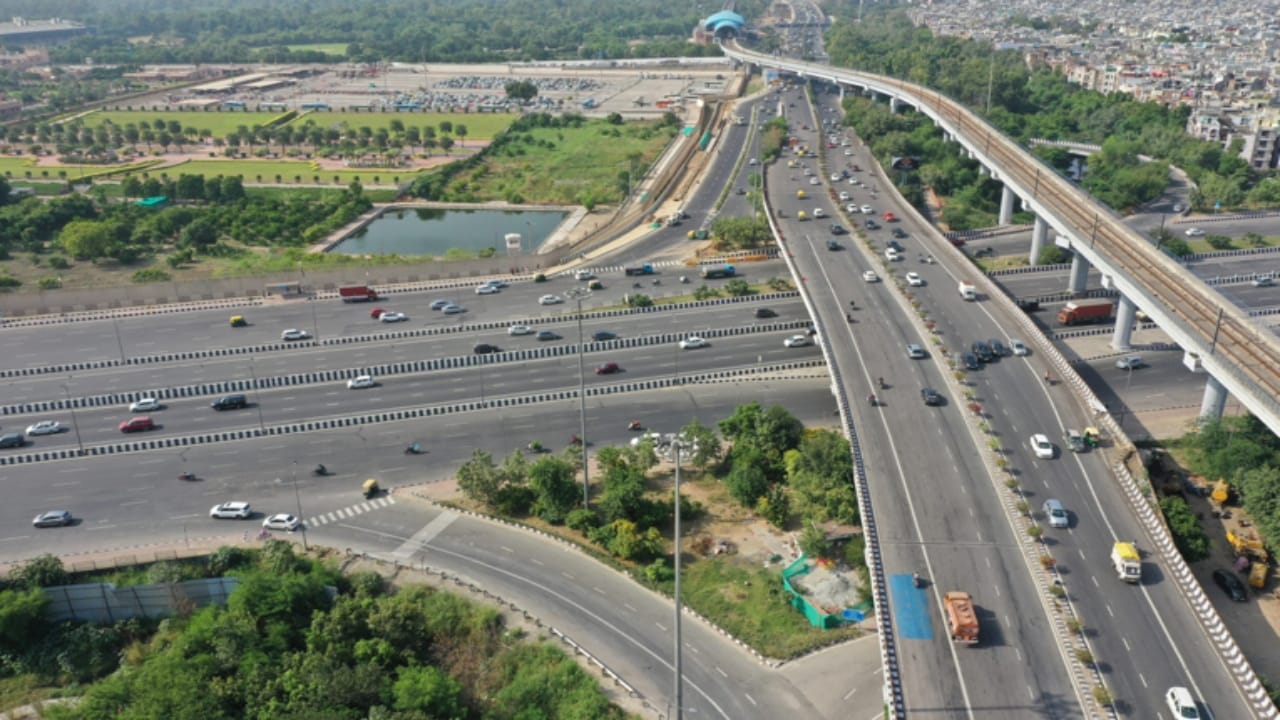
Dehradun: The Delhi–Dehradun Economic Corridor is not just a road connecting the national capital with Uttarakhand’s capital.
It has become a multi-expressway hub, linking several major national and proposed expressways across North India. This integrated transport grid is expected to revolutionize travel, trade, and tourism in the region.
Strategic link to Delhi–Mumbai Expressway
One of the biggest advantages of the corridor is its indirect connection to the Delhi–Mumbai Expressway through the National Capital Region (NCR). The Delhi–Mumbai Expressway is the country’s largest and most ambitious highway project, connecting northern India with western industrial and financial centers like Jaipur, Kota, Vadodara, Surat, and Mumbai. For Uttarakhand, this means agricultural products, tourism traffic, and industrial logistics can easily access the Mumbai corridor, strengthening the state’s industries and supply chains.
Religious tourism boost via Delhi–Katra Expressway
The corridor also connects to the Delhi–Amritsar–Katra Expressway, which is vital for religious tourism. This link will create a high-speed network between Dehradun, Haridwar, the Char Dham shrines, and Jammu–Katra. Pilgrims traveling to Vaishno Devi will benefit from smoother connectivity, while Uttarakhand’s religious tourism economy will see significant growth.
Delhi–Meerut Expressway and EPE link
Another major benefit is the corridor’s link to the Delhi–Meerut Expressway and the Eastern Peripheral Expressway (EPE). This connection divides NCR traffic into three directions — Meerut, Dehradun, and western Uttar Pradesh. It will ease congestion within Delhi and provide an alternative high-speed route for freight traffic, making logistics more efficient.
Future connectivity through Shamli–Gorakhpur Expressway
Looking ahead, the proposed Shamli–Gorakhpur Expressway will directly connect western Uttar Pradesh with eastern Uttar Pradesh. Traffic will bypass the Delhi–Dehradun corridor and reach Bareilly, Lucknow, Gorakhpur, and the Purvanchal region. This future link is expected to revolutionize logistics, agricultural transport, and industrial freight movement, creating new opportunities for businesses across the state.
Haridwar Spur strengthens tourism economy
The Haridwar Spur, a 50.7 km link road branching off the main corridor, is another highlight. It connects Roorkee, Haridwar, and the Char Dham route. This spur will directly benefit the Kanwar Yatra, Kumbh Mela, Char Dham Yatra, and weekend religious tourism. By improving access to Haridwar and surrounding areas, it will also attract tourism investments, boosting Uttarakhand’s economy.
The Delhi–Dehradun Economic Corridor is more than just a highway. With its multi-expressway connectivity, it has become a transport hub that integrates North India’s road networks. From industrial logistics to religious tourism, the corridor offers five major benefits that will reshape travel and economic activity across the region.