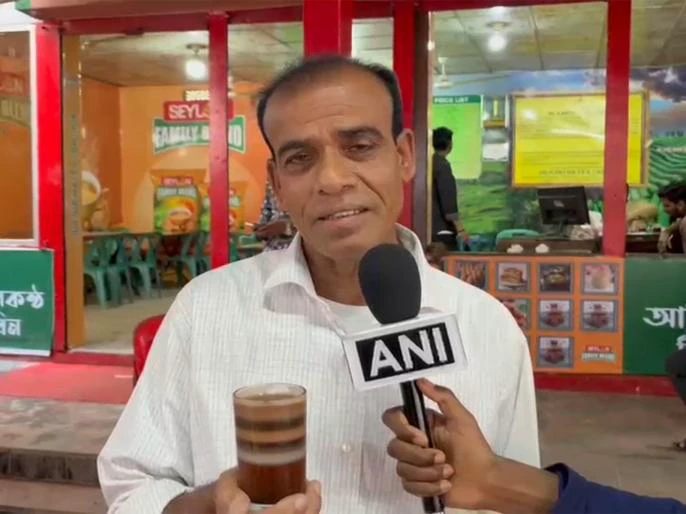
Romesh Ram Gour, the first inventor of colour and layer tea, lives in Sreemangal, Bangladesh’s tea garden rich region located 183 kilometers east of capital Dhaka.
In 2002, after he developed this colored tea with layers, his fame spread both nationally and internationally, and he became a hero.
At first, there were two layers. Then, after two to three months, he added one layer at a timethree, four, fiveuntil he made the tea with seven layers.
After the introduction of his seven-layer tea on a popular magazine show on Bangladesh Television, he became famous overnight.
“Each layer of this tea has a different taste, meaning each layer offers a distinct flavor. The former Prime Minister of Bangladesh, Sheikh Hasina, along with her family, the former President, Badruddoza Chowdhury, and many celebrities from India also camemany celebrities drank this tea. And special individuals, celebrities, and notable people from 112 countries came to Sreemangal to drink this tea”, Romesh Ram Gour toldin an interview.
The area in Srimangal where Ramesh Ram Gaur sells his seven-layer tea was a remote area; in fact, the place called Manipuri Para was a secluded area. Since the selling of this seven-layer tea began, a huge number of tourists have started coming from both within the country and abroad, and this area has developed countless Manipuri cloth markets, turning it into a bustling tourist areathe fame of this seven-layer tea.
“This seven-layer tea does not mix between the layers for about six hours. After six hours, they gradually mix. However, I will not sell the process or the patent of making this seven-layer tea to anyone. Up to now, many people from Bangladesh and 11 other countries have offered me millions of taka, but I have not sold it. As long as I am alive, I will keep it, and if I am gone, my son or my descendants will keep it. But we will never sell it. Now, it is seen that many are selling fake versions of this seven-layer colored tea. So, I would say, stay away from the fake ones”, he added.
Various research institutions have conducted studies on this tea, and they have found no chemical or harmful substance that would affect health.
“In 2004, a special team of 30 experts from Japan took samples from each layer using their equipment. They tested it, and after testing, they found that there was nothing harmful, no chemicals, and for this reason, they also promoted this tea on Japanese television. Besides this, the Bangladesh Tea Board, Bangladesh University of Engineering and Technology (BUET), and the Bangladesh Tea Research Institute each conducted studies on this tea, tested it, and none of them found anything harmful; rather, they declared it safe for consumption”, Gour said.