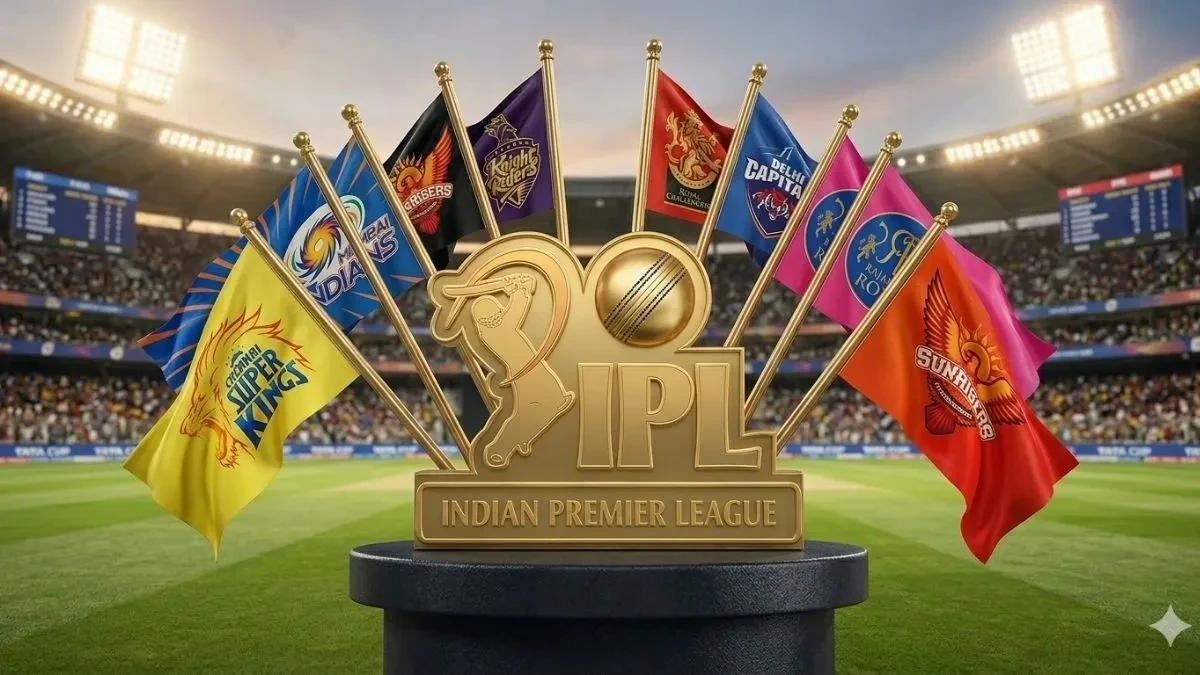
The Big Bash League (BBL) could be set for a major structural shift, with IPL franchise owners emerging as key potential investors as Cricket Australia explores partial privatization of the tournament.
As of April 14, 2026, Australian state cricket associations are expected to indicate whether they support a proposal allowing private investors to purchase stakes in BBL franchises – a move that could significantly reshape the league’s financial model.
What is the BBL privatization proposal?
Cricket Australia has proposed selling minority stakes in BBL teams to private investors as part of a long-term plan to strengthen the league’s financial future and remain competitive in the expanding global T20 market.
Under the current structure, most franchises are expected to sell up to 49% ownership stakes, while Cricket Australia or state associations would retain majority control.
There are also discussions around the possibility of full ownership sales for select teams, potentially involving franchises based in major markets such as Sydney or Melbourne.
The proposal is similar to the model adopted in England’s The Hundred, where minority stakes in teams were sold to private investors to boost league funding and infrastructure.
Why IPL owners are central to the plan
IPL franchise owners are considered the most likely investors due to their growing presence across global T20 leagues.
Over the past few years, IPL-backed ownership groups have expanded aggressively into international competitions, including:
- SA20 (South Africa), where all six teams are owned by IPL franchises
- ILT20 (UAE), featuring multiple IPL-backed teams
- Major League Cricket (USA), which includes investments from Mumbai Indians and Kolkata Knight Riders ownership groups
- Caribbean Premier League (CPL), where IPL-linked ownership has existed for several seasons
Their potential involvement in the BBL would extend this global footprint and allow franchise groups to operate teams across multiple continents throughout the year.
State approval remains the biggest hurdle
Before any investment talks can begin, the proposal must receive approval from a majority of Australia’s state cricket boards.
Cricket Australia circulated the privatization pathway to state bodies in March 2026, outlining the benefits of selling partial ownership stakes while preserving the league’s identity.
Some stakeholders have expressed concerns about potential branding changes if IPL-linked investors enter the league – with speculation around possible naming shifts such as franchise-linked branding.
However, Cricket Australia officials have reportedly indicated a preference to retain the traditional BBL team names to protect established brand value.
Financial stakes could reshape the BBL
The privatization push is driven largely by financial projections that suggest the sale of team stakes could generate between $394 million and $525 million in total revenue.
Player associations are also expected to benefit from the restructuring, with reports indicating that revenue from franchise sales could result in significant financial gains for players under existing agreements.
BBL franchise valuations are being benchmarked against the rapid financial growth seen in the IPL, where team values have recently crossed billion-dollar levels.
Recent IPL ownership transactions highlight the scale of these valuations:
- Royal Challengers Bengaluru were sold in March 2026 for $1.78 billion to a consortium led by the Aditya Birla Group
- Rajasthan Royals were acquired in the same period for $1.63 billion by a US-based investor group
The IPL itself is now estimated to have a total business value of $18.5 billion, reflecting the commercial strength of franchise-based T20 leagues.
Why global investors are targeting T20 leagues
The growing interest in franchise leagues is closely linked to media rights revenue and year-round commercial opportunities.
The IPL’s broadcast deal worth approximately ₹48,390 crore (2023-2027) remains one of the primary drivers of franchise valuations, accounting for a significant portion of team revenue.
Investors are increasingly viewing T20 franchises as long-term assets with strong capital appreciation potential rather than short-term profit ventures.
Owning teams across multiple leagues also allows franchise groups to maintain a continuous cricket calendar, maximizing commercial exposure and player development pipelines.
What happens next for the BBL?
The immediate next step lies with Australia’s state cricket associations, whose approval will determine whether Cricket Australia can move forward with formal negotiations.
If the proposal is approved, talks with IPL franchise owners and other global investors are expected to begin later in 2026.
Should the plan move ahead, the BBL could become the next major T20 league to adopt a hybrid ownership model – potentially ushering in a new era of global franchise cricket expansion.