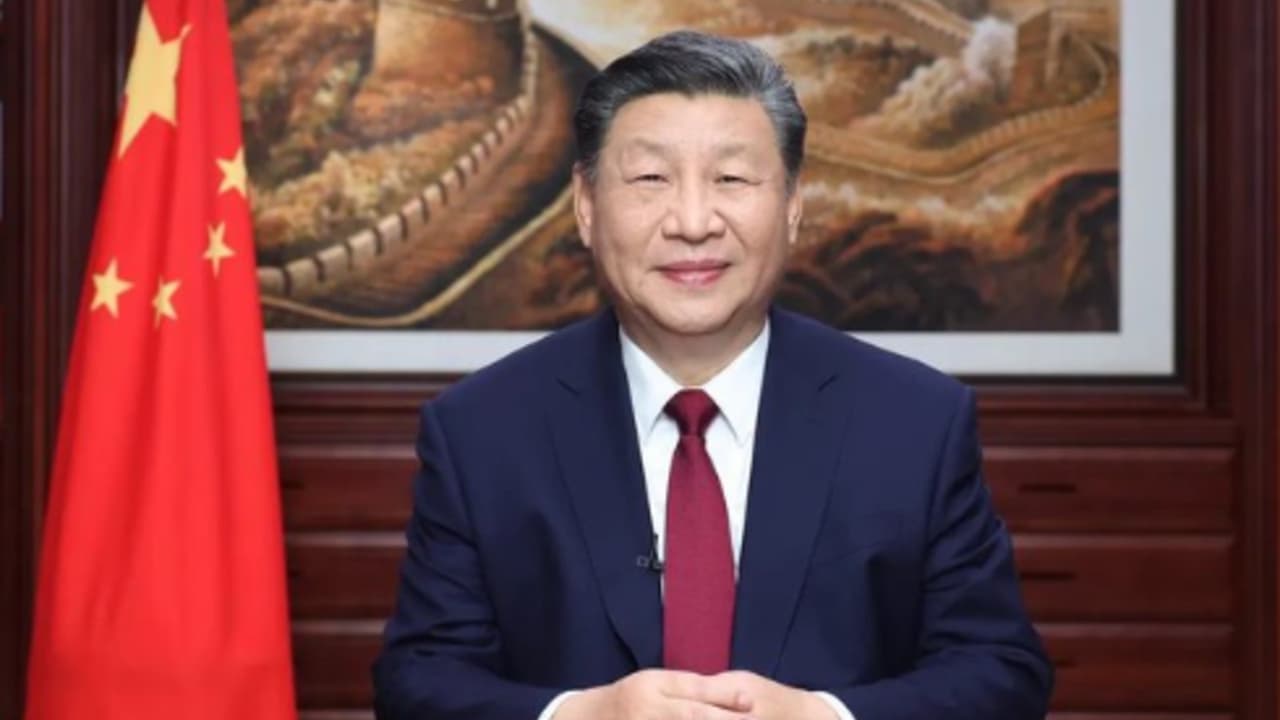
In a rare phone call with Saudi Crown Prince Mohammed bin Salman, Chinese President Xi Jinping stressed the need to keep the Strait of Hormuz open. Xi stated that safe shipping through the vital energy corridor is crucial for regional and global economic stability.
Chinese President Xi Jinping has called for the Strait of Hormuz to remain open in a rare direct conversation with Saudi Crown Prince Mohammed bin Salman, as Beijing intensifies diplomatic efforts to prevent fresh instability in the Middle East.
The phone call, described as Xi’s first with the Saudi leader in more than three years, came at a sensitive moment as the fragile US-Iran ceasefire faces renewed strain and global concerns grow over the future of one of the world’s most critical energy corridors. China, the world’s largest importer of crude oil and liquefied natural gas through the Gulf, has become increasingly vocal about restoring stability in the region.
During the call, Xi emphasized that safe shipping through the strategic waterway must be protected for the benefit of both the region and the wider global economy.
“The Strait of Hormuz should remain open to normal transit, which is in the common interest of regional countries and the international community,” Xi said during the conversation, according to Chinese state media.
Xi also urged an immediate halt to conflict in the region and renewed China’s push for diplomacy over confrontation.
“China calls for an immediate and comprehensive ceasefire, supports all efforts to restore peace and insists disputes be resolved through political and diplomatic means,” he said.
Also Read: Donald Trump May Join Pakistan Peace Talks In Person As US-Iran Deal Nears Critical Deadline
The Strait of Hormuz, which links the Persian Gulf to global markets, handles a major share of the world’s seaborne oil shipments. Any prolonged disruption there can rapidly affect fuel prices and supply chains worldwide. Recent tensions involving Iranian restrictions and a US naval blockade have already shaken markets and raised fears of a wider regional crisis.
China has strong economic reasons to intervene diplomatically. A large portion of Chinese energy imports passes through the narrow waterway, making Beijing especially vulnerable to any sustained closure. Trade between China and Middle Eastern nations has also been affected by recent instability, prompting Beijing to take a more visible role in regional affairs.
Xi’s remarks also carried a broader geopolitical message. In the same call, he told the Saudi crown prince that countries in the Middle East should have a greater role in shaping their own future without relying entirely on outside powers. Analysts see that as part of China’s long-term effort to position itself as a more influential diplomatic player in the Gulf.
Saudi Arabia has not publicly disclosed details of the call, but Riyadh has been closely monitoring developments in the Gulf as it balances relations with Washington, Tehran and Beijing. The kingdom has repeatedly stressed that regional stability is essential for global energy security.
The timing of Xi’s intervention is significant because it comes as uncertainty hangs over planned US-Iran talks expected in Pakistan. Those negotiations could determine whether the current ceasefire survives or whether tensions flare again in the coming days. If diplomacy collapses, the Strait of Hormuz could once again become the center of a broader geopolitical confrontation.
Xi’s rare call underscores how seriously Beijing views the threat to Gulf shipping. With China dependent on uninterrupted energy flows and eager to project itself as a stabilizing force, the Chinese leader’s public appeal signals that the battle over Hormuz is no longer just a regional issue — it has become a matter of global economic concern.
Also Read: Iran warns of ‘decisive response’ to US ‘breach of covenant’: Report