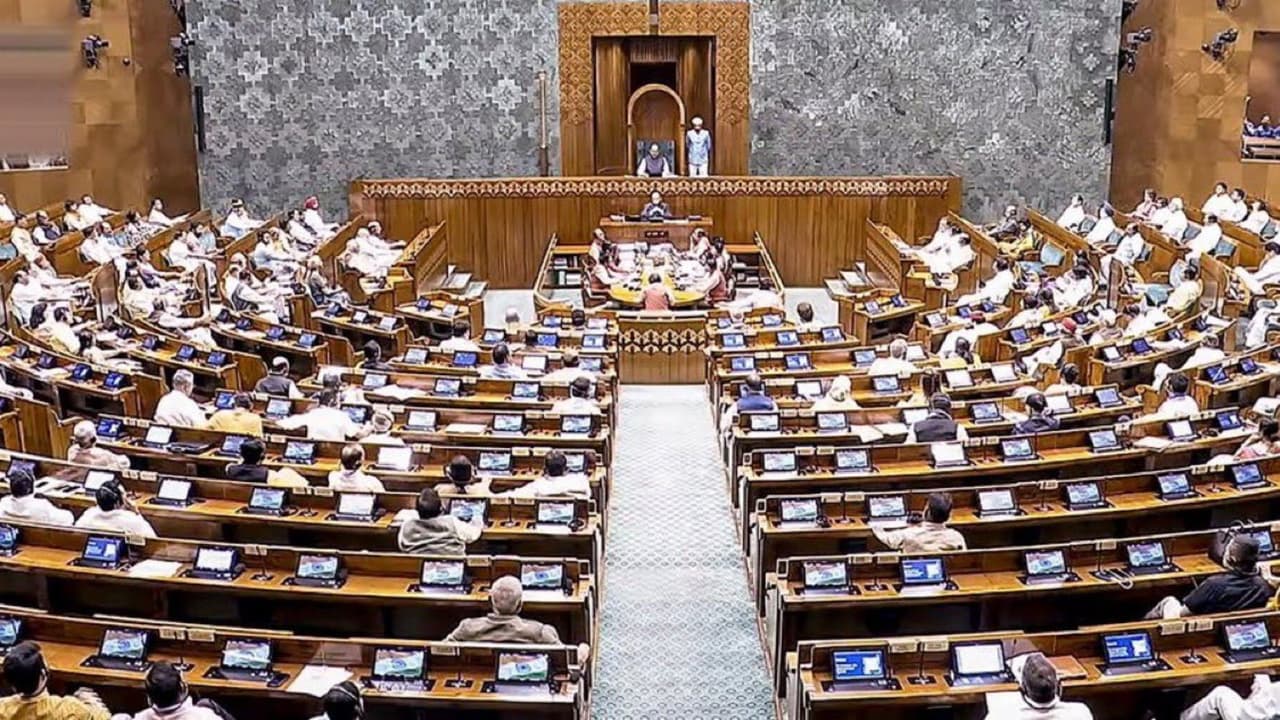
33% Women Reservation Bill 2026 stuck due to lack of two-thirds majority in the Lok Sabha. The Women’s Reservation Bill could not be passed amid 298 support versus 230 opposition. The 30-year-old conflict, delimitation disputes, political opposition and balance of power kept stopping it. Women’s political empowerment is still incomplete.
Women Quota Bill 2026: Late on the night of 17 April 2026, the bill for which expectations were at their peak in the Lok Sabha once again ended in disappointment. The “Constitution (131st Amendment) Bill 2026”, which gives constitutional status to 33% women’s reservation, and the delimitation proposals related to it could not break the wall of political consensus within the Parliament. The vote was supported by 298 MPs, but fell well short of the required two-thirds majority of 352. The government claimed that this proposal is a solution to old disputes – expansion of new seats, 2011 census based delimitation and reservation for women from 2029 without cutting the seat of any sitting MP. Still the bill could not move forward.
30 years of incomplete struggle: Why is women’s reservation stuck again and again?
The issue of women’s reservation is not new.
- From 1996 till now, it has been on the agenda of many governments, but every time some political obstacle stopped it.
- The bill came for the first time in 1996, but the process remained incomplete due to the fall of the government.
- Between 1998 and 2003, opposition came mainly from regional parties, which made OBC reservation a priority issue.
- In 1998, the incident of tearing of a bill inside the Parliament took political tension to its peak.
- 2004–2014: The Congress-led UPA government had an absolute majority.
- Despite being passed in the Rajya Sabha in 2010, it was not taken forward in the Lok Sabha. This was the period when despite the presence of majority, questions were raised about political will.
Power vs Equality: Where is the real conflict?
Experts believe that opposition to women’s reservation has been more a question of balance of power than ideology. Reservation for women was accepted at the Panchayat level because the influence of power is limited there. But 33% share in Parliament changes the political equation – this is the real crux of the resistance.
Grassroots change vs Parliament’s inertia
In India today, millions of women are leading in Panchayat, education, administration and local governance. In many states, almost half the seats in Panchayats are held by women. Despite this, their participation in national politics remains limited. Government schemes—Swachh Bharat, Ujjwala Yojana, Jan Dhan and housing schemes—have empowered women socially, but political representation is still incomplete.
Is the next chapter yet to come?
The night of 17 April 2026 once again showed that women’s reservation is not just an issue of law but a test of political will. The question is whether next time the Parliament will be able to fulfill this historic opportunity, or this dream will again be postponed to a new date.