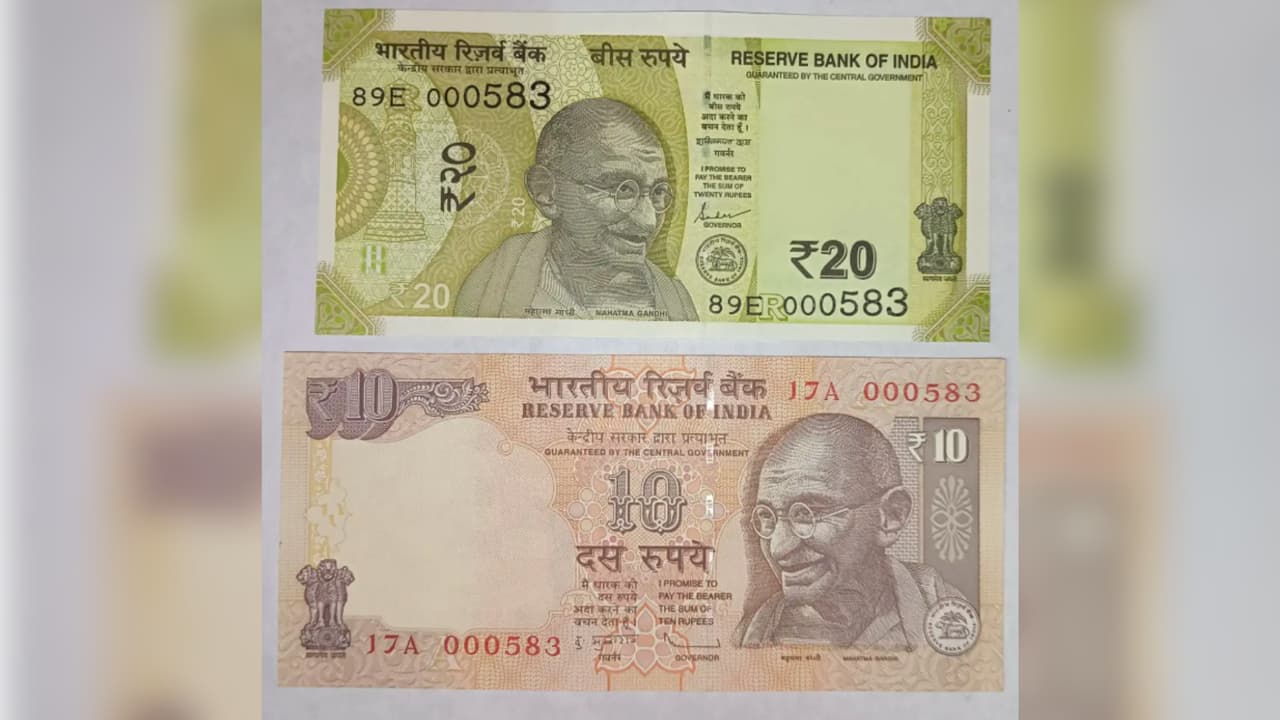
RBI Polymer Notes: Government has given approval to RBI to conduct field trials of 1-1 billion polymer notes of ₹10 and ₹20. Will old paper notes be discontinued? Know the complete plan of the government and RBI.
India New Notes 2026: New types of notes of ₹10 and ₹20 can soon be seen in India. However, this does not at all mean that the existing paper notes are going to be discontinued. According to a Business Standard report, the central government has given approval to the Reserve Bank of India (RBI) to issue 1 billion (100 crore) polymer banknotes of ₹10 and ₹20 for field trials.
First there will be field trials, then the big decision will be taken
Minister of State for Finance Pankaj Chaudhary said in a written reply in the Lok Sabha that the government has approved this proposal on the recommendation of the Central Board of RBI. In the initial phase, field trials of polymer notes of ₹10 and ₹20 will be conducted. If the test is successful, RBI may issue polymer notes of these denominations regularly in future.
However, the government has clarified that there are no plans to completely remove paper notes. Both polymer and paper notes will work together.
Also read: EPF Withdrawal 2026: Buying a house from PF has become easier! But if these conditions are not fulfilled then the claim will get stuck.
Why are polymer notes coming?
Business Standard According to, RBI has been considering polymer notes for some time. The biggest feature of these notes is considered to be their long life. According to international studies, polymer notes last much longer than normal paper notes, which may reduce the need to frequently print new notes.
According to the RBI’s FY25 annual report, ₹6,372.8 crore was spent on secure printing of currency notes in 2024-25, up from ₹5,101.4 crore in the previous fiscal.
India has tried before also
India first tried to introduce polymer notes in 2012, but the plan could not move forward due to technical challenges at that time. Polymer notes are already in use in about 60 countries of the world. Australia first adopted them in 1988, while countries like Canada, Singapore, Malaysia and Romania are also using this technology.
RBI has also clarified that what impact the polymer notes will have on digital payments can be assessed only after their regular issuance. At present, both cash and digital payments are being considered as complementary mediums to each other.
Also read: Do not make these 5 mistakes as soon as you get a salary hike, otherwise even the increased salary will be reduced.