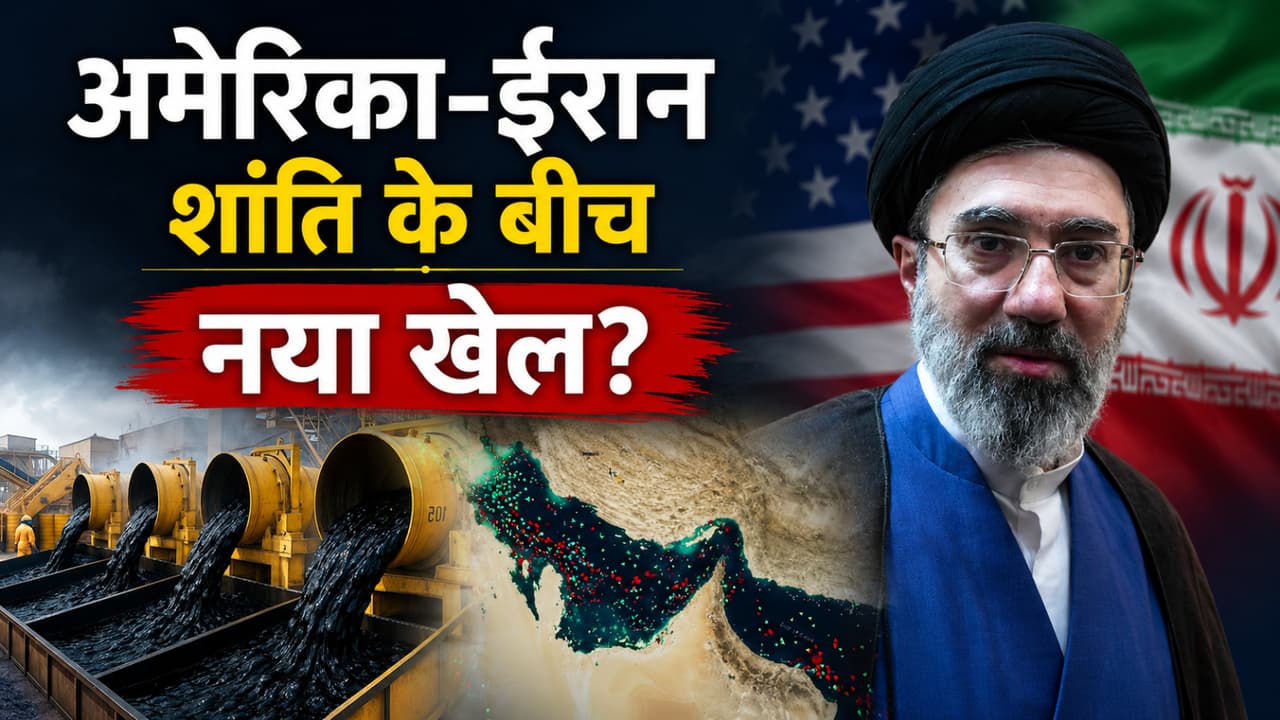
Iran US Ceasefire Agreement: How practical is Iran’s plan to impose duties on ships passing through the Strait of Hormuz? What will be the impact on global oil prices and India’s energy security if Iran imposes transit charges? Does international maritime law allow Iran to charge tolls or service charges on the Strait of Hormuz?
Hormuz Strait Toll Charges: These days, the eyes of those keeping an eye on world politics and global energy market are once again fixed on the Strait of Hormuz. After the US-Iran conflict that lasted for more than 100 days, the chances of a ceasefire now appear to be getting stronger. Meanwhile, reports have emerged that Iran is considering the option of imposing duty on ships passing through the Strait of Hormuz.
If this happens, it could prove to be a step affecting not only the regional but also the global economic system. The reason is simple, about one-fifth of the world’s maritime oil trade passes through this narrow sea route.
Why is the Strait of Hormuz so important?
The Strait of Hormuz connects the Persian Gulf to the Arabian Sea and the open sea. It is counted among the most strategic sea routes in the world. The exports of major oil producing countries like Saudi Arabia, Iraq, Kuwait, Qatar, United Arab Emirates and Iran reach the world through this route. According to media reports, about 20 percent of the global seaborne oil trade and a large amount of LNG (Liquefied Natural Gas) passes through this route.
Consideration of imposing a fee of $ 1 per barrel
According to recent reports, Iran is studying the possibility of imposing a transit fee of about $1 per barrel on oil tankers passing through the Strait of Hormuz. Energy sector experts estimate that if this model is fully implemented, Iran can get additional revenue of 70 to 80 billion dollars every year. This amount may sometimes exceed its annual oil export earnings.
Earning can be more from oil export
According to available economic data, Iran had earned approximately $41.1 billion from oil exports in the year 2023. In 2024, this figure will increase to around $46.7 billion. If transit fees generate $70-80 billion, it could become a bigger revenue source for Iran than oil sales. This is the reason why this proposal is being seriously discussed at the global level.
Oil income increased despite war and sanctions
Despite international sanctions and regional conflicts, Iran has not let its oil exports be completely affected in the last few years. According to reports, Iran’s daily oil income reached about $139 million in March 2026, compared to about $115 million in February. Apart from this, its crude oil export remains at the level of about 16 lakh barrels per day. Market experts say that Iranian oil’s income has increased due to reduction in discount on Iranian oil in the international market.
How did the Hormuz crisis start?
Regional tensions escalated in late February when Iran limited shipping traffic in the Strait of Hormuz in response to US and Israeli military action. This step had an impact on the energy market all over the world. Oil prices rose, increasing costs for shipping companies and raising concerns about energy supplies in many countries. Thousands of ships were stuck waiting on both sides, affecting global trade.
Rising cost of ships standing at sea
Experts associated with the shipping industry say that keeping a ship standing at sea for a long time is a very expensive deal. Ship owners have to continuously bear crew salaries, fuel, maintenance, insurance premiums, bank loan installments and security expenses. Insurance companies also charge additional risk fees due to war zones. For this reason, for many companies, moving forward by paying a limited fee is considered a more economical option than remaining stuck for a long time.
Is Iran already collecting tariffs?
Some international reports have claimed that huge sums of money were taken in exchange for passage of some ships during the conflict. In some cases this amount has been said to be up to $2 million per ship. Although these claims have not been officially confirmed, it definitely indicates that Iran is assessing the possibilities of converting its strategic importance into economic opportunity.
Does international law allow this?
This is where the most important legal question comes into play. The Strait of Hormuz is considered a natural international waterway under international maritime law. In such routes, ships of all countries have the right to unhindered movement. Therefore, imposing direct toll just for passing through the route could give rise to legal challenge. However, it is considered possible to charge service charges for facilities such as maritime safety, navigation, traffic management, environmental protection, search and rescue services.
Why is Hormuz different from the Panama and Suez Canal?
Hormuz is often compared to the Panama and Suez Canal, but the two circumstances are different. The Panama and Suez Canal are man-made waterways. The responsibility for their construction, operation and maintenance lies with the respective countries, hence toll fees are charged there. Hormuz is a natural sea route and the maritime boundaries of many countries are connected around it. In such a situation, it will not be easy for any one country to impose unilateral duty.
What will be the impact on the world including India?
The oil and gas supplies of major energy importing countries like India, China, Japan and South Korea largely depend on the Strait of Hormuz. If some kind of permanent tariff system is implemented in the future, oil transportation could become expensive. Its effect may be visible on the prices of petrol, diesel, gas and other energy products. On the other hand, if normal traffic is restored in the Strait of Hormuz after a permanent ceasefire between the US and Iran, then the global energy market may get relief and the possibility of stability in oil prices may increase.