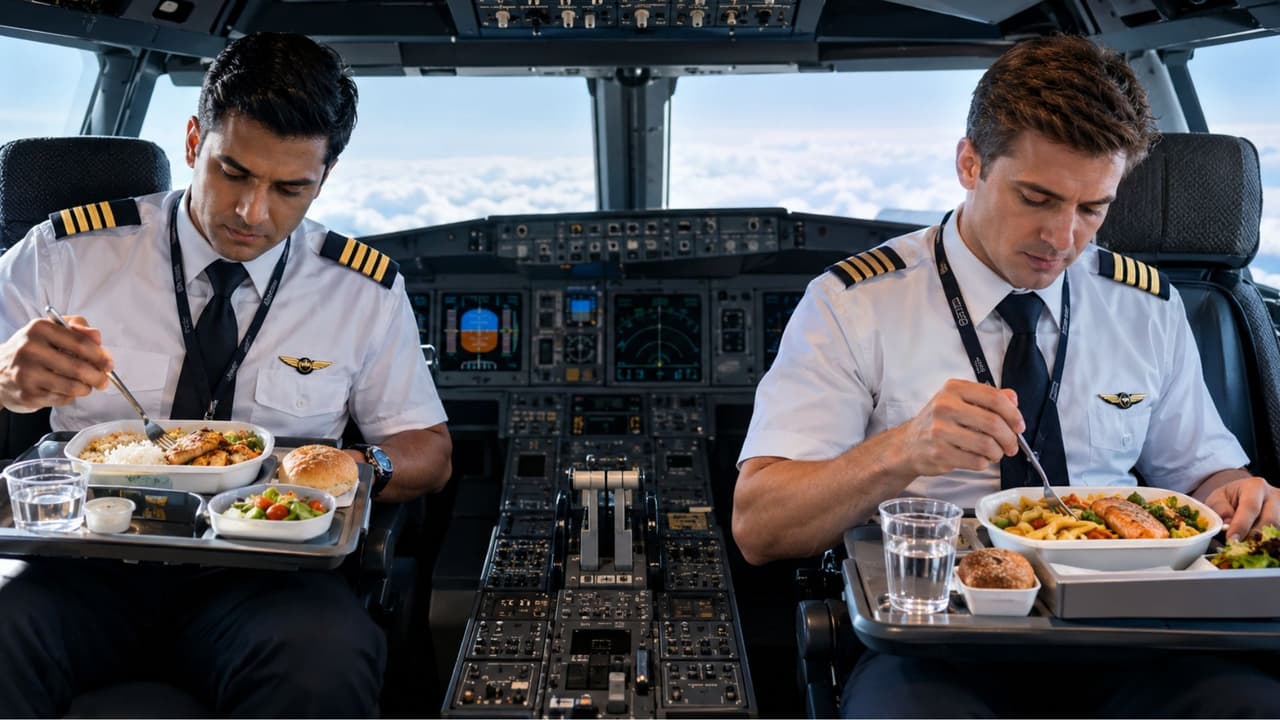
Aviation safety practices often involve serving different meals to pilots to reduce the risk of simultaneous food poisoning. The precaution is intended to ensure at least one pilot remains fit to operate the aircraft.
The recent hijack attempt on the Flydubai flight from Dubai to Tel Aviv made global headlines. Indian-origin pilot Captain Smith Macchar showed great courage and saved hundreds of passengers. The shocking part was that the Omani co-pilot launched this attack. This incident has sparked a lot of discussions about flight pilots everywhere. People are now curious about pilot routines, their meals, and flight rules. Did you know that airlines never serve the same meal to two pilots on the same flight? Here is the surprising reason behind this rule.
Why do airlines serve different food to two pilots?
Flight captains cannot just eat whatever they want. Food preference is not the top priority for pilots on duty. Two pilots never sit together and eat at the same time. The captain and the first officer always get different meals. If one pilot gets rice, dal, and chapati, the airline will not serve the same dish to the other pilot. Many people do not know this fact. Let us understand why airlines follow this rule.
What is the reason behind this pilot meal rule?
If both pilots eat the same food and the food is bad, both will fall sick at the same time. Airlines serve different meals to the captain and the first officer to prevent this exact problem. If one pilot gets food poisoning, the other pilot remains safe because they ate something else. This ensures that one pilot is always healthy enough to manage the cockpit. Since they eat different meals, both crew members will not fall ill simultaneously.
One pilot might get chicken, while the other gets pasta, fish, or a vegetarian meal. The food menu depends on the internal safety protocols of the airline. When one pilot is eating, the other pilot handles flight control, communication, and other cockpit duties.
Serving separate meals is a standard airline safety rule. It is not a strict legal requirement forced by global aviation authorities. The main purpose behind this precaution is to keep at least one pilot ready and fit to fly the aircraft at all times.
You can stop a car on the road and eat your meal. One driver is enough for a road journey. But having only one pilot flying high in the sky is extremely dangerous. You cannot even imagine the risk. The Flydubai flight had extra crew members in the cockpit along with the two pilots. When the attacker targeted Smith Macchar, the passengers caught the attacker and pinned him to the floor. The plane was dropping fast during this time, but another crew member pulled the aircraft back to the right altitude. What would have happened if there was only one pilot or just two pilots without backup?