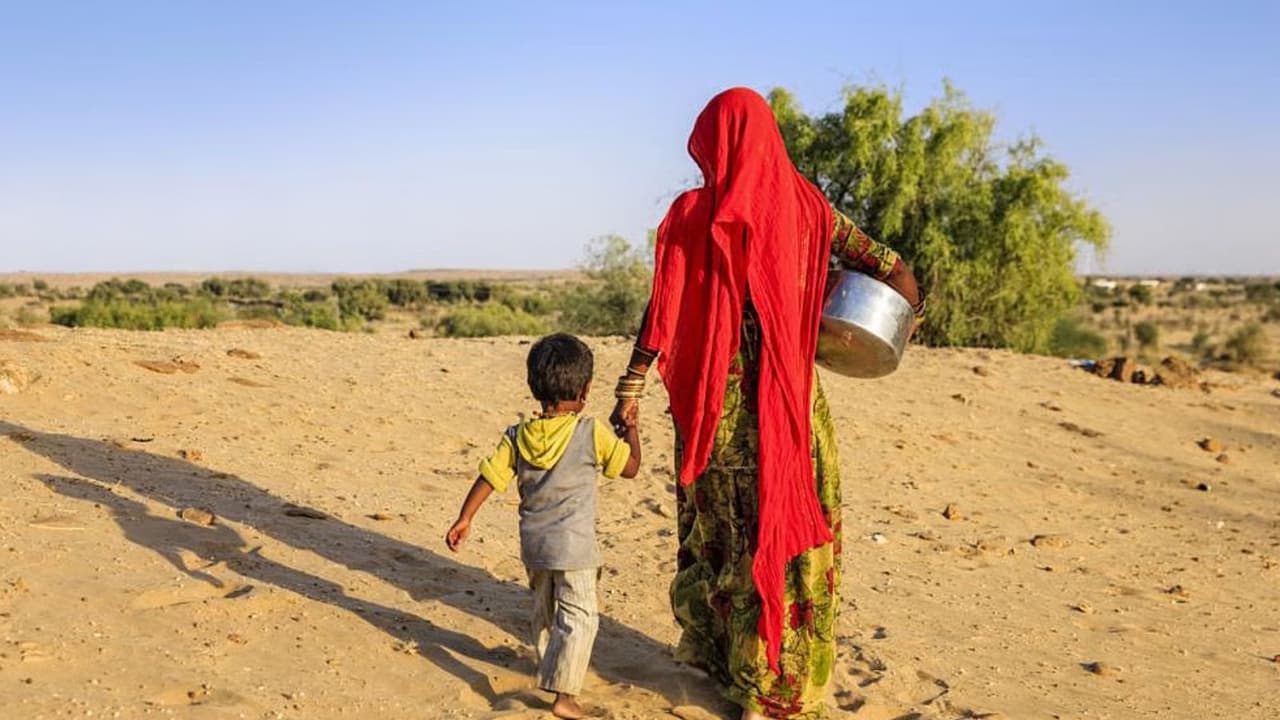
As El Niño intensifies, drought is emerging as a constant global risk threatening food, water, energy and trade, with UN officials urging governments to move beyond fragmented crisis response.
A strengthening El Niño is set to drive extreme conditions well into 2027, exposing governments worldwide to a drought risk that has outgrown traditional management.
Officials from the United Nations Convention to Combat Desertification (UNCCD) warn that drought can no longer be treated as a temporary agricultural or environmental crisis. Instead, it must be managed as a persistent, economy‑wide risk affecting food and water security, energy, health, transport, tourism and trade.
Global Impact Of Drought
The consequences extend far beyond national borders. Drought in the Panama Canal can disrupt trade in Asia, while shortages in the Nile basin can affect grain supplies across Africa.
Yet at UNCCD COP17 in Mongolia in August 2026, governments failed to reach consensus on a global drought framework, leaving unresolved how international cooperation should be structured.
UNCCD’s World Drought Atlas projects that three in four people worldwide will be affected by drought by 2050. By late 2025, nearly 30% of the world’s land surface was in drought, triple the levels recorded in the 1990s, according to a Nature Reviews Earth & Environment analysis.
Persistent drought has already deepened food and water insecurity in West Africa, reduced snow accumulation on the Tibetan Plateau, triggered intense heat‑drought spells in Western Europe, lowered river levels in South America and fuelled wildfires in North America.
The World Meteorological Organization said on September 3 that El Niño is almost certain to persist through February 2027, forecast to reach “very strong” intensity before peaking later this year.
From Crisis Response To Risk Management
Daniel Tsegai, UNCCD programme officer for drought resilience, said national plans often focus only on what to do once drought strikes. “They treated drought as a crisis. For a crisis you don’t prepare, you just wait until it hits hard and then you do something. But drought is now a constant risk,” he explained.
Deputy Executive Secretary Andrea Meza Murillo added that governments remain organised in silos, even as drought increasingly cuts across sectors. Agriculture and environment ministries alone cannot manage the risk; finance and health ministries must also be involved.
The Nature Reviews analysis found droughts are no longer driven primarily by rainfall deficits. Rising land temperatures increase evaporative demand, meaning regions can tip into drought even without unusual rainfall shortfalls.
This exposes the limits of early warning systems focused only on rainfall. Improving soil health, restoring degraded land and retaining water in landscapes are critical to resilience.
Tsegai stressed that early warning must go beyond predicting when drought will occur. “It is analysing the risk. It is analysing the vulnerability, who is going to be affected and what,” he said. National plans must cover the entire cycle – before, during and after drought – rather than switching into action only once an emergency is declared. Fractured Global Response
While countries broadly agree on the need to move from crisis response to resilience, they remain divided on the international architecture required. COP17 ended without consensus on whether cooperation should take the form of a framework, protocol or other instrument.
Meza acknowledged that the outcome reflects a difficult geopolitical moment. “Nothing in multilateralism will be the perfect agreement,” she said.
For UNCCD officials, drought’s growing reach leaves no country unaffected. “This is a global challenge and it needs a global solution,” Tsegai said.
Upcoming summits – the climate COP31 in Turkey and the biodiversity COP17 in Armenia – will test whether land, water, climate and biodiversity can be managed in a more coherent way.