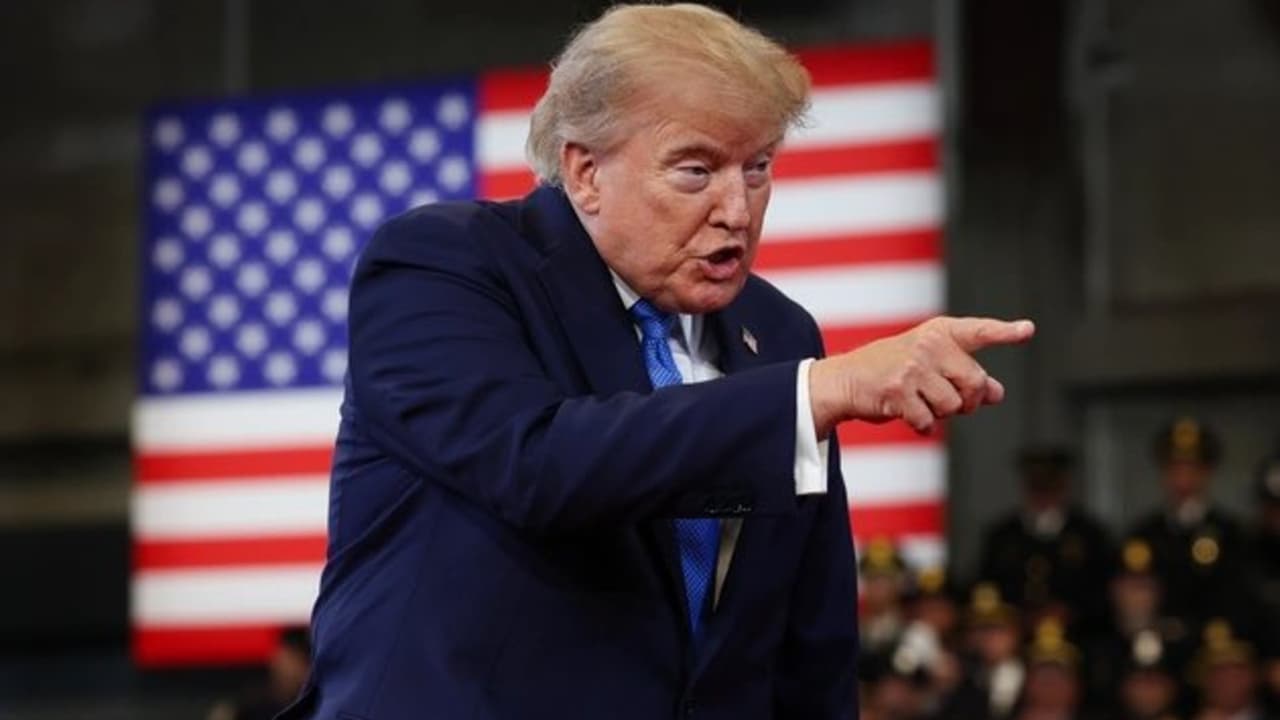
A major dispute over media access has erupted in Washington after the White House announced action against several prominent news organizations, drawing responses from journalists, legal advocates and political leaders.
A new confrontation between the White House and major American news organizations escalated on Friday after President Donald Trump announced that CNN, MS Now and Politico would be barred from White House access, citing what he described as years of inaccurate coverage.
The move immediately triggered criticism from media organizations, press freedom advocates and political figures, who argued that restricting access based on coverage could raise constitutional and legal questions.
Trump announced the decision through a post on Truth Social, saying the action would take effect immediately. He accused the outlets of repeatedly publishing what he called “fake news” and indicated that additional organizations could face similar measures in the future.
Speaking later at a White House event focused on healthcare policy, Trump defended the decision and repeated his criticism of media coverage directed at his administration. He said he believed news organizations should provide what he described as truthful reporting about the presidency and government activities.
The announcement came on a day when the affected outlets published reports on separate national security and government matters. Trump stated that the decision was not linked to any single report and described it as the result of what he characterized as years of unfavorable coverage.
Questions remain about how the restrictions will be implemented and what specific forms of access could be affected inside the White House press operation.
Media Organizations And Press Groups Respond
The decision prompted swift reactions from the organizations involved.
CNN said it stood by its White House reporting team and maintained that its coverage was fair and accurate. The network stated that journalists have a constitutional right to report on government activities without interference.
Politico also defended its reporting and said it would continue covering the White House while protecting its First Amendment rights.
MS Now did not issue a detailed public response following the announcement.
The White House Correspondents’ Association also criticized the move. The organization said journalists were being singled out for performing their professional duties and argued that the issue extends beyond reporters themselves.
According to the association, restrictions on access affect the public’s ability to obtain independent information about decisions made by the federal government.
Legal and media advocacy groups likewise questioned whether excluding organizations because of their editorial coverage would withstand constitutional scrutiny.
Several commentators pointed to previous court disputes involving press access, noting that the relationship between the White House and news organizations has increasingly become a subject of legal debate.
Latest Chapter In Longer Media Dispute
The confrontation is the latest development in a broader struggle over White House access that has unfolded during Trump’s presidency.
Since returning to office, the administration has introduced several changes affecting the way journalists cover presidential activities.
One of the most widely discussed disputes involved The Associated Press, which lost access to certain presidential events after continuing to use the term “Gulf of Mexico” in its reporting instead of “Gulf of America.” The news agency later challenged the restriction in court.
The administration also assumed a greater role in determining aspects of the presidential press pool, a system that governs which reporters are permitted to accompany and question the president in locations such as the Oval Office and aboard Air Force One.
In another high-profile dispute, a Pentagon press policy intended to place new restrictions on journalist access drew opposition from news organizations and eventually faced legal challenges.
The latest announcement comes amid ongoing legal battles involving several major media outlets, including newspapers, broadcasters and international news organizations.
For supporters of the administration, the decision is part of a broader effort to challenge what they view as unfair coverage. Critics, however, argue that limiting access based on editorial content represents a significant escalation in tensions between the White House and the press.
As details of the proposed restrictions continue to emerge, attention is likely to focus on whether the measures are implemented, challenged in court or expanded to include additional organizations.