15
Image Credit : ChatGPT
How is electricity created?
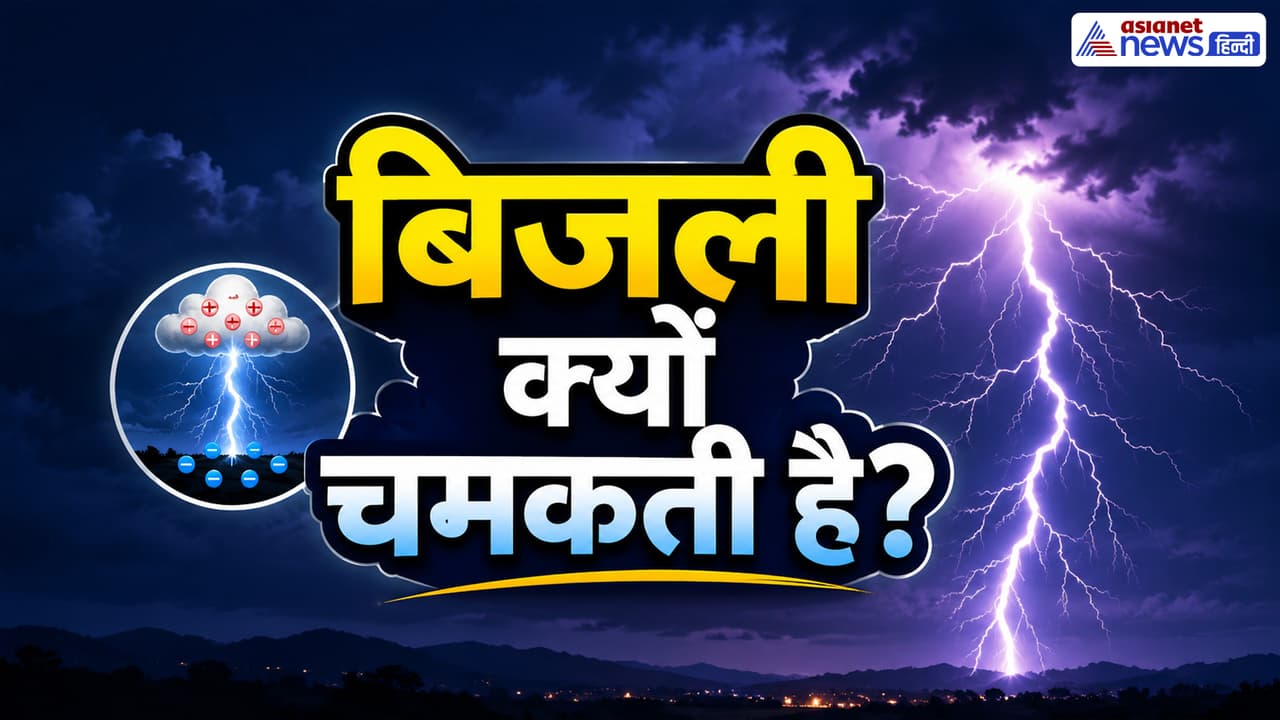
When large rain clouds form, water droplets, small particles of ice and hail keep moving up and down inside them. During this, these particles collide with each other. Due to these collisions, electric charge starts building up inside the clouds. Usually the upper part of the cloud becomes positively charged and the lower part becomes negatively charged. When the difference between these two increases too much, it suddenly comes out in the form of a strong electric current. We see this brightness in the form of lightning in the sky.

25

Image Credit : ChatGPT
Why is thunder heard?
When lightning strikes, the air around it heats up to about 30,000 degrees Celsius in a matter of seconds. This temperature is higher than the surface of the Sun. Such intense heat causes the air to expand rapidly and then immediately subside. This process produces a loud sound, which is called thunder.
35
Image Credit : ChatGPT
Why is lightning visible first and sound comes later?
This question is also often asked. The reason for this is simple. The speed of light is approximately 3 lakh kilometers per second.
Whereas the speed of sound under normal circumstances is about 343 meters per second. That is, the flash of lightning reaches our eyes almost immediately, but its sound is heard later. Understand it this way: Suppose lightning strikes 2 km away from your house. You will see the flash immediately, but the sound of thunder may be heard after about 5–6 seconds. This is why we first hear lightning and then thunder.
45
Image Credit : ChatGPT
Does lightning always strike the ground?
No. Not every lightning strikes the ground. Many times lightning flashes from one cloud to another. In some cases it reaches the ground from the cloud. This situation is considered the most dangerous.
55
Image Credit : ChatGPT
What to do during lightning?
Lightning is a common natural phenomenon, but being struck by lightning can be deadly. If there is lightning during a storm, always follow the warnings of the Meteorological Department. India Meteorological Department and meteorologists say…
- Do not stand in the open field.
- Do not stand under a big tree.
- Keep distance from metal objects.
- Do not stand in water.
- Stay inside your house or car during lightning.
Content Source: India Meteorological Department, National Aeronautics and Space Administration, National Weather Service
Welcome to the Asianet News Hindi General Knowledge (GK) Hub, your go-to destination for amazing facts, interesting information, everyday science explainers, “Did You Know?” stories, curiosity-driven content, and answers to intriguing “Aisa Kyu?” questions. Explore fascinating insights about science, nature, history, technology, space, health, and the world around you—all explained in a simple and engaging way.