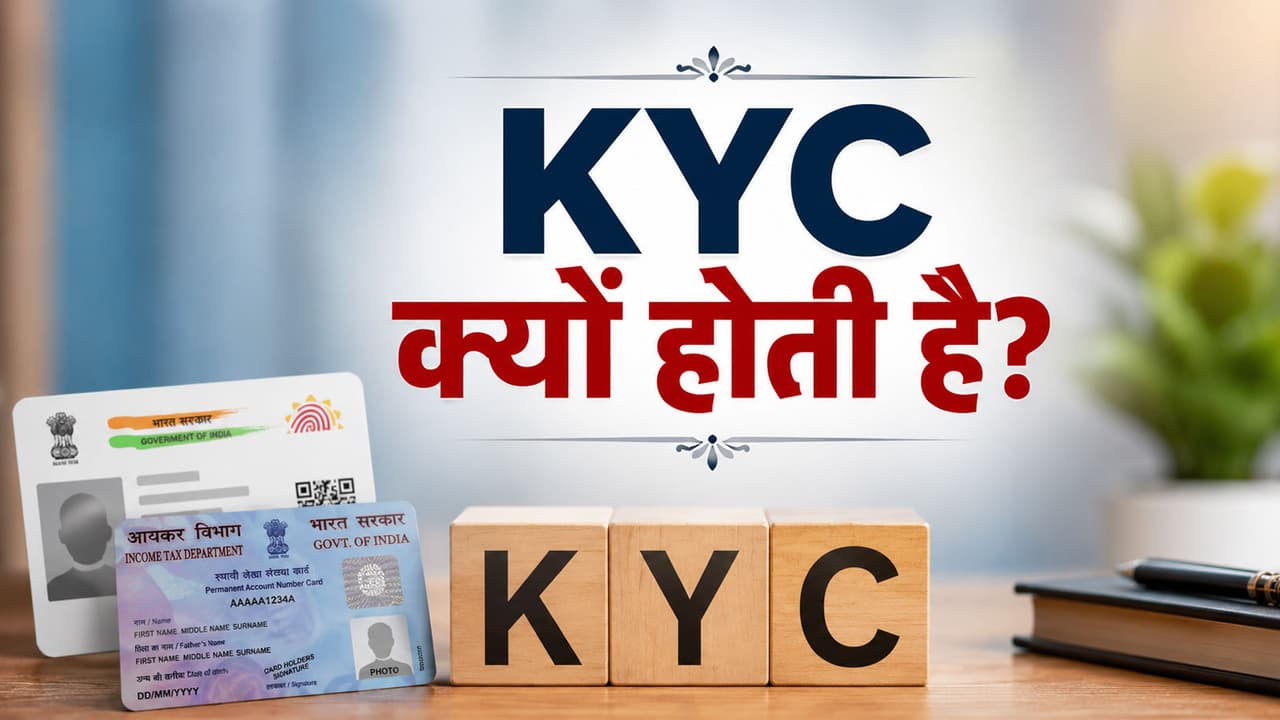
Why KYC is Required: What is KYC and why is it necessary? Know the meaning of KYC, where it is required, which documents are required and easy ways to avoid fraud.
KYC Meaning: At present, whether it is opening a bank account, investing in mutual funds, getting a new SIM card or using any other financial app, KYC has to be done everywhere. Now the question arises in the mind, why is KYC necessary? The full name of KYC is ‘Know Your Customer’. It is a process through which banks, financial institutions and some other companies verify the identity and address of their customers. Its purpose is to check whether the right person is using the service or not.
Why is KYC necessary?
The biggest objective of KYC is to put a stop to fraud, fake accounts and financial crimes. If a person opens a bank account by giving a fake document, it can be used for fraud, money laundering or other illegal activities. KYC helps in preventing such activities. For example, suppose a fraudster wants to open a bank account in the name of another person. If the bank checks Aadhaar, PAN and identity during KYC, then the chances of opening such fake accounts are significantly reduced.
Where is KYC necessary?
- In opening an account in the bank
- Fixed Deposit (FD)
- Invest in mutual funds
- Demat and trading account
- Insurance
- At the time of getting the SIM card
- Some digital wallet and financial apps
Which documents are required for KYC?
- Aadhar card
- PAN card
- Passport
- Voter ID
- driving license
- Recent photo in some cases
What is e-KYC?
Earlier for KYC one had to go to the bank or branch and submit the documents. Now many institutions provide the service of e-KYC (Electronic KYC). In this, online identity verification is done. In many cases, video KYC or OTP based verification service is also available. For example, if you open a mutual fund account online, many platforms can verify your identity through video KYC. Due to this there is no need to go to the branch.
What can happen if KYC is not done?
- Transactions from the bank account may be banned.
- Investment related services may be banned.
- Use of financial services may reduce.
Is KYC done only once?
This is not so in every case. Many times banks or financial institutions also conduct Re-KYC from time to time. Its purpose is to keep customer information updated. If your address, mobile number or identification information changes, the organization asks you to update the records.
What things should be kept in mind while doing KYC?
- Do KYC only on private sector banks, institutions or their official app/website.
- Do not share Aadhaar, PAN or OTP with an unknown person.
- Beware of fake calls, links or messages coming in the name of KYC.
- Get information from the official website or branch of the institution.
Note: If someone calls and says – KYC has not been updated yet, then your account will be closed. If you ask for OTP, be alert that it could be cyber fraud. Banks or authorized institutions never ask for OTP or UPI PIN over the phone.
Does KYC keep your information safe?
The information given during KYC is used for identity verification. Banks and institutions have to follow RBI rules to maintain the security and confidentiality of customer information.
Content Sources: Reserve Bank of India, Securities and Exchange Board of India (SEBI), Financial Action Task Force, National Payments Corporation of India (NPCI), State Bank of India.