There was a big fall in banking shares on Monday.
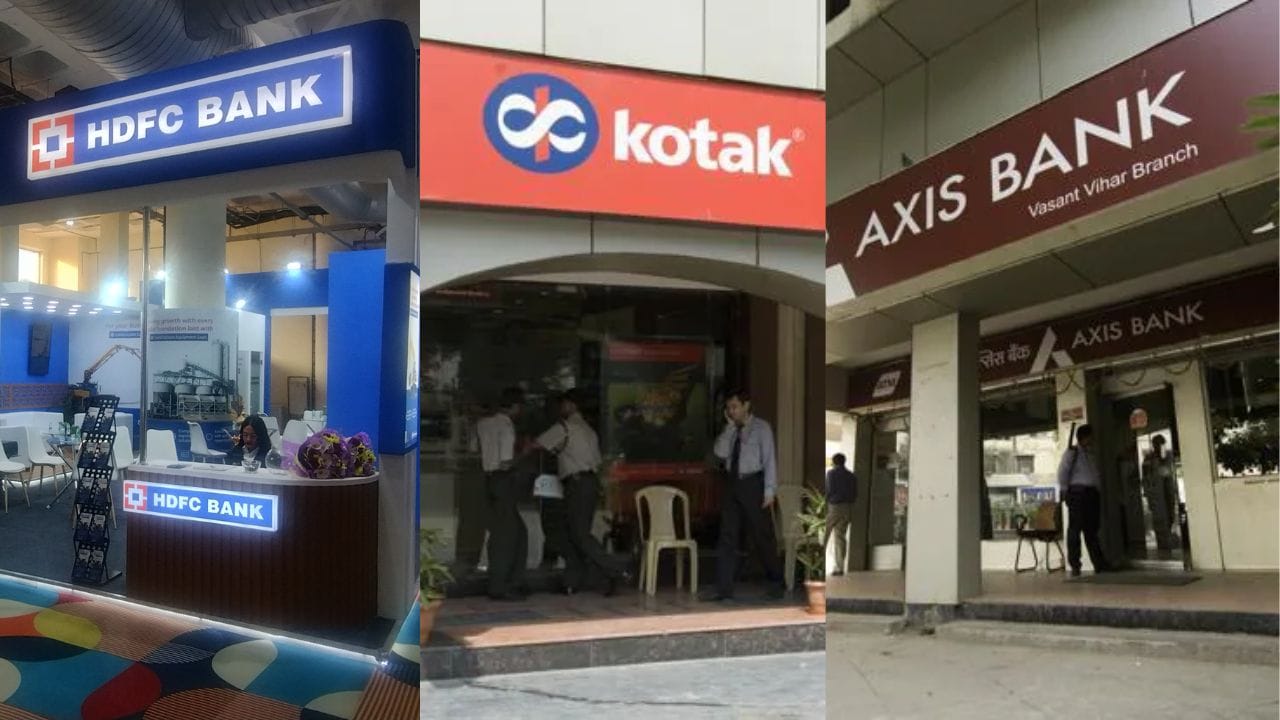
The credit growth that investors were expecting was visible, but it did not increase profits. Due to which a mountain of selling broke out on the country’s leading private banks on Monday. Shares of HDFC Bank, Axis Bank and Kotak Mahindra Bank saw a decline ranging from 3.50 per cent to more than 6 per cent. Due to which more than Rs 1 lakh crore disappeared from the total market of the three banks. This happened because along with rapidly increasing loan growth, challenges like declining margins, weakening of low-cost deposit franchises and uncertainty regarding leadership emerged.
Fall in shares of big banks
On Monday, Axis Bank shares fell by 6 per cent, resulting in a decline of about Rs 25,000 crore in market capitalisation. HDFC Bank shares fell by 5.56%, causing a loss of about Rs 65 thousand crores, while Kotak Mahindra Bank shares fell by 3.51%, causing a loss of about Rs 14 thousand crores. There was a decline of more than Rs 1 lakh crore in the total market value of these three banks. At the same time, shares of ICICI Bank rose by about 1%, which shows that investors were not selling banking shares without thinking. It seems that their decision depends not just on credit expansion but on the quality of growth and profitability.
Why did the decline occur?
- Experts say that corporate lending is increasing rapidly, but retail credit is still not growing that fast. Corporate loans generally provide low returns, while the decline in current and savings account deposits is forcing banks to rely more on high-cost term deposits and borrowings.
- This has resulted in pressure on the net interest margin (NIM) – the difference between banks’ loan earnings and the costs they pay to fund them – which has impacted key loan growth figures.
- A review by Equirus Securities found that large private banks, except ICICI Bank, witnessed a sequential decline of ‘mid-teen’ basis-points in margins. The main reason for this was the rapid increase in corporate loans and reduction in spreads (difference in interest rates).
- According to brokerage firms, corporate credit was supported by higher demand for working capital, a shift from bond market funding to bank borrowings and a modest increase in business-related capital expenditure. But how long will retail growth continue and when will margins improve remain the main points of interest for bank investors.