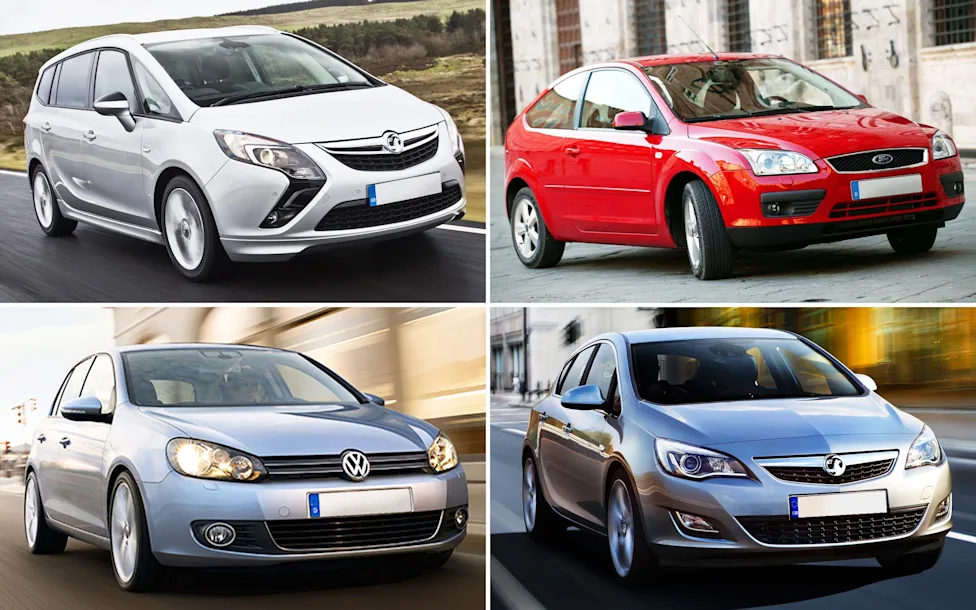
A car with 100,000 miles on the clock has traditionally been something a savvy motorist wouldn’t touch with a barge pole.
But an increasing number of drivers are beginning to appreciate vehicles with six-figure odometer readings.
Prices of secondhand cars aged between 10 and 15 years have risen by 8pc in the past year to £7,238, while cars aged over 15 years have jumped by 5pc, according to Autotrader.
Research by Startline Motor Finance also found that more than 33pc of car dealers reported an increase in demand for cars with excessive mileage. A quarter of vehicles that are more than 10 years old have travelled the equivalent of four times around the world.
“Crossing the 100,000-mile threshold isn’t a goal that buyers actively seek out, it’s just no longer the deal-breaker it once was,” Marc Palmer, the head of strategy at Autotrader, said.
“Instead of viewing high mileage as a red flag, consumers see it as a pragmatic trade-off to keep purchase costs down.”
by a sizeable chunk in the past 12 months, prices of younger secondhand motors have plateaued. The average price for cars between five and 10 years old is £14,314 – a rise of just 1.6pc from last year.
The growing realisation that a well-maintained car can remain useful long beyond 100,000 miles comes as family budgets continue to be squeezed by rising household bills. As a result, older cars are bucking the broader seasonal softening seen across much of the secondhand market.
Palmer added: “Cost of living pressures such as energy, food and petrol take up a significantly larger slice of household budgets. Buyers simply have less disposable income left for a car purchase.
“Shoppers who would previously have bought a slightly newer vehicle are being crowded into the older bracket, creating strong, concentrated demand at the budget end of the market.”
Five years ago, an £8,000 budget would comfortably buy a car aged between five and 10 years old, according to Palmer. Today, that same £8,000 squeezes buyers squarely into the 10-plus age bracket.
Although it depends on the make of car, for many vehicles, mileage isn’t as important as service history. A car with only 40,000 miles could be in much worse condition than one with triple the mileage.
Lexus is the manufacturer renowned for producing high-end cars that continue to run like a Swiss watch.
There was a time when you wouldn’t have been surprised to find a car virtually unusable 10 years after it was made. But nowadays, well-made cars from the 2000s are lasting longer.
They remain mechanically and electronically simpler than newer models, and, in most cases, are relatively economical to keep on the road.
A further 1.2 million have covered between 150,000 and 199,000 miles, while 290,000 have huge totals of between 200,000 and 249,000 miles.
The data, obtained via a Freedom of Information request, suggest that around one in seven vehicles have notched up impressive six-figure mileage totals.
Steve Walker, of trade publication Auto Express, said: “There is an environmental argument for keeping cars on the road for longer.
“Extending the useful life of an existing vehicle can avoid some of the environmental cost associated with manufacturing a replacement, so the growing appeal of older cars isn’t necessarily a bad thing.”
Motorists’ desire to keep cars on the road longer means the average vehicle on UK roads is 9.7 years of age – a 40pc rise from 20 years ago.
Scepticism about modern technology
When the dreaded time to change car comes, buyers tend to prefer the simplicity and familiarity of petrol, diesel and conventional hybrid vehicles.
While appetite for EVs has grown, many buyers are wary of and remain nervous of the nation’s charging infrastructure and home-charging network.
It means the constant supply of three-year-old EVs entering the secondhand market does not match what used-car buyers want.
The transition to electric has introduced an element of uncertainty, with some buyers still hesitant about range, charging infrastructure and how quickly the technology is evolving, according to Walker.
“There’s also a growing sense that newer doesn’t necessarily mean better for every driver,” he added. “The sheer amount of technology in modern cars can be daunting, both because of how complex some systems are to use and the perception that there are simply more things that could go wrong.”
Some motorists would rather seek out a basic car from the 2000s which they understand, particularly when there are plenty of older models that remain perfectly reliable.
Newer cars are also becoming wider by 1cm every two years. The average vehicle is now more than 180cm wide compared with 170cm in 2001.
But bulkiness doesn’t appeal to everyone. The appetite for hatchbacks rather than SUVs is evident in the used car market, with the Ford Fiesta, Vauxhall Corsa and Volkswagen Golf being this year’s most bought used models.
Palmer, however, believes price is the overriding factor for the growing demand for older cars. “There is a theory that buyers are turning to older cars to escape digital touchscreens or oversized designs, but the reality is simpler: buyers at this price point are not governed by tech preferences, but budget.”