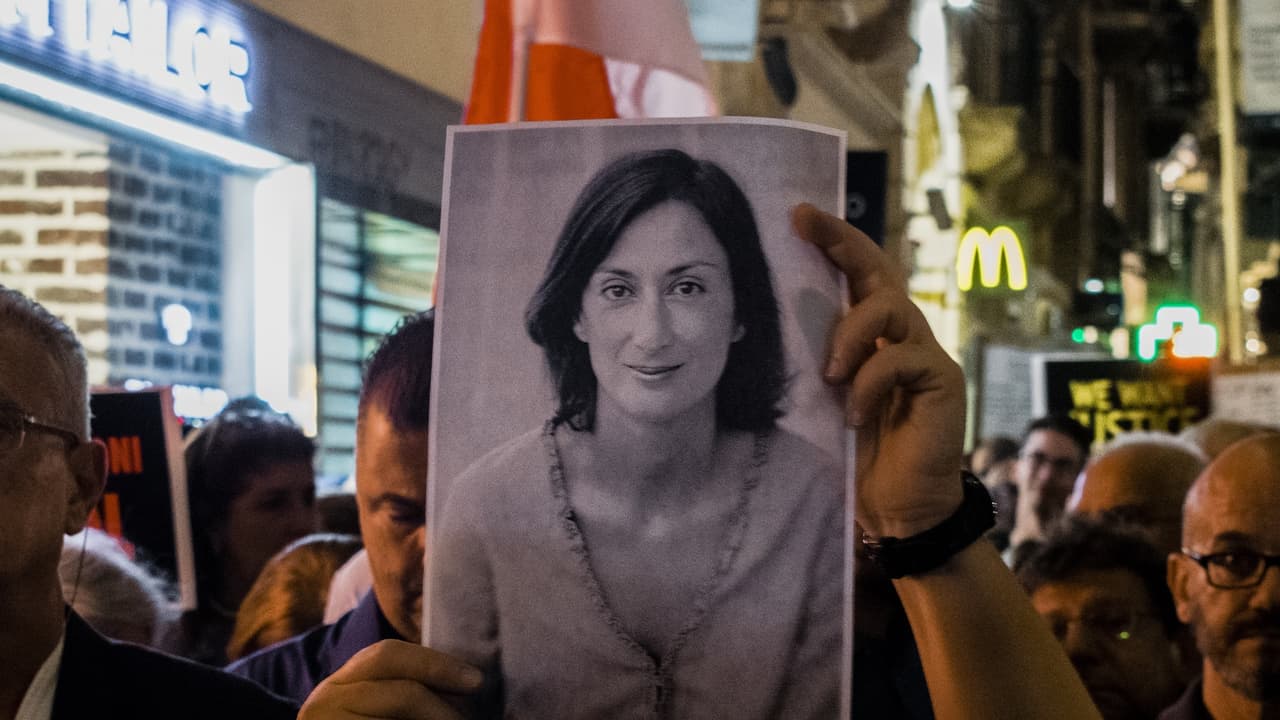
Malta is witnessing large-scale protests after the acquittal of businessman Yorgen Fenech in the murder of investigative journalist Daphne Caruana Galizia. Citizens demand justice, stronger institutions, and protections for press freedom.
Daphne Caruana Galizia was Malta’s most prominent investigative journalist, known for her fearless reporting on corruption, organized crime, and political scandals. Born in 1964, she began her career in the 1980s and became widely recognized for her independent blog, Running Commentary.
Her reporting exposed links between Maltese politicians, business elites, and offshore financial networks. She was among the journalists who investigated the Panama Papers, revealing offshore holdings of Maltese officials. Caruana Galizia’s work often drew threats and lawsuits, but she remained committed to exposing wrongdoing.
On October 16, 2017, she was killed by a car bomb near her home in Bidnija. The assassination shocked Malta and the wider European Union, raising questions about the safety of journalists and the strength of democratic institutions in the bloc’s smallest member state.
Three men who planted the bomb and two who produced it have been convicted and sentenced. However, the alleged mastermind, businessman Yorgen Fenech, was acquitted in September 2026 after a two-month trial, reigniting public anger.
Why Malta Is Protesting In Big Numbers
The acquittal of Fenech has triggered widespread outrage. Civil society groups, including Repubblika, organized mass demonstrations in Valletta, drawing thousands of citizens. Protesters carried placards reading “Justice Denied,” “End Impunity,” and “We Will Not Look the Other Way.”
The protests mark 107 months since Caruana Galizia’s assassination. Demonstrators accuse Malta’s institutions of failing to deliver justice and demand reforms to strengthen the rule of law. Many shouted “mafia” during marches, reflecting perceptions that organized crime and corruption have infiltrated politics and business.
Scroll to load tweet…
Family members of Caruana Galizia addressed the crowds, emphasizing that the struggle is not only about justice for Daphne but also about ensuring Malta is governed by sound institutions rather than corruption and fear. Her nieces spoke of renewed grief and anger following the acquittal, while activists called for anti-mafia legislation and stronger protections for journalists.
Broader European Solidarity
Protests have not been limited to Malta. Demonstrations have taken place across Europe, including in London, Berlin, Paris, and The Hague, organized by Maltese communities and press freedom advocates. These solidarity actions highlight the international significance of Caruana Galizia’s case and the broader concerns about press freedom and accountability in Europe.
Organizers abroad have stressed that “Daphne’s fight is our fight,” urging institutions to serve the people rather than powerful interests. The protests have also focused on implementing recommendations from Malta’s public inquiry into the murder, which called for stronger protections for journalists and whistleblowers.
Malta’s attorney general is expected to appeal Fenech’s acquittal, though legal options are limited. Appeals can only be made on points of law, raising uncertainty about whether a retrial will occur.
Civil society leaders argue that beyond the legal process, Malta must adopt systemic reforms. These include anti-mafia laws, independent institutions free from political and business pressure, and stronger safeguards for journalists.