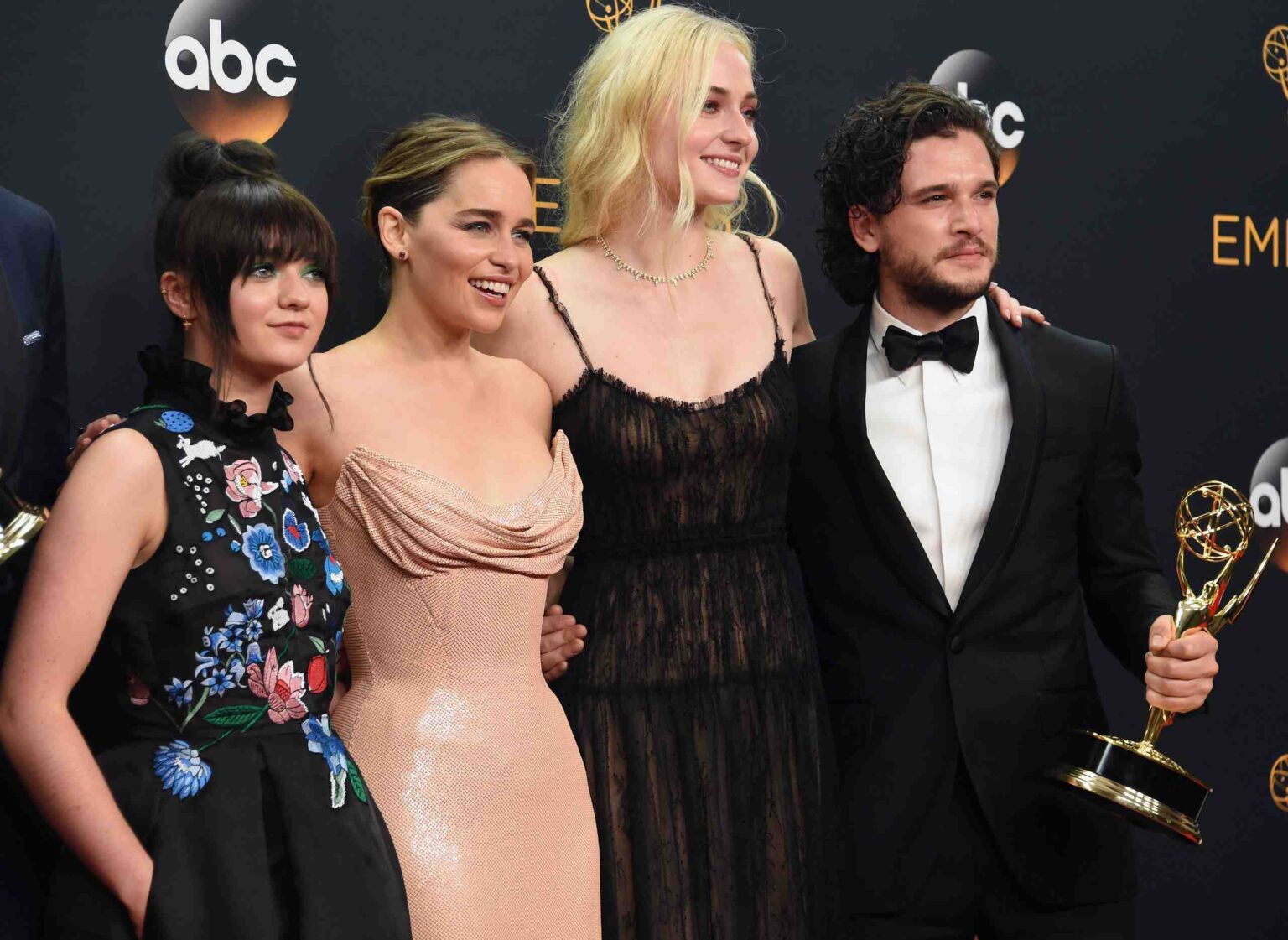
Game of Thrones’ cast members have spent the last seven years proving that a single prestige series can launch careers in wildly different directions. Some traded dragons for awards circuits, while others chased tentpole franchises or quietly rebuilt in prestige cable. The results show clear winners in earnings, cultural staying power, and 2025-2026 momentum.
the clearest case of sustained A-list status. Four Emmys and steady studio offers have kept him in high-profile projects without obvious typecasting. His $25 million net worth tops the original ensemble.
Recent credits include the 2023 Hunger Games prequel and a voice role in Wicked. The 2024 Netflix comedy Unfrosted added another mainstream notch. Dinklage has said he stands by the original finale despite the online backlash.
Critics note that Dinklage avoided the fantasy lane entirely after wrapping. That choice has kept him in awards contention and studio casting lists when peers struggled to shake their Thrones image.
Emilia Clarke’s franchise balance
Clarke landed major studio roles after yet her box-office results have been uneven. Terminator Genisys and Solo brought visibility without long-term franchise ownership. She has since pivoted toward prestige streaming.
Her upcoming Peacock series Ponies, slated for 2026, gives her lead billing and executive-producer credit. Clarke has stated she is finished with fantasy for now, seeking roles that distance her from dragons.
Her $20 million net worth and continued red-carpet presence keep her in the conversation, even if the commercial peaks have not matched the show’s original scale.
Sophie Turner’s 2026 slate
Turner has leaned into thriller and action material. The Prime Video film Steal, due in 2026, places her at the center of a high-stakes heist story. She also headlines the live-action Tomb Raider series filming this year.
Earlier credits such as The Staircase and the 2024 miniseries Joan established her range beyond Sansa. She has avoided watching new Game of Thrones spin-offs, citing anxiety tied to the original theme music.
The Tomb Raider casting has renewed fan interest and placed Turner in franchise conversations that few other cast members currently occupy.
Kit Harington’s prestige pivot
Harington has focused on limited series and behind-the-camera work. His recurring role in Industry earned praise as a career highlight. The BBC adaptation of A Tale of Two Cities adds another period prestige credit.
His directorial debut Psychopomp premiered in 2026, signaling an expansion beyond acting. Estimated earnings sit around $14 million, lower than Dinklage or Clarke but supported by consistent HBO and BBC bookings.
Harington has said the core cast largely drifted apart after production ended, a candid note that contrasts with the tight-knit image the show once projected.
Jason Momoa and Pedro Pascal
Momoa and Pascal logged limited screen time yet achieved the broadest commercial reach. Aquaman, The Mandalorian, The Last of Us, and Gladiator II turned brief Thrones arcs into global stardom. Their trajectories show that short exposure can still yield outsized results when paired with the right franchise.
Neither actor has returned to the Game of Thrones universe in any capacity. Their success rests on new IP rather than legacy roles.
Industry observers often cite these two when debating whether screen time or casting luck matters more for post-show longevity.
Lena Headey and Nikolaj Coster-Waldau
Headey and Coster-Waldau have maintained steady employment without major franchise breakthroughs. Headey appears in the second season of The Last Thing He Told Me. Coster-Waldau leads the upcoming historical series King & Conqueror.
Both actors have spoken about the challenge of moving past their Lannister characters. Their output remains respectable, yet it lacks the awards heat or box-office spikes seen elsewhere in the cast.
Recent interviews suggest they accept the slower pace and focus on selective European and streaming projects rather than chasing tentpoles.
Maisie Williams and spin-off chatter
Williams continues to field questions about a possible Arya-centric series. She has not confirmed interest, but social-media speculation persists whenever new Thrones-adjacent projects surface.
Her recent credits include The New Look and smaller genre films. These roles keep her visible without tying her exclusively to the original character.
Industry chatter suggests any Arya spin-off would need her involvement to succeed, giving Williams leverage if negotiations ever move forward.
Net-worth and market signals
Public estimates place Dinklage at the top, followed by Clarke and then Harington. These figures reflect both salary history and post-show endorsement deals. Streaming residuals continue to factor into newer calculations.
Agencies now track which cast members can open international markets. Momoa and Pascal lead those lists, while Turner’s Tomb Raider news has improved her foreign-value rating.
Producers note that the original ensemble still carries name recognition seven years later, an advantage newer prestige casts rarely match.
Upcoming visibility windows
Clarke’s Ponies and Turner’s Tomb Raider series will dominate 2026 coverage. Harington’s directing follow-up and Industry return add smaller but consistent headlines. Dinklage’s next awards push remains the safest bet for red-carpet presence.
These staggered release dates ensure that Game of Thrones’ cast stays in trade coverage through the next two cycles. No single actor dominates every lane, yet each maintains a distinct lane of their own.
Forward trajectory
The pattern is clear: franchise access and selective genre shifts produced the largest gains, while steady prestige work preserved relevance without matching the same scale. Game of Thrones’ cast members who diversified earliest now control the widest set of options heading into 2027.