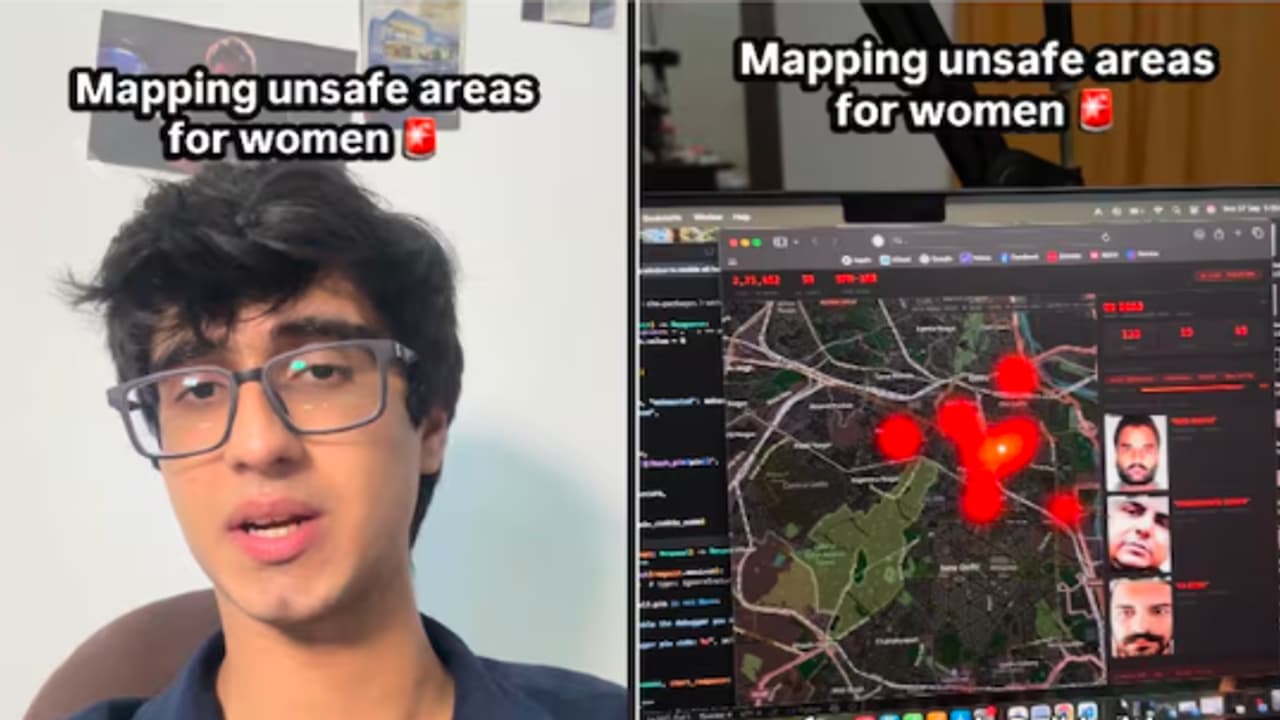
Raj Gomani, a Delhi local, utilized AI and NCRB data to create a visual map highlighting unsafe areas for women in the city. The viral project aims to make complex crime data accessible, sparking online discussions about women’s safety and resource allocation.
What if a picture could show you which parts of Delhi might be less safe for women at night? Raj Gomani, a local, has used AI and openly available crime data to make just that. He has turned official records into a visual map that shows where extra care may be needed. Raj made the map with help from Claude, Anthropic’s AI helper, and crime data from the National Crime Records Bureau (NCRB). The goal was to make complicated crime data much easier to understand so that people could see where crimes involving women have been reported and figure out where they might need to be more careful.
He shared a video explaining the project, along with a look at the map he created. “I mapped unsafe areas for women in Delhi with the profiles of the criminals in that area. I am disgusted that I even have to point out unsafe areas in our national capital,” Raj explained in the video.
People on the Internet quickly became interested in the map and said that the project could be made bigger or even open source. Some people liked that you tried to make crime data that was available to the public easier to find instead of hiding it in big datasets.
But Raj’s message was more than just saying that some parts of Delhi were unsafe. He said that figuring out where the problems are is only the beginning and that blaming governments or men would not solve the bigger problem.
He said that making things safer needs everyone to work together and better distribution of resources to places where people may be most at risk.
Watch Viral Video
The project also brings up an interesting question about how AI can help make public information better. Raj Gomani used Claude to help turn crime data into a visual tool that people can quickly use. Before, this data was only used in spreadsheets and official reports.
Both sides of the idea were shown in the online responses. Some people liked the map because it helped them understand how crime happens, but others thought it was a sad reminder of the safety problems women still face in cities.