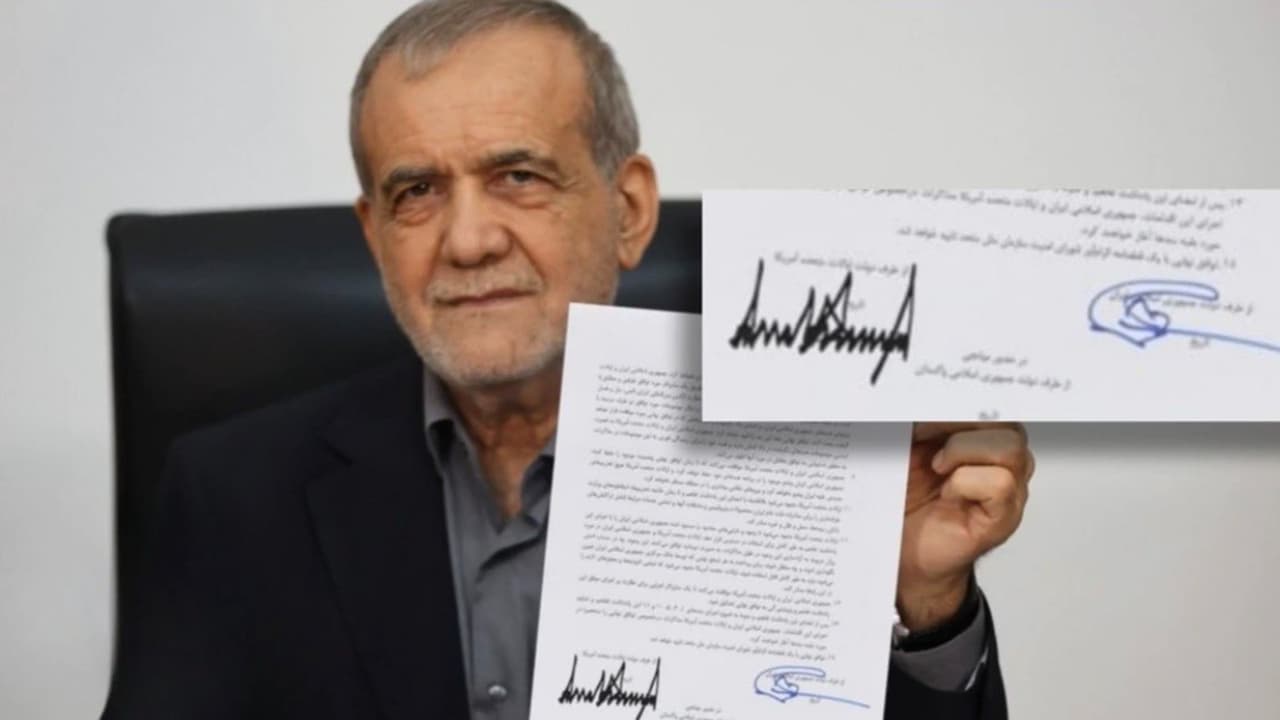
Will Iran’s uranium reserves weaken or will the nuclear threat return? Will the US-Iran deal end the war or start a conflict on new terms? Will more than 440 kg of enriched uranium be destroyed or sent somewhere? From Hormuz to Uranium, 5 big secrets hidden in US-Iran agreement exposed?
Washington/Tehran: The layers of the historic ‘Islamabad Agreement (MoU)’ signed to end the devastating 108-day war between America and Iran are now slowly beginning to unravel. Although the eyes of the whole world are on the reopening of the Strait of Hormuz and the relaxation of sanctions, behind the scenes of this mega-deal there is a secret and most sensitive military provision hidden, which is going to directly affect the backbone of Iran’s nuclear program. The issue is the future of Iran’s vast reserves of highly enriched uranium.
The threat had reached close to 90%: That IAEA report had blown the senses away.
In the nuclear weapons world, uranium enriched to 90 percent or more is considered ‘weapons-grade’. Just before the US and Israeli air strikes on Iranian nuclear sites in June 2025, the International Atomic Energy Agency (IAEA) released a very shocking estimate. According to the report, Iran had huge reserves of about 440.9 kg of uranium enriched up to 60 percent. This level was too high for civilian use and very close to the threshold for making a nuclear bomb. This was the reason why America wanted to completely deactivate or eliminate this stockpile at any cost.
Scroll to load tweet…
‘Downblend’ or transfer to a third country? That secret plan to weaken uranium
According to the draft shared by US officials, under this interim agreement, Iran has finally fully agreed to “dilute” its dangerous uranium stockpile. In diplomatic language, this is called ‘downblending’, that is, reducing the level of enrichment of uranium so much that it can never be used in making weapons. However, the suspense as to how this operation will be implemented still remains. Behind the scenes, intense negotiations are taking place on two options—either downgrading Iran’s nuclear arsenal by blending on site under international supervision, or transferring the entire stockpile to a safe third country.
Bigger exemption than the 2015 nuclear deal: Is Iran going to get complete freedom from sanctions?
Experts believe that this interim agreement is more comprehensive and beneficial for Iran than the historic nuclear agreement of 2015 (JCPOA). In 2015, Iran received relief from only some economic sanctions in exchange for reducing uranium. But this time, the deal opens the way for the complete lifting of ‘all’ sanctions imposed on Iran by the US and the United Nations (UN). This not only includes the ban on Tehran’s weapons programs, but a schedule is also being prepared to remove restrictions related to human rights violations. In return, Iran has promised that it will never buy or manufacture nuclear weapons in the future.
New complication between $300 billion mega-package and Israeli attacks on Lebanon
After the successful mediation of Pakistani Prime Minister Shehbaz Sharif, this deal has come into effect with immediate effect, but its economic and regional provisions have created new suspense. Under the deal, Iran is expected to get a huge financial package of at least US$300 billion ($300 billion) to rebuild the country, depending on the progress of further talks. Additionally, the deal pledges to preserve Lebanon’s territorial integrity and sovereignty, despite Israel’s fierce attacks against the Hezbollah militant group.
Dangerous timer of 60 days: Will tax war break out again in Hormuz after two months?
The most delicate part of this agreement is its time limit. This agreement guarantees toll-free and unrestricted movement of ships through the Strait of Hormuz for only 60 days. The biggest suspense is that this draft has not completely ruled out the possibility of Iran imposing transit fees or taxes on this strategic waterway in the future. That is, if a final agreement is not reached between the two countries on the timetable for weakening uranium and complete removal of sanctions within the next 60 days, then this world’s most important oil supply line may be closed once again and the Middle East may again be engulfed in the fire of war.