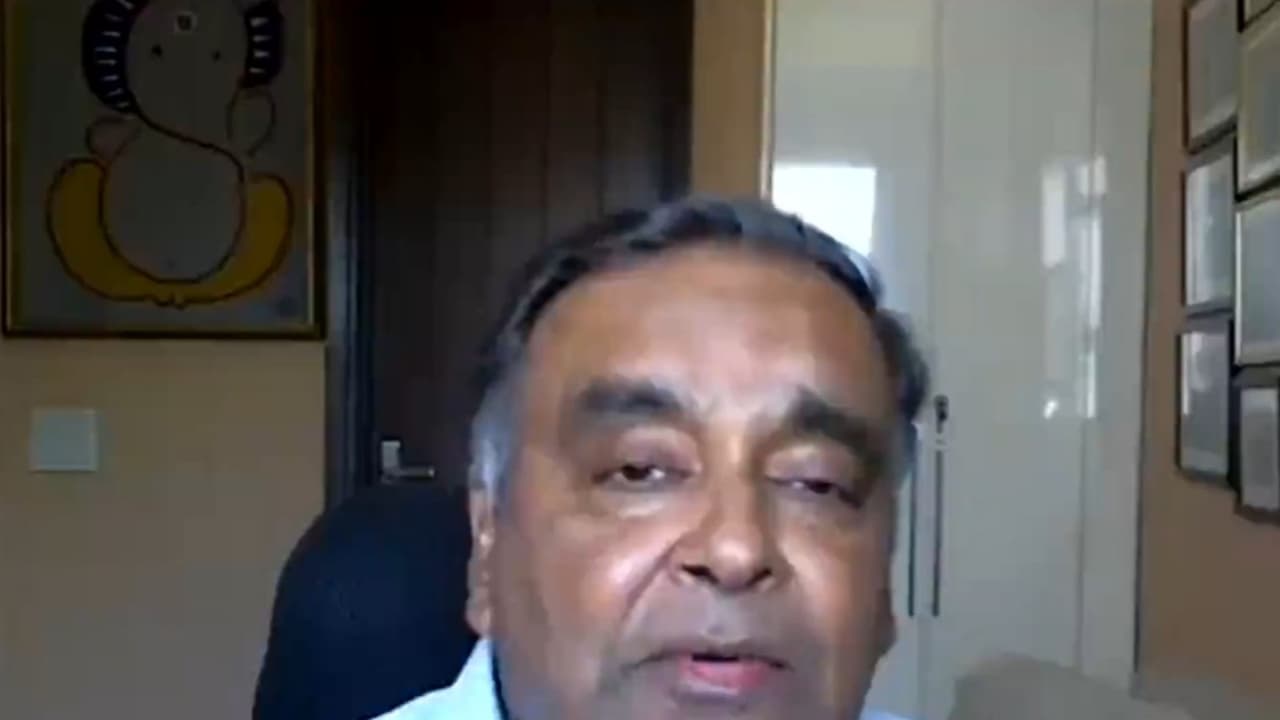
Ex-diplomat YK Sinha doubts the durability of the West Asia peace MoU, citing the absence of key players like Israel and Hezbollah. He warns that Israel’s refusal to vacate southern Lebanon could be a “deal breaker” for the agreement.
Former diplomat Yashvardhan Kumar Sinha has expressed scepticism about the durability of the recently signed 14-point Memorandum of Understanding (MoU) aimed at ending the conflict in West Asia, arguing that key stakeholders remain absent from the negotiating table and that the agreement faces significant challenges.
Scepticism over MoU’s Durability
On the ongoing efforts to end the conflict, Sinha said that the negotiations had been unusually prolonged, noting that “throughout the 100-odd days the war was carried on, around 60 ceasefires have been announced and about 39 times President Trump announced that there was a deal in the offing.” Referring to the signing of the agreement, the retired IFS offical said that “finally, now, an MoU was ironically digitally signed at Versailles of all the places. which doesn’t have the best connotation if you recall, after World War I, the losers signed the surrender basically.”
Sinha said mediation in such conflicts requires substantial influence and leverage. “Mediation is a very tricky business. Unless you have the stature or the clout or the cards up your sleeve, you realise that it’s a very slippery slope,” he said. He added that credit should be given to Pakistan’s leadership if the peace initiative succeeds, but also added that their presence “is more at the mercy of the White House rather than any special qualities that they have. “
According to Sinha, Iran appears to have emerged with certain advantages from the agreement, but the MoU itself carried its own “doubts”. He said, “Iran has actually gained from this MoU. But then again, the MoU itself is in doubt because of Israel and Hezbollah.”
Key Stakeholders Absent, Security Concerns Remain
Questioning the completeness of the peace process, Sinha noted that major parties to the conflict were not directly involved in negotiations. “When you have combatants beating to conclude a peace deal, you expect all the principal players to be present. But Israel is not on the table, nor is Hezbollah,” he said.
He further pointed to unresolved security concerns, saying, “Israel is very clear that as long as it sees a threat from Hezbollah, it is going to react. Moreover, they’ve also stated that they will not vacate southern Lebanon.” Warning that these issues could derail the agreement, Sinha said, “So is that a deal breaker? We will have to find out because one thing is clear that if the Strait of Hormuz is closed, then we go back to the situation that existed before this MoU was announced.”
Trump Vows to ‘Solve Problems’ with Netanyahu
On Monday, US President Donald Trump said that he will get “problems solved real fast” with Israeli Prime Minister Benjamin Netanyahu after the latter refused to remove the forces from southern Lebanon, despite the ongoing US-Iran peace talks.
When asked how he would ensure that the Israeli PM doesn’t sabotage the negotiations regarding the 14-point MoU, Trump refused to inform his plan but recognised himself as a “problem solver.” “I’m not going to tell you what I’m going to do, but it gets solved. I’m a problem solver. I get problems solved real fast, including with Bibi,” Trump told reporters.
President Trump’s statement came in light of Benjamin Netanyahu’s statement yesterday that Israeli forces will continue to remain in Lebanon. Addressing the Jerusalem News Syndicate’s International Policy Summit 2026, Netanyahu disregarded the US-Iran MoU and reaffirmed his resolve to protect his nation and citizens, asserting that the Israeli Defence Forces (IDF) will remain in the security zone in southern Lebanon, even as the quadilateral meeting in Switzerland agreed to form a “de-confliction zone” to cease the hostilities in Lebanon.
“No matter what happens in the talks, with an agreement, without an agreement, I pledge to you that Iran, as long as I’m Prime Minister, will never have a nuclear weapon. Never. As long as I am the Prime Minister of Israel, I will not let that happen. As long as we need to protect our people, we will remain in the security zone in South Lebanon. No country would be asked to do otherwise,” he said. (ANI)
(Except for the headline, this story has not been edited by Asianet Newsable English staff and is published from a syndicated feed.)