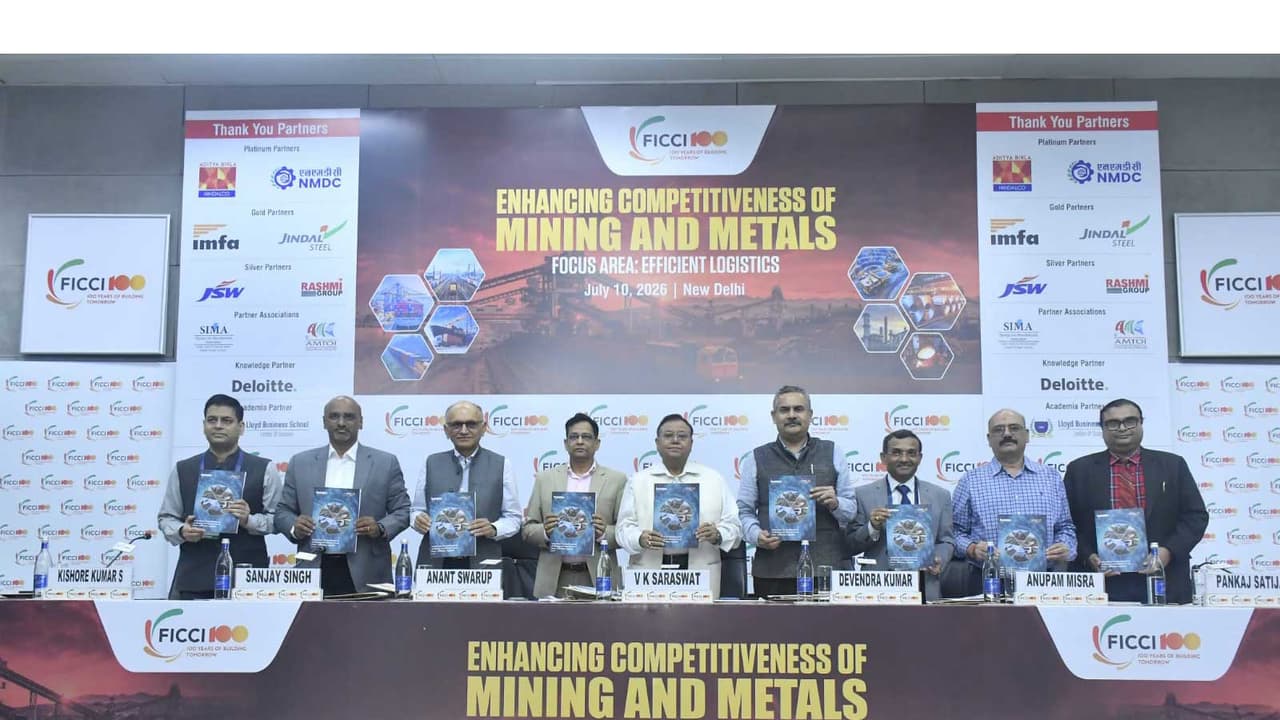
Logistics costs for India’s mining sector may be 8% of GDP, lower than cited, but weak first/last-mile connectivity and over-reliance on road transport hurt competitiveness, said former NITI Aayog member V K Saraswat at a FICCI conference.
India’s logistics costs for the mining and metals sector may be much lower than the widely cited estimates, but weak first-and last-mile connectivity and heavy dependence on road transport continue to hurt the sector’s competitiveness, former NITI Aayog member V K Saraswat said on Friday.
Speaking at the FICCI conference on “Enhancing Competitiveness of Mining and Metals”, Saraswat said logistics costs for the sector “may be far closer to 8 per cent of GDP than the widely cited 14 per cent figure,” even though key structural bottlenecks remain unresolved.
Key Bottlenecks Identified
“Bulk freight bottlenecks and mining-specific evacuation gaps are still real and costly,” he said, identifying inadequate first-and last-mile connectivity from mines and over-reliance on road transport as the two biggest challenges facing the sector.
According to a FICCI press release, Saraswat said road haulage for bulk commodities could cost “two to three times more per tonne-kilometre than rail,” underscoring the need to shift more mineral freight to rail and other efficient transport modes.
Multi-pronged Strategy for Efficiency
He proposed a multi-pronged strategy to improve logistics efficiency, including dedicated mineral freight corridors, wider use of conveyor systems and slurry pipelines, faster port mechanisation, regional mineral logistics parks, expanded rail connectivity to mining clusters and greater digitalisation across the logistics value chain.
Leveraging Emerging Technologies
Saraswat also highlighted six emerging technologies that could improve mining logistics, including autonomous haul trucks, AI-based dispatch optimisation, drone-assisted surveying, robotics, digital twins and satellite fleet monitoring integrated with 5G connectivity.
“Logistics must be recognised as a strategic determinant for mining and metals competitiveness,” he said.
A joint FICCI-Deloitte study released at the conference found that while India’s freight tariffs are broadly competitive with global benchmarks, “fragmented logistics and heavy road reliance are eroding this advantage.”
Indian Railways’ Initiatives
Addressing the conference, Railway Board Additional Member (Traffic) Devendra Kumar said Indian Railways is expanding end-to-end logistics solutions and is also testing operational innovations to improve freight movement.
He said the railways have conducted trials of clubbing two or three freight trains together and added that “two-kilometre-long trains already run elsewhere could run in India.”
The conference brought together policymakers and industry leaders to discuss ways to improve freight efficiency, strengthen first- and last-mile connectivity, and enhance logistics infrastructure to support the long-term growth of India’s mining and metals sector. (ANI)
(Except for the headline, this story has not been edited by Asianetnews Editorial staff and is published from a syndicated feed.)