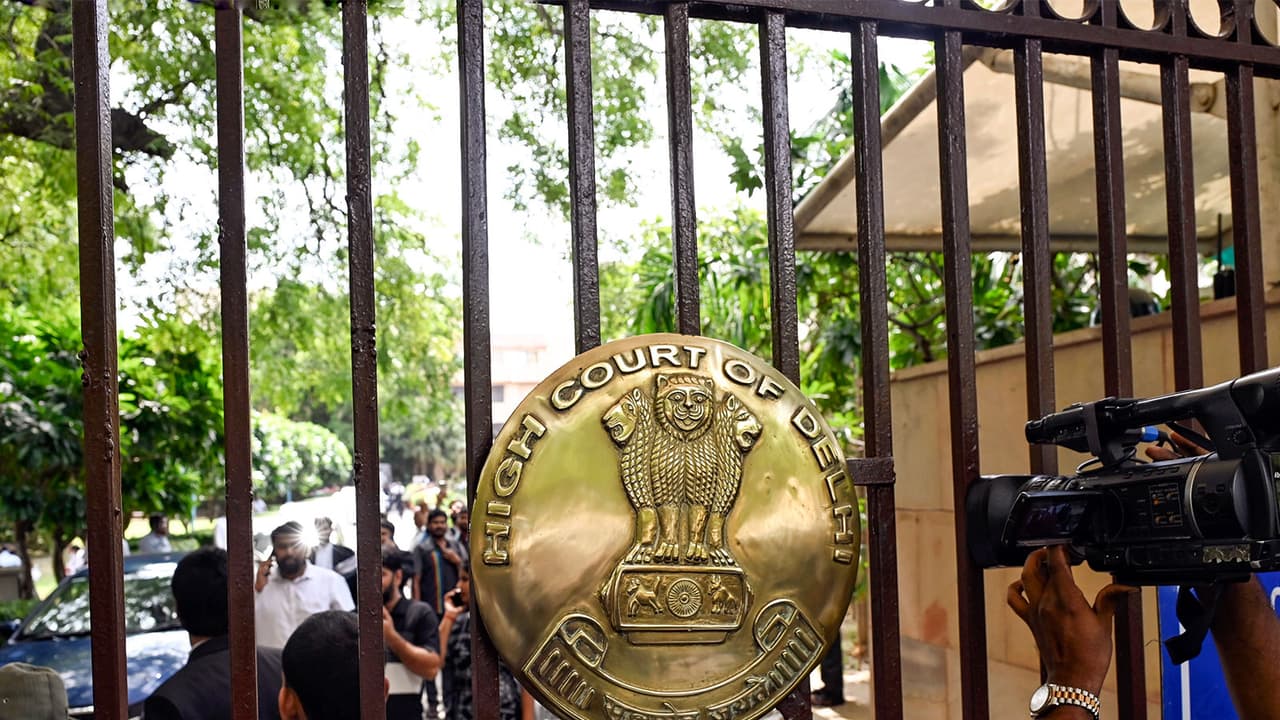
The Delhi High Court has stayed a trial court order allowing two Chinese nationals, accused in the Rs 20,000 crore Vivo money laundering case, to travel to China. The court cited high flight risk and no extradition treaty with China for its decision.
The Delhi High Court has stayed a trial court order that had permitted two Chinese nationals, accused in an alleged Rs 20,000 crore money laundering case linked with Vivo Mobile, to travel to China, noting the high flight risk involved and the absence of any extradition treaty or arrangement between India and China.
One of the Chinese nationals is Guangwen Kuang, alias Andrew, who had worked as an admin manager. He was arrested in October 2023 and was granted bail in November 2024. Another Chinese national is Weigang Wang. Both are charge sheeted by the ED in the alleged money laundering case.
The Enforcement Directorate (ED) challenged the June 17 order of the trial court permitting the two accused to travel to China and sought its quashing. The agency also sought an interim stay on the operation of the order pending adjudication of its petition before the High Court.
High Court Stays Travel Permission
Justice Tejas Karia, after hearing submissions made on behalf of the ED, stayed the operation of the June 17 order and issued notice to the respondents. The matter has been listed for further hearing on July 2.
In the order passed on June 19, Justice Karia observed, “Having considered the entirety of the facts and circumstances of the case, the operation and effect of the Order of 17.06.2026 passed by the learned Trial Court shall remain stayed until the next date of hearing.”
” Accordingly, the Petition merits consideration. In the event the operation of the Order is not stayed, the Respondent will travel to China, thereby rendering the present Petition infructuous,” the court further said.
Flight Risk and Lack of Extradition Treaty Cited
While granting interim relief to the ED, the High Court noted that the respondents are nationals of the People’s Republic of China and are facing allegations under the Indian Penal Code (IPC) and the Prevention of Money Laundering Act (PMLA).
“Having regard to the nature of the allegations, his foreign nationality, and the absence of an extradition treaty or arrangement between India and the People’s Republic of China, the apprehension that he may not return to India cannot be said to be unfounded,” Justice Karia observed while staying order Guangwen Kuang.
The High Court also noted that the trial court had earlier rejected Kuang’s application seeking permission to travel abroad on June 8. However, a subsequent application was allowed without any material change in circumstances warranting such a departure.
“This Court finds merit in the Petitioner ED’s submission that permitting the Respondent to leave India at this stage may frustrate the pending proceedings and investigation in relation to serious allegations of money laundering,” the court observed.
The court further pointed out that the medical documents relied upon by the respondent in support of his request had not yet been verified. It also observed that the ED had not been given sufficient opportunity to verify the medical condition of the respondent’s father before the impugned order was passed.
ED’s Allegations and Investigation Details
Appearing for the ED, Special Counsel Zoheb Hossain, along with advocate Pranjal Tripathi, submitted that Guangwen Kuang, alias Andrew, had knowingly assisted in activities connected with the proceeds of crime.
According to the agency, his role included concealment of beneficial ownership, incorporation and operation of entities allegedly used for acquisition and siphoning of proceeds of crime, and facilitation of the alleged money laundering scheme.
The investigation further revealed that Vivo Mobile India Private Limited and its State Distributor Companies had acquired proceeds of crime amounting to approximately Rs 2,02,41,17,72,292, the ED submitted.
Consequently, the agency filed a prosecution complaint dated December 6, 2023, before the trial court under Sections 3, 4 and 70 of the Prevention of Money Laundering Act, 2002. On December 20, 2023, the trial court took cognisance of the complaint and arraigned Kuang as an accused in the case.
During the hearing, the Look Out Circular (LOC) issued against Kuang had already been quashed by the trial court on April 29, 2026. The ED informed the High Court that the said order has also been challenged. The counsel for the accused contended that such a challenge was instituted only after the present petition was filed and, therefore, its pendency cannot constitute a ground to assail the travel permission order.
The High Court is scheduled to hear the matter further on July 2.
(Except for the headline, this story has not been edited by Asianet Newsable English staff and is published from a syndicated feed.)