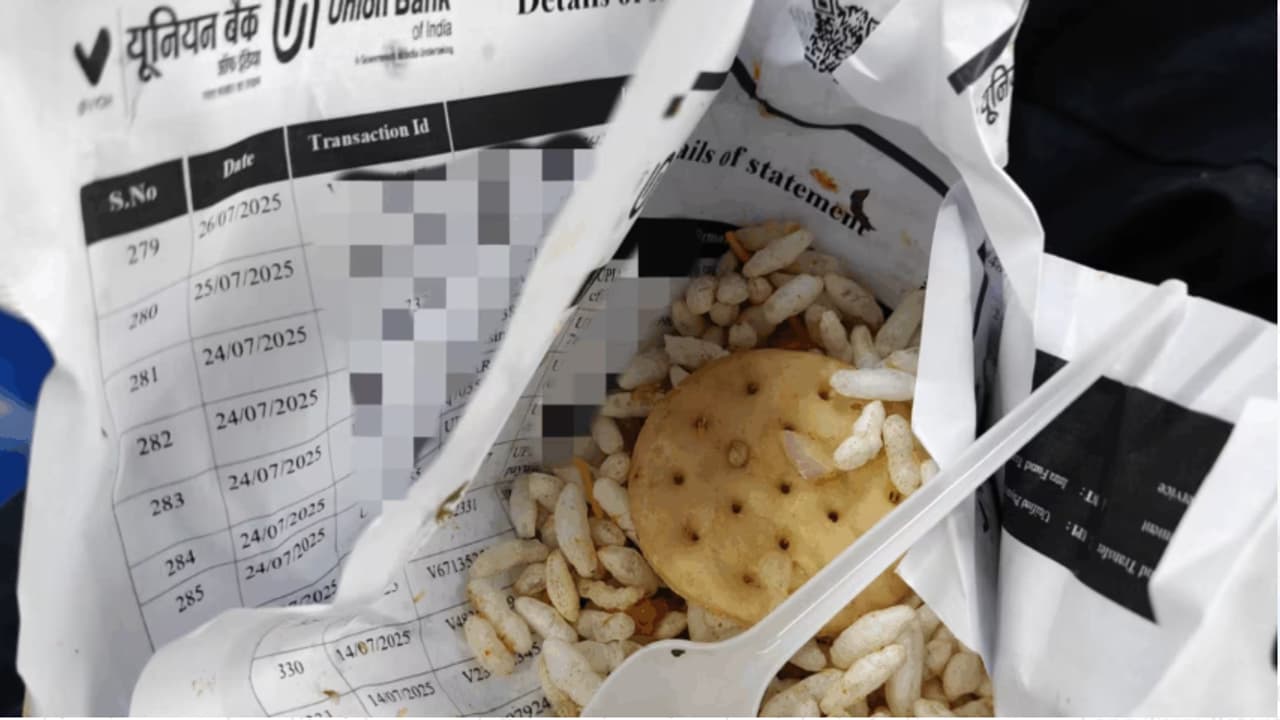
A viral social media post in India showed bhel puri served in a discarded bank statement containing sensitive personal and financial details. The incident triggered a widespread online debate, raising significant concerns over both data privacy and food hygiene.
A seemingly ordinary street food purchase has triggered a massive online debate after a man discovered that his Rs 20 bhel puri was served in a discarded bank statement containing sensitive personal information. The shocking incident, shared on social media platform X, has raised alarming concerns about both data privacy and food hygiene in India.
The viral post was shared by X user Sudhanshu Ambhore, who uploaded a picture showing the bhel puri wrapped inside what appeared to be a two-page account statement from Union Bank of India. The document reportedly displayed personal details including the account holder’s name, account number, and transaction history. Sharing the image online, he wrote, “Bought a ₹20 Bhel from a street vendor and it was wrapped in someone’s 2 page bank statement. Name, account number, transactions… everything just out there like it’s normal. Privacy is seriously a joke in India.”
Scroll to load tweet…
The post quickly went viral, sparking widespread criticism and concern among social media users. While many were shocked by the apparent leak of confidential banking information, others focused on the hygiene risks associated with serving food in discarded printed papers coated with chemical ink.
Also Read: ‘Soul Of This Place Is Unmistakable’: African Traveller’s Viral India Post Wins Hearts Online
One user commented, “Privacy is a joke, and so is hygiene,” while another warned, “More dangerous is you eating from garbage paper with that ink.” A separate comment highlighted the unsafe handling of waste paper, saying it may have been lying in “some dusty corner where mice might have crawled over it.”
Several users also pointed out that such incidents expose poor awareness around secure disposal of sensitive documents. One commenter suggested that people should tear or shred bank-related papers before discarding them to prevent misuse of personal data. Others noted that the issue reflects a larger problem of careless waste recycling practices and weak data protection awareness.
The viral incident has now reignited conversations around consumer safety, responsible disposal of confidential documents, and the everyday privacy risks many Indians unknowingly face.
Also Read: ‘Respect Women Every Day’: Street Vendor’s Powerful Words On Women’s Rights Go Viral