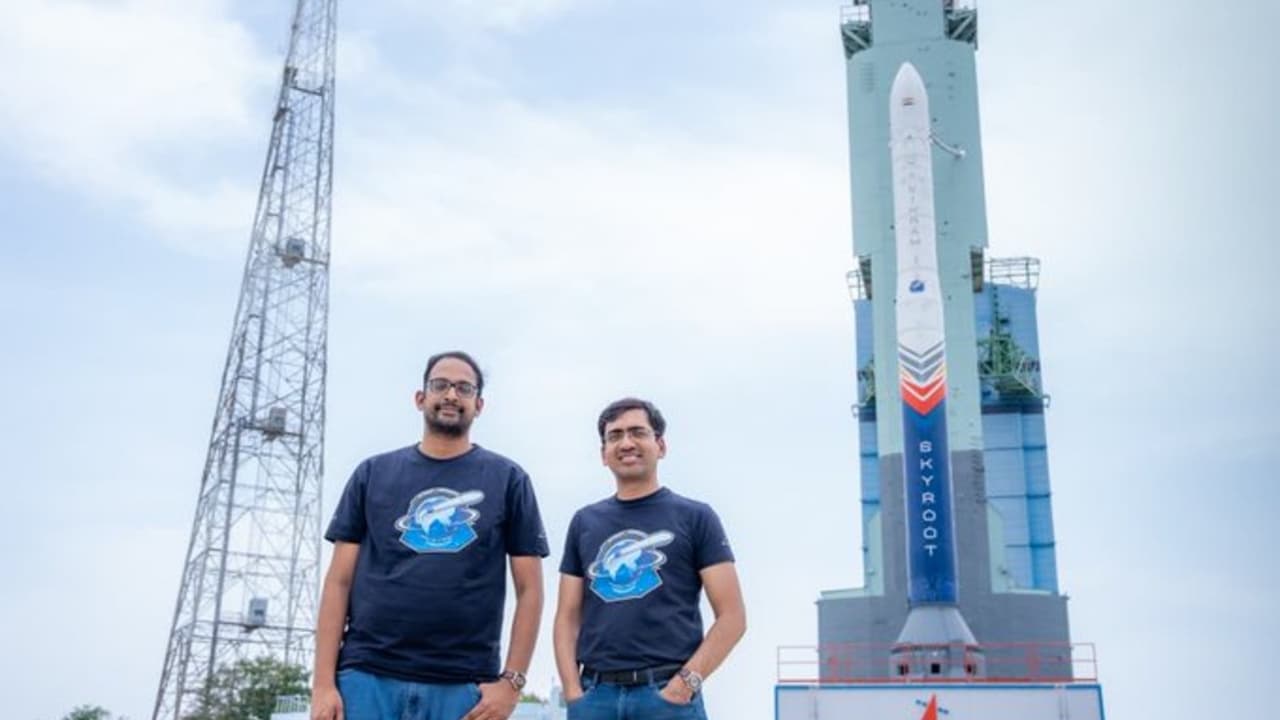
Breathing had stopped in Sriharikota! After a last-minute interruption, Skyroot’s Vikram-1 did something that stunned the world in its very first attempt. What is the secret of PM Modi’s secret message that reached space?
Sriharikota: Saturday has been recorded in golden letters in India’s space history. When a seven-storey high Mahabali rocket moved towards the sky from the Satish Dhawan Space Center (SDSC-SHAR) in Sriharikota, bursting with fierce flames and clouds, the whole world kept watching. Hyderabad-based space start-up ‘Skyroot Aerospace’ has done what even big countries could not imagine by successfully launching the orbital-class rocket Vikram-1 in its very first attempt. This unprecedented success of ‘Mission Aagaman’ has included India in the elite list of those few countries in the world which have private companies launching orbital rockets independently.
That scary twist of ‘Internal Hold’ and the suspense of countdown!
Just before the launch, there was sudden silence in the control room of Satish Dhawan Space Centre. During the countdown, breathing stopped due to a technical ‘internal hold’. There was a fear in everyone’s mind whether this historic mission would stop? But, the young scientists of Skyroot did not give up. Once the obstruction was cleared and the rocket took off, its four stages, one after the other, performed exactly as expected. The rocket not only successfully entered the space orbit, but also installed the satellites very cleanly at their designated place. This 100% success in the very first attempt testifies to India’s new supremacy in the world of space transportation.
What is the biggest strength of Vikram-1?
Vikram-1, about seven storeys high, is a multi-stage launch vehicle made entirely of carbon composite. It has the capability to deliver payload up to 350 kg into low earth orbit. Its biggest features are its completely in-house developed propulsion system, 3D-printed rocket engine and high-performance solid motor, making it modern and cost-effective.
Scroll to load tweet…
What went into space in ‘Mission Arrival’?
The first flight was not just a technical test. The mission carried several technology demonstration payloads, including Grahaa Space, Cosmoserve, DCubed and Skyroot’s SCOPE experiment. Along with this, Prime Minister Narendra Modi’s handwritten ‘Vande Mataram’ message, messages from ISRO scientists, astronauts and Skyroot team were also symbolically sent into space.
PM Modi’s secret phone call: “You not only planted a tree, but also…”
Immediately after this miraculous success, Prime Minister Narendra Modi himself picked up the phone and congratulated the Skyroot team. While talking to the founders of Skyroot, PM Modi said something which made every Indian’s chest swell with pride. The Prime Minister said, “Pawan and Bharat, you have not only planted a new tree in space, but have also strengthened a new root on the ground which will inspire the next generation of the country.” This rocket, approximately seven storeys high, is completely made of advanced carbon composite. Its biggest feature is that it uses 3D-printed rocket engines and high-performance solid rocket motors, which have been completely developed in-house.
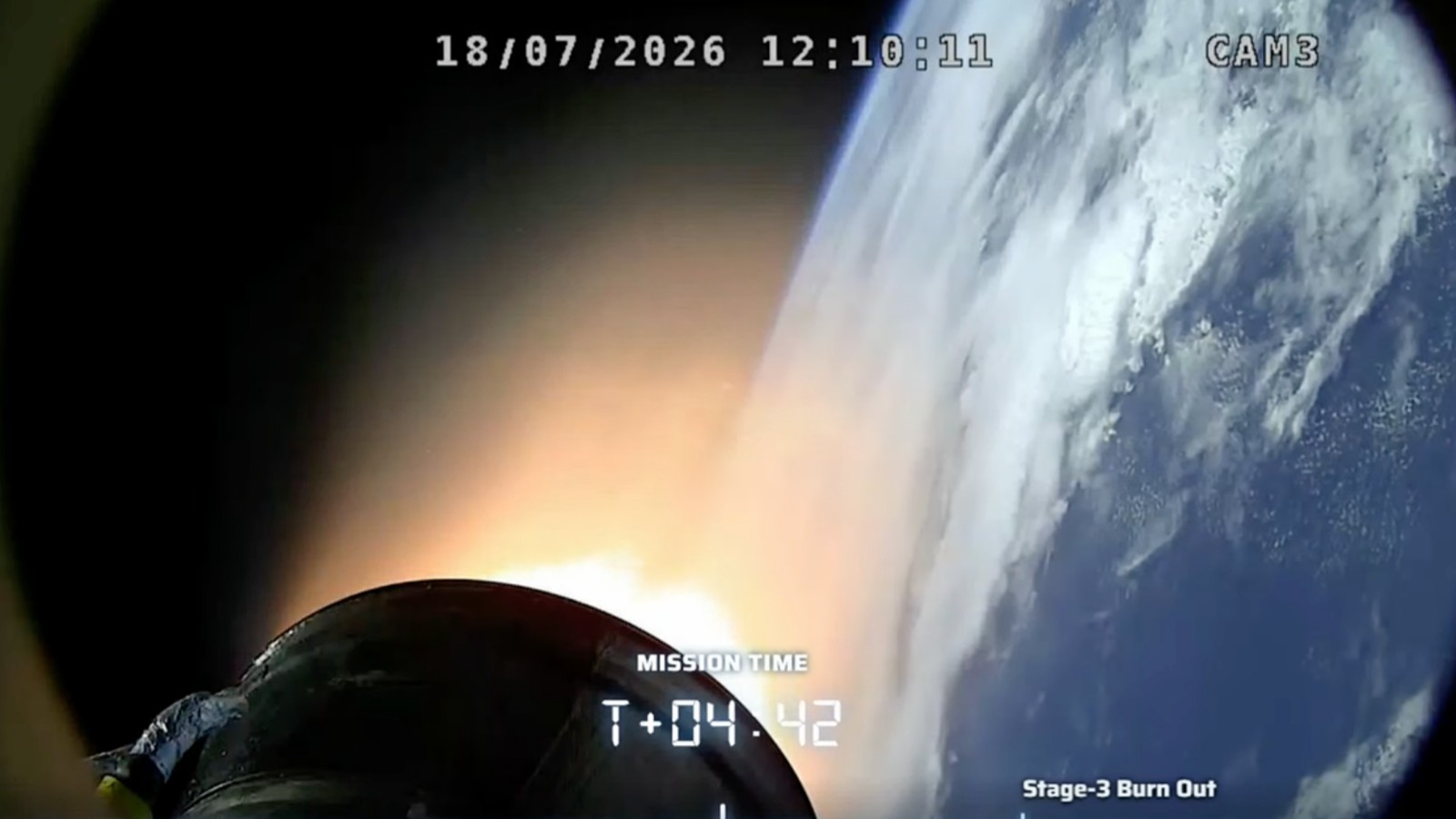
PM Modi’s ‘Vande Mataram’ message reached space and those mysterious payloads
Vikram-1 has the power to carry a payload of up to 350 kg into Low Earth Orbit (LEO). This first test flight carried several high-tech technology demonstration payloads, including Grahaa Space, Cosmoserve, DCubed, and Skyroot’s own SCOPE experiment. But in this mission, apart from the technical payloads, some very emotional and special symbolic things were also sent to space. A handwritten “Vande Mataram” postcard of Prime Minister Narendra Modi was placed inside the rocket. Along with this, handwritten secret messages of the present and former Chairman of ISRO, Indian astronauts and investors of Skyroot have also been sent into the infinite depths of space, which reflect India’s creativity and determination.
The madness of two scientists, which sealed ISRO’s reforms!
The foundation of this historic success was laid in the year 2018, when two former ISRO scientists—Pawan Kumar Chandana and Naga Bharat Daka—left their secure government jobs and had a dream of transforming space. In the year 2020, when the Government of India opened the space sector to private companies, both of them gave their full strength. In the year 2022, their sub-orbital rocket ‘Vikram-S’ had just touched the space, but today Vikram-1 has created history and placed satellites in the orbit. This mission proves that India’s private industry is now fully prepared to capture the global space market.
What is going to change for India’s space business?
The success of Vikram-1 will have the biggest impact on the commercial space market. Now small satellite operators will be able to get a faster, cheaper and reliable launch option. With this, India will take a strong step towards increasing its share in the global space launch market and will open new opportunities for private companies. This mission is not just a launch, but the beginning of a new chapter in India’s space ecosystem, where private companies along with government agencies are making their mark at the global level.