Vaastu Shastra Image Credit source: unsplash
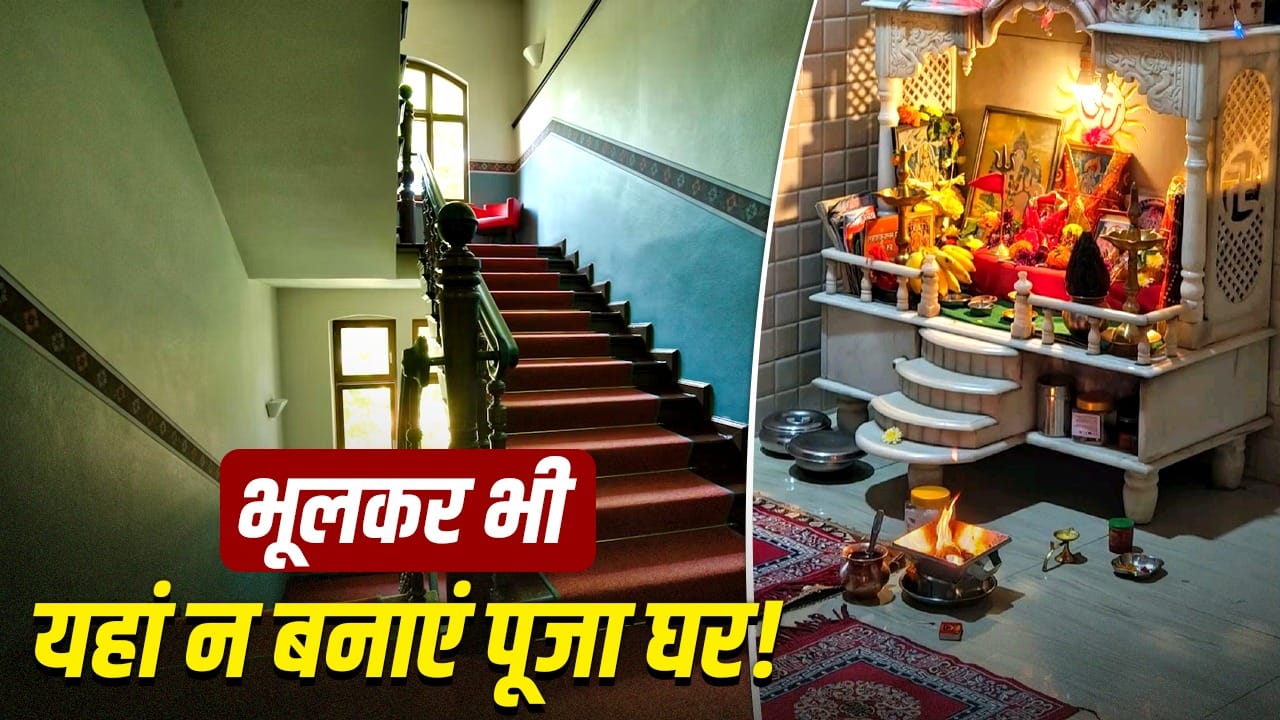
Staircase Vastu Rules: In Hindu religion, the home temple is not just a place of worship, but it is considered a center of positive energy and spiritual power. This is the reason why while building a temple, it is advised to pay special attention to its direction, location and surrounding environment. Even in Vastu Shastra, some special rules have been mentioned for the puja room. An important thing among these rules is that a temple should not be built under the stairs of the house. According to Vastu experts, doing so can cause serious Vastu defects and affect the positive energy of the house.
Why should a temple not be built under the stairs?
Vaastu Shastra According to this, the temple should always be in a quiet, clean and respectable place. There is a constant flow of people under the stairs. In such a situation, the sanctity of the place of worship may be affected. According to the scriptures, crossing one’s feet over the places of revered deities is considered a grave disrespect. Due to this, the purity and positive energy of that place is completely destroyed.
What do religious beliefs say?
According to religious beliefs, the place of Gods and Goddesses should be at the most respected place in the house. The temple should be such a place where a person can sit with a calm mind and worship and meditate. The temple built under the stairs often does not have enough space, due to which attention often gets distracted during the puja. It is believed that keeping the place of God elevated and clean is considered auspicious, while the area below the stairs is considered the opposite.
What can be the effects of Vaastu defects?
It is believed in Vastu Shastra that if a temple is built at the wrong place then problems like mental stress can arise in the house. Vastu experts believe that wrong position of the puja room can affect the environment of the house and create obstruction in the flow of positive energy.
Which direction is considered most auspicious for the temple?
According to Vastu Shastra, it is considered most auspicious to build the temple of the house in the north-east direction i.e. in the north-east corner. This direction is considered to be associated with spiritual energy. If space is not available in the north-east corner, then the puja room can be built in the east or north direction also. Besides, it is also considered important to maintain cleanliness around the temple and to have complete lighting there.
Also read: From salt to needle, do not take these 8 things as loan or gift, otherwise your life will be ruined!
Disclaimer: The information given in this news is based on Vastu Shastra. TV9 Bharatvarsha does not confirm this.