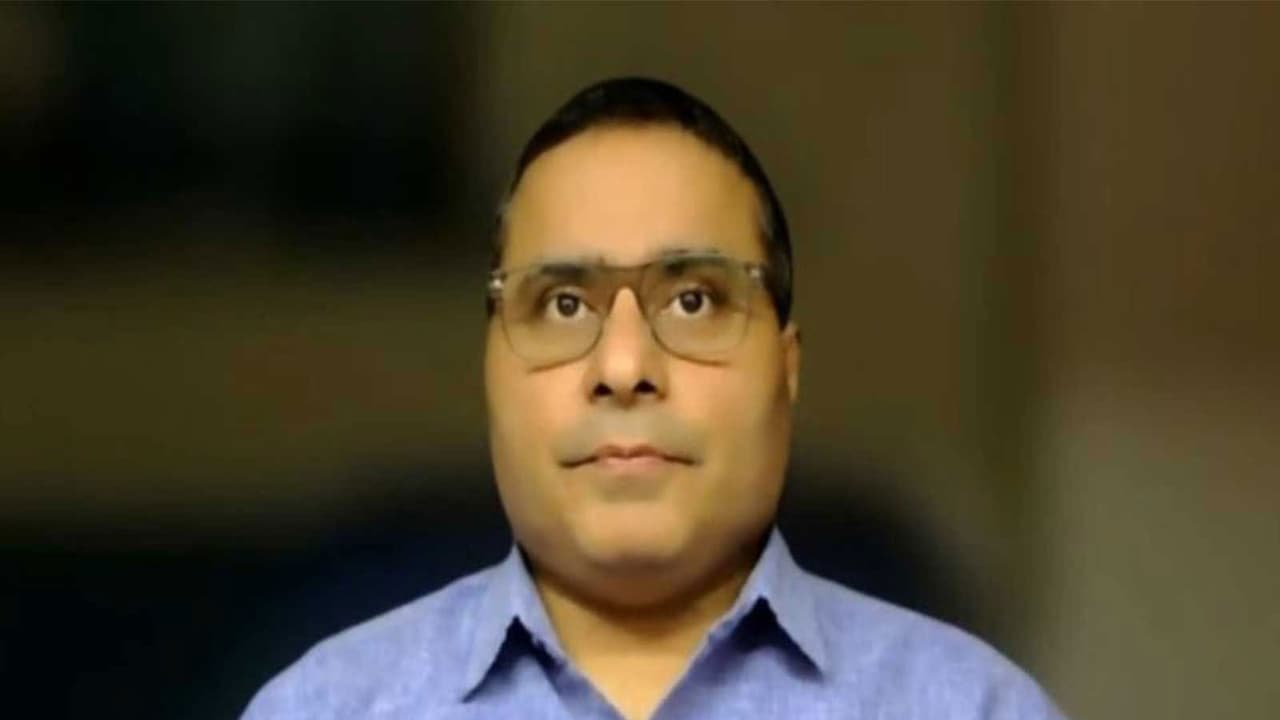
According to an expert, India’s macroeconomic stability is well-insulated from US pressure on Russian crude. The impact of potential sanctions is seen as minimal, with the real threat being a global oil price surge rather than shifting suppliers.
As Washington tightens the screws over Russian crude imports, India’s macroeconomic stability remains remarkably well-insulated, according to Anindya Banerjee, Head of Commodity and Currency Research at Kotak Securities. Weighing in on recent geopolitical friction during an exclusive interview with ANI on Saturday, Banerjee asserted that potential US sanctions and tariff pressures would have a minimal impact on India’s broader economy.
His remarks follow the US Senate’s passage of a legislative bill on Friday by an 86-11 vote, which could potentially impose tariffs of up to 100 per cent on nations like India and China that purchase Russian crude oil and natural gas.
Shrinking Russian Crude Discounts
Addressing the financial implications of shifting away from Russian supplies, Banerjee pointed out that the economic calculus has changed dramatically since the conflict in Ukraine began. While Russian crude initially offered massive discounts of $15 to $20 per barrel in 2022, robust demand outside the Gulf has since compressed those margins down to just $2 to $3 per barrel. “See, we have to understand the context… Russian crude at a current discount rate, the benefit is around $2 to $3 billion a year and not a day,” Banerjee explained, contrasting it against India’s hefty annual oil import bill of nearly $150 billion.
Fortifying Non-Dollar Trade
Stepping back to analyse the broader geopolitical chessboard, Banerjee warned that aggressive Washington-led sanctions are weaponising global financial infrastructure to America’s long-term detriment. “So it’s kind of America is actually hurting its own interest over the long term,” he remarked. To bypass settlement obstacles and settlement risks, India has steadily fortified non-dollar payment channels. These initiatives include the Reserve Bank of India’s push for rupee trade via Vostro accounts, bilateral trade settlement mechanisms utilising UAE dirhams, and potential interlinkages of Central Bank Digital Currency (CBDC) frameworks across BRICS nations.
Global Price Shocks the Real Threat
Because these financial stakes are relatively minor, Banerjee noted that replacing Russian supplies with pricier Middle Eastern alternatives would not severely disrupt domestic inflation or fiscal deficits. Instead, he pinpointed global price shocks, rather than shifting suppliers, as the true threat to macroeconomic health. “Every $10 jump in the average price of oil for India, the imported basket, roughly translates into a $15 billion jump in the annual oil import bill,” Banerjee said, adding that a prolonged crude spike above $100 per barrel poses a far greater risk than losing Russian discounts. “I don’t think the Russian crude or switching away from Russia to other sources… is going to have a big impact on our macroeconomic situation now.”
Supply Chain Resilience
Addressing potential supply chain bottlenecks stemming from US crackdowns on “shadow fleets,” Banerjee expressed absolute confidence in the adaptability of Indian refiners. He noted that moving oil relies on three foundational pillars–banks, insurers, and tankers–with maritime shipping being the easiest component to source through non-Western avenues. “Logistics have been able to handle it… no new kind of risk has emerged, which was not there over the last four years,” he affirmed.
To safeguard energy sovereignty against external geopolitical demands, India has leaned heavily into multi-vector sourcing. Under the active energy diplomacy of Prime Minister Narendra Modi and External Affairs Minister S Jaishankar, India now sources crude from over 40 countries, including Venezuela, African nations, and the United States. Furthermore, backed by 10 to 12 days of government strategic reserves and 70 to 75 days of commercial stocks, India sits comfortably close to the G7 benchmark of 90 days of import cover. “As far as India is concerned, supply is not going to be an issue,” Banerjee stated.
Future Outlook and De-dollarisation
While short-term navigation requires handling multiple non-dollar routes, Banerjee cautioned that weaponising payment systems will only accelerate global de-dollarisation over the next six to seven years. Despite the current legislative headwinds and ongoing India-US trade negotiations, Banerjee remains optimistic that a balanced resolution is within reach. “I think the tariff deal will happen on its own course… It’s in the best interest of both countries to come up with a workable tariff policy,” he concluded. (ANI)
(Except for the headline, this story has not been edited by Asianetnews Editorial staff and is published from a syndicated feed.)