A painting by renowned Chicago artist Gertrude Abercrombie, which disappeared from public view for more than seven decades, has resurfaced and turned a $30 estate sale purchase into a $1.35 million windfall.
A painting by renowned Chicago artist Gertrude Abercrombie, which disappeared from public view for more than seven decades, has resurfaced and turned a $30 estate sale purchase into a $1.35 million windfall. Titled “Alderman Merriam’s Shells,” the 1951 painting was recently discovered at an estate sale in Kalamazoo, Michigan, after a buyer initially visited the sale looking for vinyl records. He spotted the artwork, turned it over and noticed a name on the back that seemed familiar.
He paid just $30 for the painting.
On Thursday, the long-lost artwork sold for $1.35 million at auction, setting a new world auction record for Abercrombie’s work, according to a spokesperson for Freeman’s Auctions, which handled the sale.
The painting features a collection of shells belonging to Chicago Alderman Robert Merriam, who represented the city’s 5th Ward from 1947 to 1955. The ward included Hyde Park, where Abercrombie lived and became a prominent figure in Chicago’s art and music circles.
Abercrombie gifted the painting to Dr. John T. Reynolds of Kalamazoo in 1952 in exchange for medical services. The artwork was subsequently displayed at exhibitions in New York, Chicago, Milwaukee and Evanston between 1952 and 1953. It was last known to have been exhibited at the Chicago Design Center in 1953.
After that, it disappeared from public view.
More than 70 years later, the painting emerged at an estate sale belonging to Reynolds, the same doctor who had received it from Abercrombie in 1952.
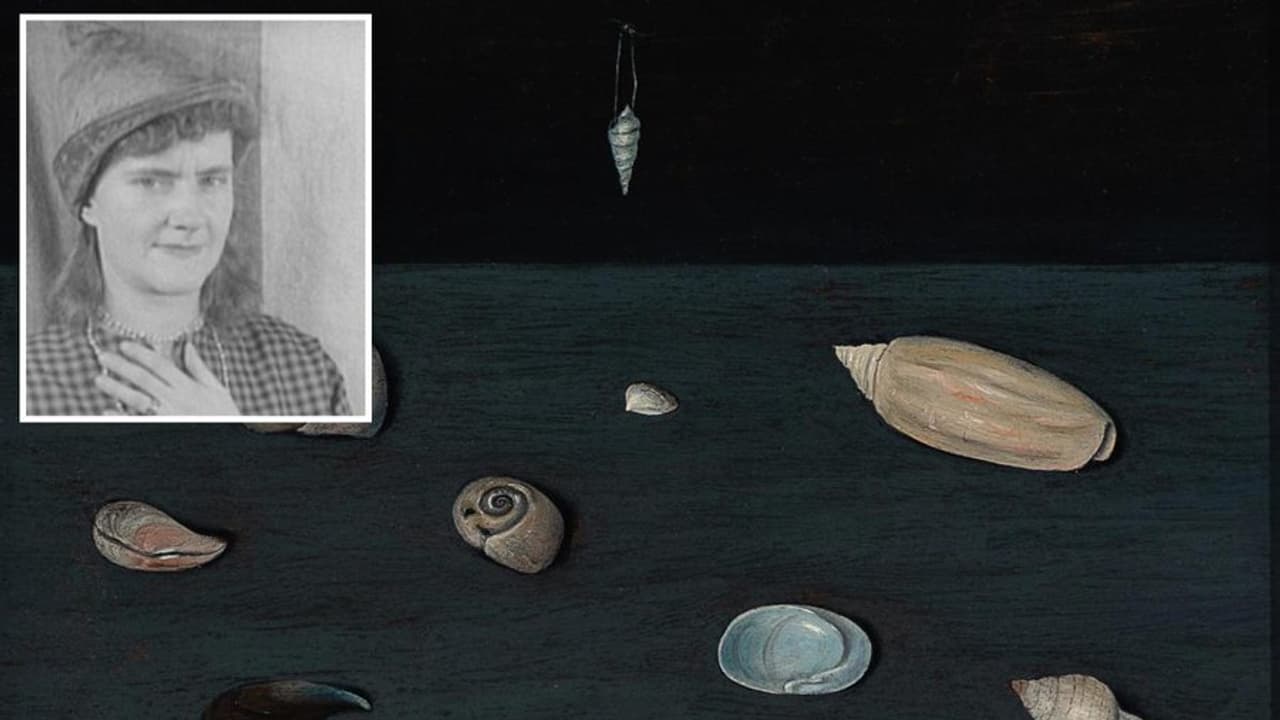
Experts say “Alderman Merriam’s Shells” represents an important turning point in Abercrombie’s artistic career, as she increasingly embraced surrealism. At first glance, the work appears to be a simple still life, but closer inspection reveals a far more mysterious composition.
The painting depicts several shells against a dark backdrop, while one shell appears to hover inside a stark black void. Each shell is illuminated by its own light source, with the lights positioned at opposing angles, creating an eerie and dreamlike effect.
The artwork is also significant for another reason: it features the first known appearance of Abercrombie’s cracked seashell motif, an element that would repeatedly surface in her later work.
Before going under the hammer, the painting underwent restoration by Chicago-based Baumgartner Fine Art Restoration.
The artwork had initially been estimated to fetch between $15,000 and $250,000. Instead, it soared to $1.35 million — far exceeding even the highest estimate and selling for nearly 10 times the upper end of its projected value.
Abercrombie died in 1977.