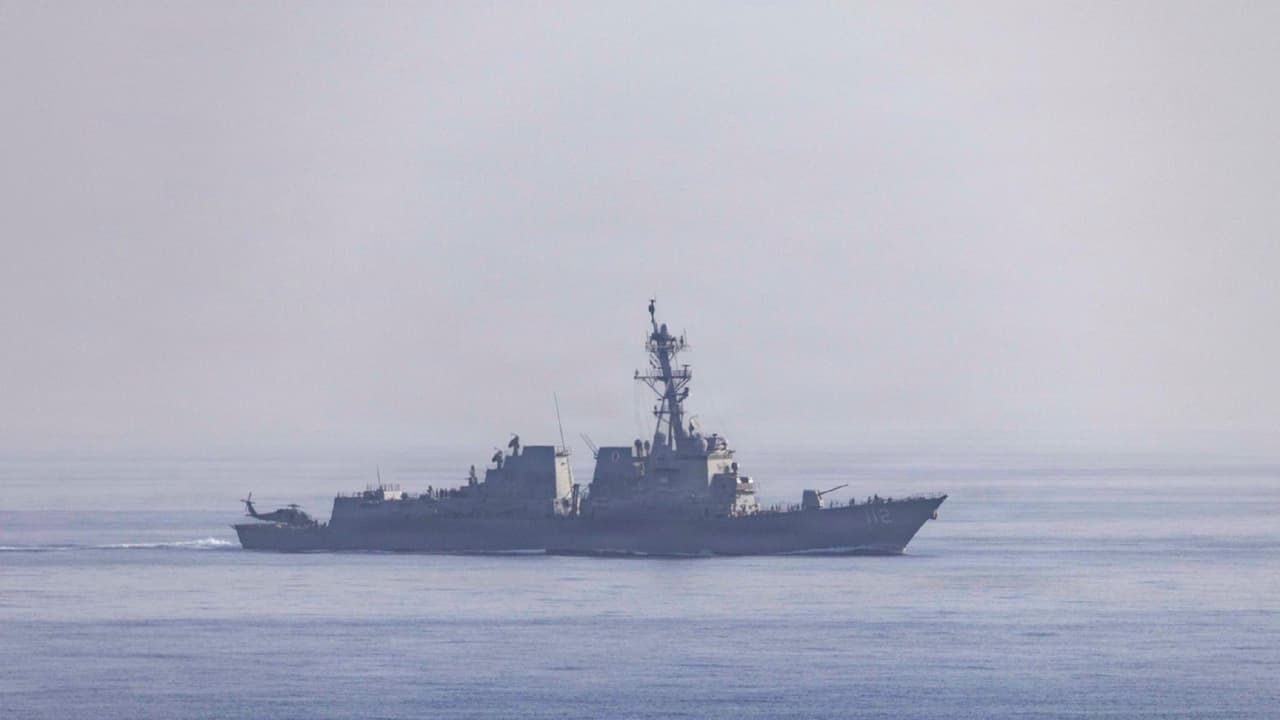
US Central Command confirmed a full naval blockade on Iranian ports, halting all maritime trade. Naval assets are patrolling the Gulf of Oman to enforce the embargo, a significant escalation following the collapse of recent peace talks.
In a development reflecting the United States’ firm resolve to cripple Iran’s economic resources, US Central Command (CENTCOM) on Wednesday confirmed that its naval assets are actively patrolling the Gulf of Oman, enforcing a strict blockade on all vessels entering or departing Iranian ports. The announcement marks a significant hardening of the U.S. military posture following the collapse of the Islamabad peace talks earlier this month.
In a post shared on X, US Central Command said, “U.S. naval vessels are on patrol in the Gulf of Oman as CENTCOM continues to execute a U.S. blockade on ships entering and departing Iranian ports. U.S. forces are present, vigilant, and ready to ensure compliance.” U.S. naval vessels are on patrol in the Gulf of Oman as CENTCOM continues to execute a U.S. blockade on ships entering and departing Iranian ports. U.S. forces are present, vigilant, and ready to ensure compliance. pic.twitter.com/dnHR2oz0ZN — U.S. Central Command (@CENTCOM) April 15, 2026
Economic Isolation and Diplomatic Context
The blockade is designed to isolate the Iranian economy by severing its primary maritime trade routes. According to official military communications, US forces are maintaining a high state of readiness to ensure total compliance with the embargo. The escalation comes at a delicate moment. While President Trump has hinted that a “great deal” could be on the horizon, the presence of heavy naval hardware in the Gulf of Oman suggests that the US is prepared to maintain the squeeze until a definitive agreement is reached.
Blockade ‘Fully Implemented’ Within 36 Hours
The United States Central Command (CENTCOM) earlier today announced that a full blockade of Iran’s ports has been successfully implemented, with US forces asserting maritime dominance across key regional waterways, particularly the Strait of Hormuz. In a statement, CENTCOM Commander Admiral Brad Cooper stated that within just 36 hours of initiating the blockade, US forces had effectively stopped all maritime trade flowing in and out of Iran. “A blockade of Iranian ports has been fully implemented as US forces maintain maritime superiority in the Middle East. An estimated 90 per cent of Iran’s economy is fueled by international trade by sea. In less than 36 hours since the blockade was implemented, US forces have completely halted economic trade going into and out of Iran by sea,” the statement read.
Naval Assets and Enforcement Details
CENTCOM, in a separate statement on X, stated that US Navy guided-missile destroyers are actively enforcing the blockade, with the mission being carried out impartially, targeting vessels of all nations entering or leaving Iranian ports and coastal areas. “A typical destroyer has a crew of more than 300 Sailors that are highly trained in conducting offensive and defensive maritime operations,” the statement added, highlighting the scale and preparedness of the deployed naval assets.
Earlier, CENTCOM revealed that more than 10,000 US personnel, including Sailors, Marines, and airmen, alongside over a dozen warships and dozens of aircraft, are involved in the blockade operation. Within the first 24 hours, no ships reportedly breached the blockade, while six merchant vessels complied with US directives to turn back and re-enter an Iranian port in the Gulf of Oman.
Scope of Blockade and Freedom of Navigation
The blockade extends across all Iranian ports along the Persian Gulf and the Gulf of Oman, with US forces maintaining strict enforcement measures.CENTCOM further noted that while the blockade restricts access to Iranian ports, US forces continue to support freedom of navigation for vessels transiting the Strait of Hormuz to and from non-Iranian ports.
The development marks a significant escalation in US-Iran tensions, with potential implications for global trade and regional stability. (ANI)
(Except for the headline, this story has not been edited by Asianet Newsable English staff and is published from a syndicated feed.)