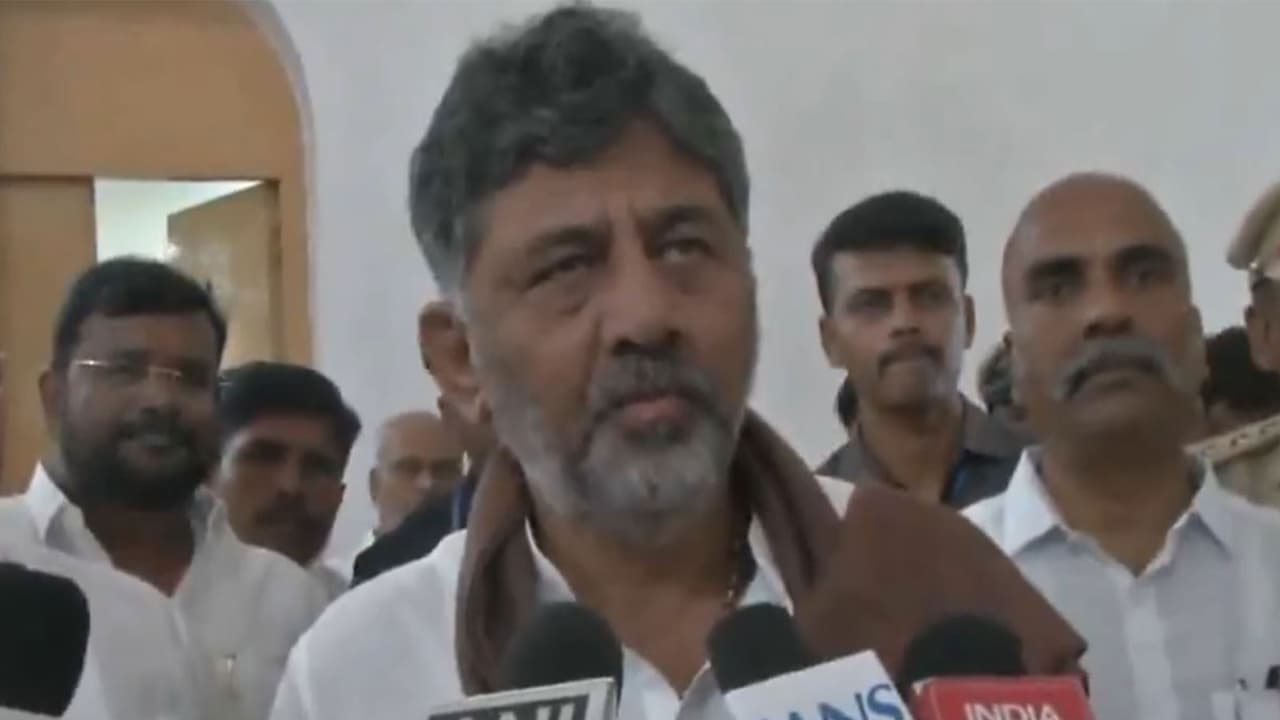
Karnataka CM DK Shivakumar and MP NK Premachandran opposed the revised UPI MDR framework, calling it a ‘great injustice’ that will burden consumers. They urged the Centre to withdraw the decision, arguing merchants would pass on the costs.
Political Leaders Oppose UPI MDR Framework
Karnataka Chief Minister DK Shivakumar on Thursday opposed the revised Merchant Discount Rate (MDR) framework for select Unified Payments Interface (UPI) transactions, calling it a “great injustice” to every section of society and urging the Centre to withdraw the decision. On UPI MDR transaction charges, Shivakumar said merchants and traders would likely pass the additional costs on to consumers.
“A great injustice to every section of society. Businessmen and traders will naturally pass these costs down to the common man. There was no need to pass these charges on to the public. We strongly appeal for this decision to be withdrawn,” he told reporters.
Revolutionary Socialist Party MP NK Premachandran also opposed the revised framework, saying that the levy would ultimately place an additional burden on consumers. “Imposing a levy on UPI transactions will ultimately place an additional burden on the common people, particularly customers. The government argues that the charge will be paid by shop owners or merchants. However, merchants are unlikely to absorb this cost themselves. Instead, it will be passed on directly to customers,” Premachandran told ANI.
He said the proposed 0.4 per cent levy on transactions above Rs 2,000, with a maximum charge of Rs 300, would indirectly affect consumers and demanded that the decision be reviewed and withdrawn. “A levy of 0.4% on transactions above Rs 2,000, with a maximum charge of Rs 300 per month, will indirectly affect consumers. This is why we are demanding that the decision be reviewed and withdrawn. On one hand, the Government of India is actively promoting digital payments and encouraging people to move towards a cashless economy. On the other hand, it is imposing charges on those very transactions. These two approaches are contradictory,” he said.
Meanwhile, Karnataka Minister Eshwar Khandre, speaking in Bidar, said he supported Congress leader Rahul Gandhi’s demand for withdrawal of the UPI MDR framework. “I support Shri Rahul Gandhi’s demand. The central government should immediately withdraw it. Otherwise, we will have to launch an agitation against the Government of India,” Khandre said.
Khandre was speaking on the occasion of Kalyana Karnataka Day and also extended greetings to the people while paying tribute to those who sacrificed their lives for the region’s liberation. “I wish everyone a happy Kalyana Karnataka Day. I pay my tributes to all those who sacrificed their lives for the liberation of Kalyana Karnataka,” he said.
He also congratulated actor Anant Nag on receiving the Dadasaheb Phalke Award. “I would like to congratulate Anant Nag on receiving the Dadasaheb Phalke Award. We are all very proud of him. I pray to God to bless him with strength, good health, and a long life,” he said.
NPCI’s Framework and Centre’s Clarification
Meanwhile, a political row has emerged over the revised UPI MDR framework announced by the National Payments Corporation of India (NPCI). Under the new framework, a 0.4 per cent MDR will apply to select Person-to-Merchant (P2M) UPI transactions above Rs 2,000, capped at Rs 300 per transaction. The framework is scheduled to come into effect from October 15, 2026.
The Centre has maintained that MDR is neither a tax nor a charge collected by the government, but is distributed among participants in the digital payments ecosystem, including banks and payment application providers.
Centre has said UPI will continue to remain completely free for all person-to-person transactions, irrespective of the amount transferred. Payments to merchants up to Rs 2,000, along with transactions covered under the zero-MDR framework for small merchants, will also remain free. Consequently, approximately 96% of all P2M transactions will remain unaffected. MDR will apply only to specified merchant transactions above Rs 2,000. (ANI)
(Except for the headline, this story has not been edited by Asianet Newsable English staff and is published from a syndicated feed.)