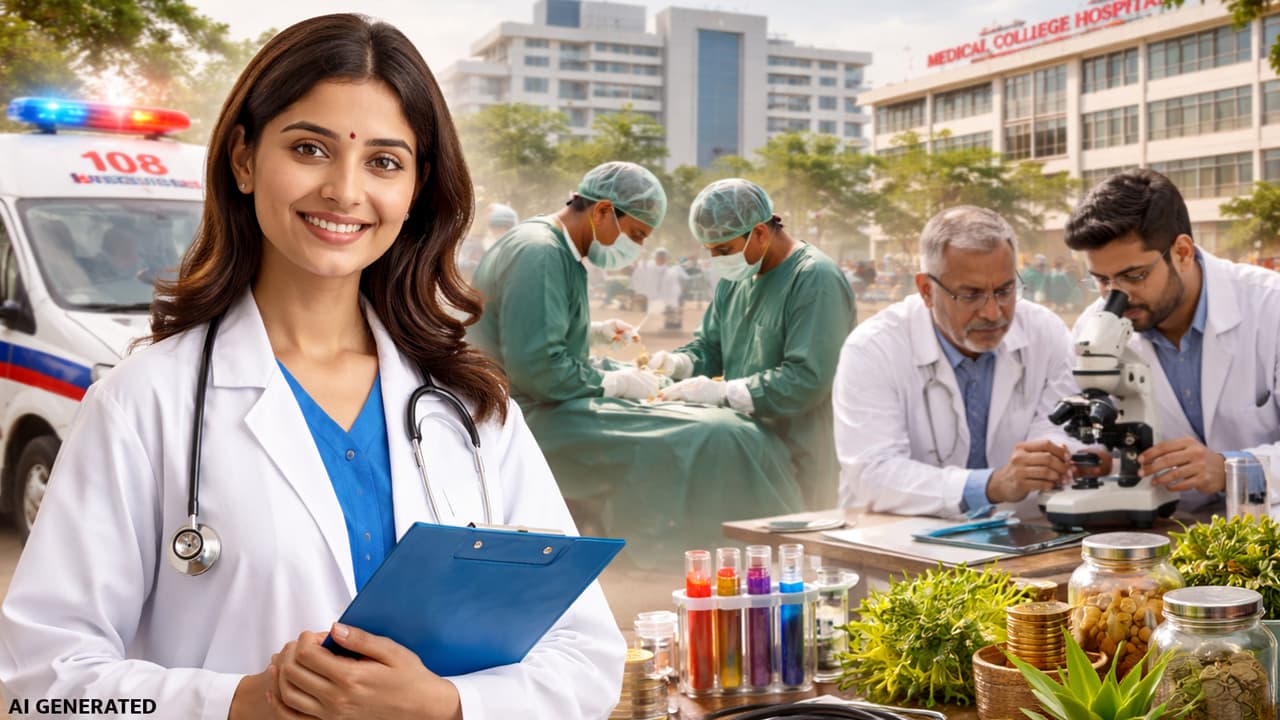
There has been a major change in the health infrastructure in Uttar Pradesh in the last nine years. 81 medical colleges, 12,700 MBBS seats, 200 new diagnostic units, 4,000 ambulances and a budget of Rs 55,000 crore are strengthening the health services.
Lucknow. The health system of Uttar Pradesh has witnessed comprehensive and structural changes in the last nine years. The state government has given priority to strengthening health infrastructure, expanding medical education and extending quality health services to rural areas. The health picture of the state has changed due to the construction of new hospitals, rejuvenation of old hospitals and unprecedented increase in the number of medical colleges.
81 medical colleges operational, record increase in MBBS and PG seats
Till the year 2017, there were 36 government medical colleges operating in the state. Now their number has increased to 81. Under the vision of ‘One District One Medical College’, work is being done to establish a medical college in every district. There has also been a significant increase in MBBS seats. There were about 4,690 seats in the year 2017, which has now increased to 12,700. PG seats have also increased by more than double, which has improved the availability of specialist doctors.
Modernization of district hospitals and expansion of health and wellness centers
District hospitals in 75 districts of the state have been equipped with modern facilities. ICU, NICU, dialysis units, trauma centers and modern pathology labs have been established in many hospitals. Community Health Center (CHC) and Primary Health Center (PHC) are being developed as Health and Wellness Centres. More than 1,500 health and wellness centers are operational, providing services such as maternal and child health, immunization, testing and non-communicable disease screening. Rural areas have been connected to specialist doctors through digital health records and telemedicine services.
More than 200 new pathology and diagnostic units established
AYUSH, Yoga, Naturopathy and Allopathic services are being coordinated under the concept of ‘Arogya Mandir’. Ayush hospitals and wellness centers have been built in many districts. Steps have also been taken towards the establishment of AYUSH University. Now facilities like RT-PCR lab, blood bank and digital X-ray are available in all the districts. The lab capacity developed during the COVID-19 period has been permanently strengthened. More than 200 new pathology and diagnostic units have been established in the last nine years, improving both the quality and quantity of investigations.
Increase in ambulance network and health budget
108 and 102 ambulance services have been expanded. At present, more than 4,000 ambulances are operating in the state, which also includes advanced life support ambulances. Special services are available for pregnant women and newborn babies. A provision of more than Rs 55,000 crore has been made for the medical education, AYUSH and health departments in the financial year 2026-27. In this, Rs 37,956 crore has been earmarked for health and family welfare, Rs 14,997 crore for medical education and Rs 2,867 crore for the AYUSH department. This amount will be spent on infrastructural development, purchase of equipment, human resource recruitment and construction of medical college.
State towards self-reliant health model
Oxygen plants, bed capacity and ICU facilities have been permanently strengthened during the COVID-19 pandemic. The aim is that the state should become self-reliant in the field of medical education and health services and patients should not have to depend on other states for treatment.
Expert opinion: improving both quality and access
According to former IAS Anurag Patel, the changes in the last nine years are not limited to just increase in numbers, but are effective at both quality and reach levels. The increase in medical colleges and seats will strengthen the availability of specialist doctors in future. Modernization of district hospitals, health and wellness centers and digital services have reduced the rural-urban gap. Timely treatment has been made possible by the expansion of diagnostic facilities and ambulance networks. It is clear from the continuously increasing budget that the state is developing the health sector as a model of long-term investment and self-reliance.