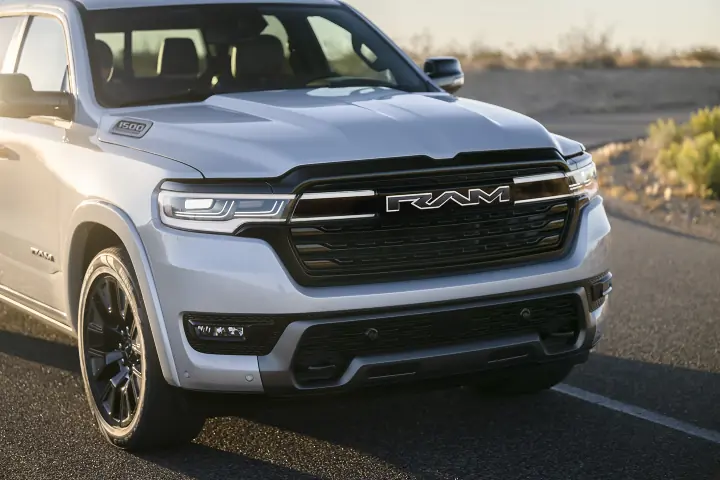
Stellantis has pushed back the launch of its two extended-range electric vehicles, delaying the Grand Wagoneer EREV and 1500 REV by several months to give engineers more time to finish the powertrain before either reaches customers.
According to , which cited people familiar with memos sent to parts suppliers, the Grand Wagoneer EREV is slipping roughly six months and the Ram 1500 REV pickup about nine. Production of the extended-range Grand Wagoneer is now scheduled to begin in November at the Warren Truck Plant near Detroit, with the SUV launching that same month. Meanwhile, the Ram truck is not anticipated until mid-April 2027, with production slated for spring of that year.
Both vehicles share the same architecture. The EREV setup pairs a 400-volt battery and electric drive motors with a 3.6-liter Pentastar V6 that functions as a generator rather than driving the wheels directly. Because the gas engine only produces electricity, the driving experience mirrors that of a full EV, with near-instant torque, while refueling is handled at a conventional gas pump. Level 3 fast-charging remains available as well. The configuration targets the large-SUV and half-ton segments, where road trips and hauling expose the range limits of battery-only vehicles.
The delays follow Stellantis pulling its Jeep 4xe plug-in hybrids, leaving the EREVs as an entirely new technology the company is working to validate before sale. Sources familiar with the memos indicate the postponement reflects a desire to resolve any remaining issues with the powertrain ahead of the public launch.
The revised timeline marks another schedule change for two of Stellantis’s most closely watched products as it reboots its electrified lineup. The company has framed the additional time as insurance that the launches proceed smoothly, given the newness of the extended-range hardware and the stakes attached to reestablishing credibility in the segment after the 4xe exit.
Neither the Grand Wagoneer nor the Ram 1500 REV had reached retail before the latest revisions. As a result, the extended-range approach positions both to offer EV-like performance with gasoline-tank refueling convenience and range comparable to conventionally powered rivals.