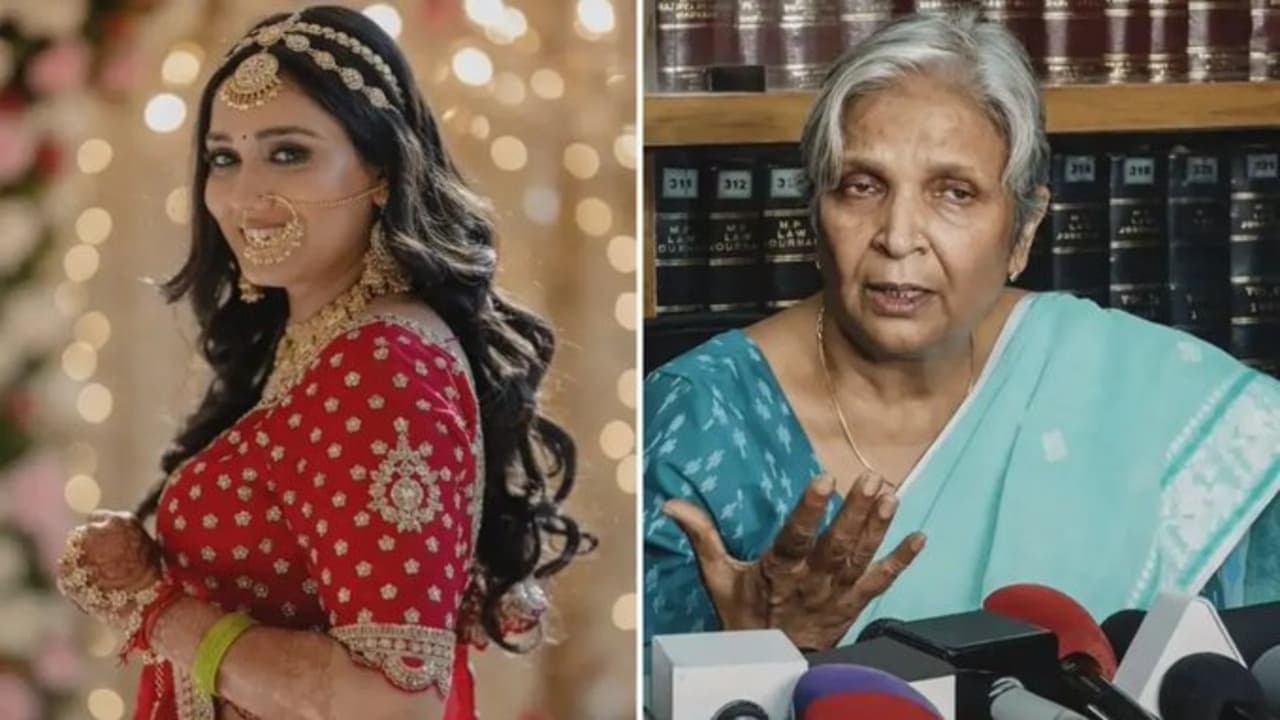
CBI is taking the help of advanced ‘tunnel view’ technology in the case of Twisha Sharma’s death. On May 12, Twisha was found dead in her house in Bhopal. The investigating agency is trying to find out the truth about her last hours by combining CCTV, phone records, Wi-Fi logs and forensic mapping.
The Central Bureau of Investigation (CBI) has started using an advanced digital investigation technique called ‘Tunnel View’ in the case of the mysterious death of former actor-model Twisha Sharma. 33-year-old Twisha was found hanging at her in-laws’ house in Katara Hills area of Bhopal on May 12. After her death, the family had made serious allegations of harassment, domestic violence and murder against her husband and in-laws. Now the CBI is trying to find out the truth about Twisha’s last moments before her death through minute-by-minute digital reconstruction.
According to India Today sources, with the ‘Tunnel View’ technique, the investigating officers create a detailed timeline by combining various types of digital and forensic evidence. The agency is examining CCTV footage, mobile phone records, Wi-Fi logs, internet activity, call detail records and smart device data related to the house. Investigators are also mapping every room of the house to create a virtual model of the crime scene. Officials believe that this process can help in finding out who went where in the house before the incident, what activities took place and whether any evidence was tampered with. This technology is often used to digitally recreate the activities of a person’s last moments.
According to reports, CBI officials are combining surveillance footage with mobile activity and internet usage to create a visual simulation of Twisha’s last hours. Investigators hope this digital reconstruction will uncover contradictions in witness statements or signs of foul play. Sources said the agency is also investigating whether there was any tampering with the crime scene after Twisha’s death. It is believed that this digital evidence will play an important role in future investigation and forensic analysis.
Twisha Sharma, a resident of Noida, married Samarth Singh of Bhopal in December last year. After her death, the parents accused the husband and his family of physically and mentally harassing her. She also alleged that her mother-in-law Giribala Singh, a former district court judge, tried to influence the investigation. Twisha’s family had earlier refused to perform the last rites and demanded a second postmortem at Delhi AIIMS. He was cremated on 24 May after the second autopsy was completed. At the same time, the in-laws denied all the allegations. They claimed that Twisha had become upset after learning about her pregnancy in April and allegedly did not want to continue it.
Twisha’s husband Samarth Singh had gone missing after the incident and later surrendered in Jabalpur on May 22. He was arrested soon after. In a recent development, the CBI also arrested Giribala Singh on May 28 after questioning him at his residence in Bhopal. Officials said the agency plans to confront both mother and son about each other’s statements to check for contradictions. His arrest came soon after the Madhya Pradesh High Court canceled the anticipatory bail granted by the Sessions Court. The CBI formally took over the case this week and re-registered the FIR lodged by the Madhya Pradesh Police.
With arrests made and digital evidence being examined, investigators believe the case has reached a critical juncture. The agency is expected to intensify questioning in the coming days and will rely heavily on forensic reconstruction to find out what happened on the night of Twisha Sharma’s death.
(with inputs from agencies)