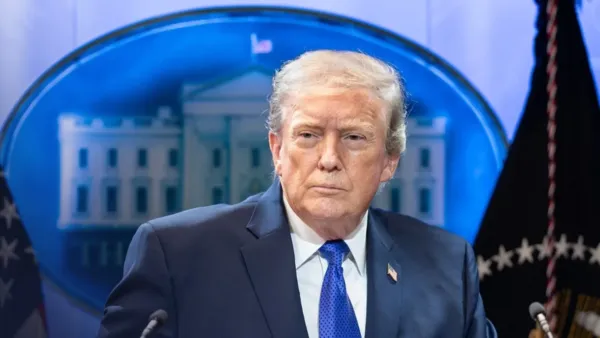
US President Donald Trump has claimed that Iran told Washington it was in a “state of collapse” and wanted the Strait of Hormuz reopened as soon as possible while it worked through a leadership situation.
“Iran has just informed us that they are in a “State of Collapse.” They want us to “Open the Hormuz Strait,” as soon as possible, as they try to figure out their leadership situation (Which I believe they will be able to do!). Thank you for your attention to this matter!” Trump posted on his Truth Social platform.
There was no immediate confirmation from Tehran and it remained unclear how such a message was conveyed.
The comments come amid a continuing two-month conflict that has severely disrupted shipping through the Strait of Hormuz, a vital chokepoint for global oil supplies.
Iran has largely blocked all non-Iranian shipping through the passage since the war began on February 28, while the US this month moved to blockade Iranian vessels.
According to a report by The New York Times, Trump has expressed dissatisfaction with Iran’s latest proposal, which suggests deferring discussions on its nuclear programme until after a ceasefire and reopening of the Strait of Hormuz.
A US official briefed on Trump’s meeting with advisers on Monday said Washington wants nuclear issues addressed from the outset.
Iran’s proposal, conveyed by Foreign Minister Abbas Araqchi during visits to Islamabad over the weekend, envisages a phased approach, according to senior Iranian officials cited by Reuters.
The first stage would require an end to hostilities and guarantees that the US would not resume military action.
Subsequent steps would address the US Navy’s blockade of Iranian trade and the future of the Strait of Hormuz, which Iran seeks to reopen under its own control.
Only then would negotiations move to other issues, including Tehran’s nuclear programme and its demand for recognition of its right to enrich uranium.
The killing of Supreme Leader Ayatollah Ali Khamenei on the first day of the war and the elevation of his son Mojtaba Khamenei, who was reportedly wounded, have weakened the country’s traditional clerical authority.
With no undisputed figure at the apex of power, hardline commanders from the Islamic Revolutionary Guard Corps (IRGC) are believed to be wielding greater influence, potentially complicating diplomatic engagement.