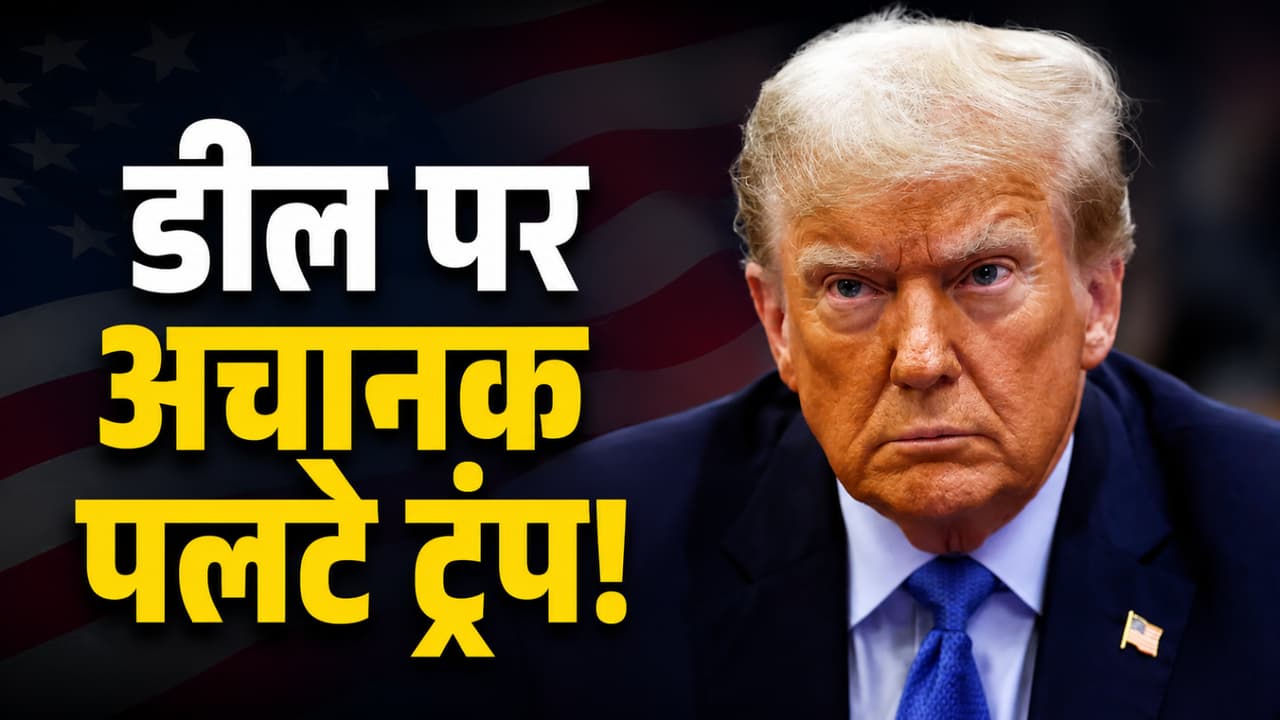
Donald Trump Iran deal: Which claims related to Iran’s peace deal did Donald Trump call ‘fake’? What is the big difference between the statements of America and Iran regarding the ceasefire? How does the claim of attack on Strait of Hormuz and Indian ships relate to this dispute?
Amid the long-running tension between America and Iran, hopes for a ceasefire have once again come under uncertainty. While Iranian media had claimed the terms of a possible agreement between the two countries, US President Donald Trump has rejected those claims. Trump’s latest statement has not only raised questions on the proposed peace agreement, but has also indicated that the gap of trust between the two countries is still very deep.
Trump calls Iranian claims ‘fake’
US President Donald Trump, in his social media post, described the terms of the alleged agreement released by Iranian state media as false and misleading. He said that the conditions that Iran is promoting have no relation to the points decided in the actual talks. Trump wrote in his post that the things made public by Iran are part of “fake news” and there is no truth in them. He also accused the Iranian leadership of giving a wrong message regarding the negotiation process.
Scroll to load tweet…
Claim of attack on Indian ships in Hormuz Strait
Trump also said that an attempt was made to target Indian ships passing through the Strait of Hormuz, which was foiled by the US security apparatus. Describing such action as unacceptable, he said that the security of sea routes cannot be compromised. However, no official confirmation regarding this claim has come to light at the independent level yet.
‘Honest talks with Iran difficult’
In his statement, Trump criticized Iran and said that it is not easy to reach an agreement with it. He alleged that there was a lack of transparency in the negotiation process and that Iran should change its behavior. These statements of Trump are being seen at a time when for the last few days, there were reports of positive signs regarding the ceasefire between the two countries.
What did the Iranian media claim?
According to Iranian state media and sources linked to it, the draft of the proposed agreement included an end to the war as well as a number of economic and strategic conditions. Reports claimed that Iran would be compensated for damages caused by American and Israeli attacks during the war. There was also talk of discussion on relief from sanctions and other economic provisions. However, these claims have not been independently confirmed and no joint official document has been made public by either country.
There is a big difference between the statements of America and Iran
There is a clear difference in the stance of the two countries regarding the ceasefire. While Trump claimed that an agreement has been reached to end the war, Iran’s official news agency IRNA said that no final conclusion has been reached yet. Iran says it is preparing practical solutions on compensation and other issues and is also working on third-party guarantees. This contradiction suggests that negotiations are still at a sensitive stage and it may take time to reach a final consensus.
The issue of death of Indian citizens is also under discussion
Amidst the tension, another issue has also come to the fore. According to reports, three Indian citizens were killed in a recent attack on a ship. Questions are being raised regarding this incident that how the increasing military tension in the maritime area is affecting international trade and the security of foreign citizens. However, the information available in this case is limited and detailed details regarding the circumstances of the related incidents are yet to be revealed at the official level.
Keeping an eye on global markets and energy supply
US-Iran relations are not limited to just two countries. The Strait of Hormuz is considered one of the world’s most important energy routes, through which a large part of the global oil supply passes. In such a situation, if peace talks move forward, energy markets may get stability. At the same time, if differences between the two sides increase further, it may also affect oil prices and global trade.