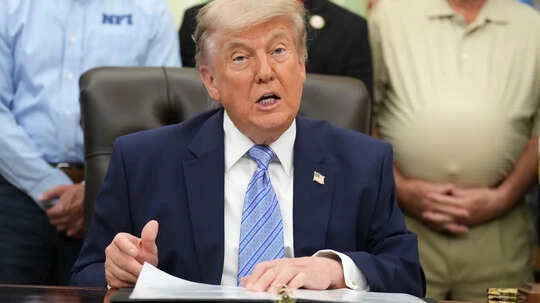
On Thursday, the Trump administration announced a relaxation of federal regulations governing refrigerants used in cooling systems, a move intended to alleviate rising grocery costs.
President Donald Trump emphasized that this decision by the Environmental Protection Agency (EPA) would help consumers by postponing strict limits on the types of refrigerants available to businesses and households.
This regulatory change reverses Biden-era policies aimed at reducing hydrofluorocarbons (HFCs), potent greenhouse gases emitted by refrigeration systems. The administration’s action comes as a response to increasing public concern over living expenses, especially in light of the upcoming elections in November.
Impact on Grocery Prices
While the administration claims the rule change will lower grocery costs, industry experts have expressed uncertainty about the actual impact. Some argue that the delay in restrictions could lead to increased prices, as manufacturers have already invested in redesigning products and retraining workers for next-generation refrigerant systems.
In April, inflation in the United States rose to 3.8% annually, driven by various factors, including geopolitical tensions and tariffs imposed by the Trump administration. These economic pressures have outpaced wage increases, further complicating the cost of living for many Americans.
Criticism of Regulatory Changes
Trump criticized the previous administration’s regulations as unnecessary and detrimental, stating that the new EPA action would save Americans over $2 billion annually and protect numerous jobs. This viewpoint was echoed by top executives from major grocery chains who attended the announcement.
However, the Air-Conditioning, Heating and Refrigeration Institute, representing over 330 HVAC manufacturers, cautioned that the relaxed regulations could create market instability and potentially raise prices. The group’s president, Stephen Yurek, highlighted that extending compliance deadlines could exacerbate supply-demand imbalances in the refrigerant market.
Historical Context of Refrigerant Regulations
The current regulatory rollback marks a significant shift from earlier efforts during Trump’s first term, when he signed legislation aimed at phasing out HFCs in a bipartisan agreement that garnered support from environmentalists and business leaders alike. This law was a part of global efforts to combat climate change and reflected a consensus on the urgency of transitioning to less harmful refrigerants.
Despite the rollback, environmental advocates have criticized the administration’s decision, arguing it undermines progress toward reducing climate pollution and disrupts the industry’s transition to alternative coolants. The EPA’s recent actions represent a broader trend of rolling back climate-friendly regulations under the Trump administration.
Industry Response to New Regulations
The 2020 law, known as the American Innovation and Manufacturing Act, was designed to phase out HFCs as part of an international commitment to reduce ozone-depleting substances. Support from various business groups, including the U.S. Chamber of Commerce, highlighted the balance between economic growth and environmental responsibility.
With the new rule relaxing restrictions set to take effect in 2026, industry stakeholders have expressed mixed reactions. While some support the extended timelines, others believe that the previous regulations were crucial for ensuring a timely transition to safer refrigerants.