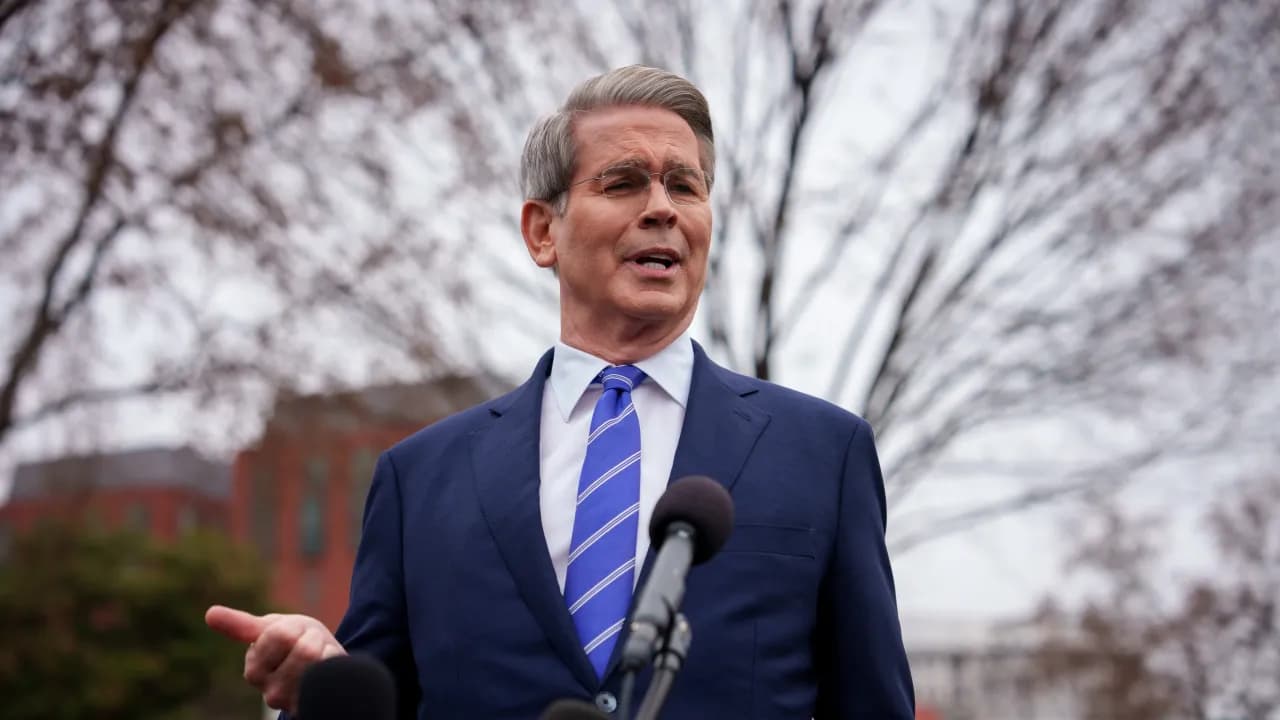
Treasury Secretary Scott Bessent expands government debt repurchases to counter spiking yields, triggering intense speculation among Wall Street dealers ahead of critical auction deadlines.
- U.S. Treasury Secretary Scott Bessent frames the department’s expanded buyback strategy as necessary to cool a speculative “fever” in the bond market.
- Market dealers anticipate the Treasury will increase its purchase operation of 10-year to 20-year debt beyond $4 billion.
- The unscheduled interventions signal a move toward a more active debt management model.
U.S. Treasury Secretary Scott Bessent is preparing to unveil the exact scope of an expanded federal debt buyback program, leaving Wall Street on edge as the administration moves aggressively to cool rising long-term borrowing costs.
The Treasury Department is slated to announce on Wednesday the operational details for its upcoming repurchase of 10-year to 20-year government debt. The announcement represents the first detailed update since officials unexpectedly declared last month that they would “at least double” the baseline $2 billion buyback size previously scheduled.
The iShares 20+ Treasury ETF ended flat on Tuesday and was 0.1% lower after-hours.
Calming Market Turbulence
Speaking at an event in Washington, Bessent defended the interventions, characterizing the market’s recent selloff as a speculative surge that required public policy action. He noted that his goal as Treasury chief is to guide conditions back toward equilibrium rather than dictate long-term market rates.
“My job is to try to push things back towards equilibrium,” Bessent said in answering questions at a Breitbart News event Tuesday in Washington, as reported by Bloomberg. “I don’t believe that I can change the equilibrium price. But nothing’s ever in equilibrium.”
Bessent also dismissed criticisms that the repurchases represent a form of quantitative easing—a policy tool traditionally used by the Federal Reserve during economic crises.
He pushed back against claims that falling Treasury prices were driven by fears over federal debt levels, arguing that U.S. debt continues to outperform European benchmarks like German bunds.
Wall Street Weighs The Risks
Financial institutions are closely monitoring the upcoming figure, with expectations largely hovering between $5 billion and $6 billion. However, analysts at Morgan Stanley note that funding constraints could allow operations to scale up to $10 billion per round.
The stakes remain heightened as 10-year Treasury yields continue to hover near their highest levels since 2023, directly influencing domestic mortgage rates and corporate debt costs. Economists warn that setting the buyback figure at just $4 billion could disappoint investors and reignite selling pressure, whereas a significantly higher target might signal deeper concern within the administration regarding market instability.
Changing Policy Framework
The Treasury’s recent moves represent a distinct departure from its long-standing “regular and predictable” issuance philosophy. By announcing adjustments outside the standard quarterly refunding schedule, Bessent has introduced active intervention that has left dealers speculating about the long-term mechanics of U.S. debt management.
The immediate consequences of the upcoming announcement will ripple through upcoming debt sales, as the Treasury prepares to hold scheduled auctions for both 10-year notes and 30-year bonds shortly after the purchase figures are released. Market participants expect any sudden shifts in buyback volume to show up quickly in derivative markets, particularly long-term swap spreads.
Retail sentiment on Stocktwits for QQQ was ‘bullish,’ ‘neutral’ for SPY, and ‘bearish’ for DIA, with ‘high’ message volumes.
For updates and corrections, email newsroom[at]stocktwits[dot]com.<