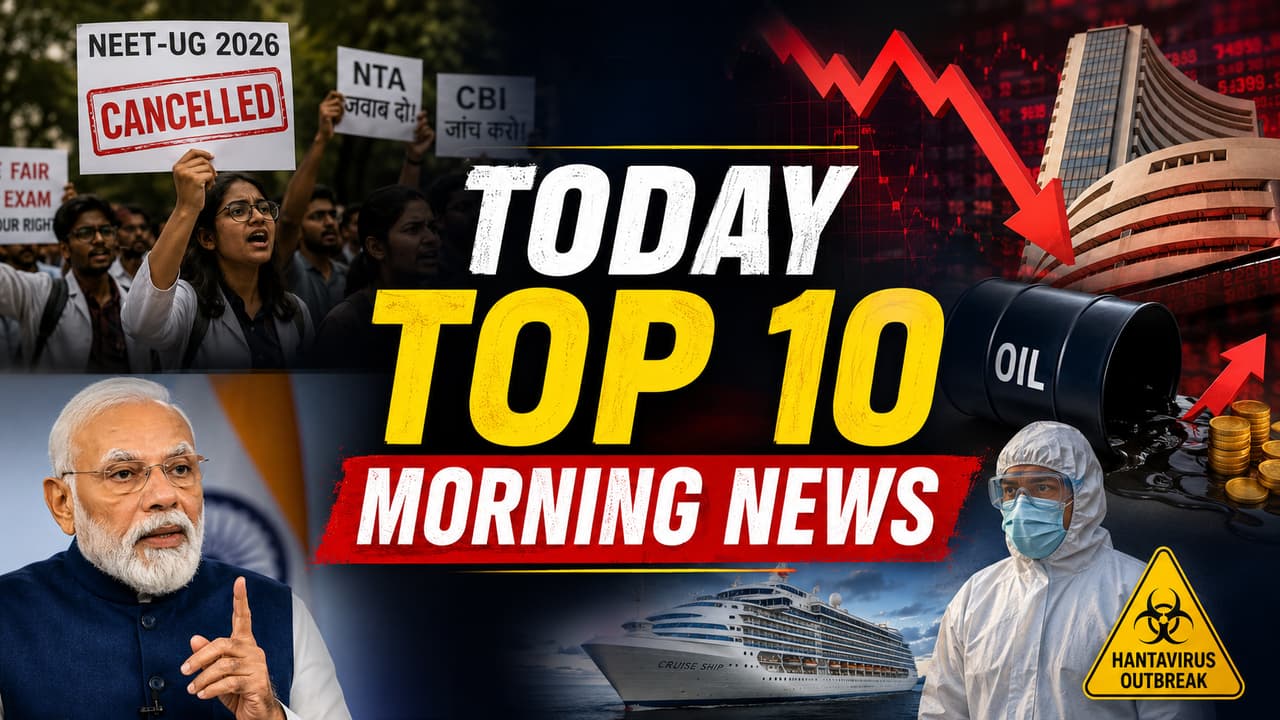
NEET-UG paper leak created national panic, stock market devastation due to US-Iran tension, China’s gap in BRICS, Pakistan-Iran military dispute, Tamil Nadu floor test drama and Hantavirus alert – these 10 big news of May 13, 2026 are presenting a dangerous picture of deepening geopolitical crisis, economic instability and power struggle in the world.
Today Top 10 Morning News: Wednesday, May 13, 2026 has started with such developments, which have affected the politics, economy and security system not only of India but of the entire world. The cancellation of NEET-UG exams in India has left the future of millions of students hanging in the balance, while rising tensions in West Asia have spooked global markets. The pressure on the Indian economy is increasing amid huge surge in oil prices and fears of war. On the other hand, big developments are also being seen in the politics of Tamil Nadu, Assam and Britain. On the health front, Hantavirus has increased the concern of global agencies. Let us know in detail today’s 10 most important news.
1. NEET-UG 2026 cancelled: Future of 22 lakh students in danger
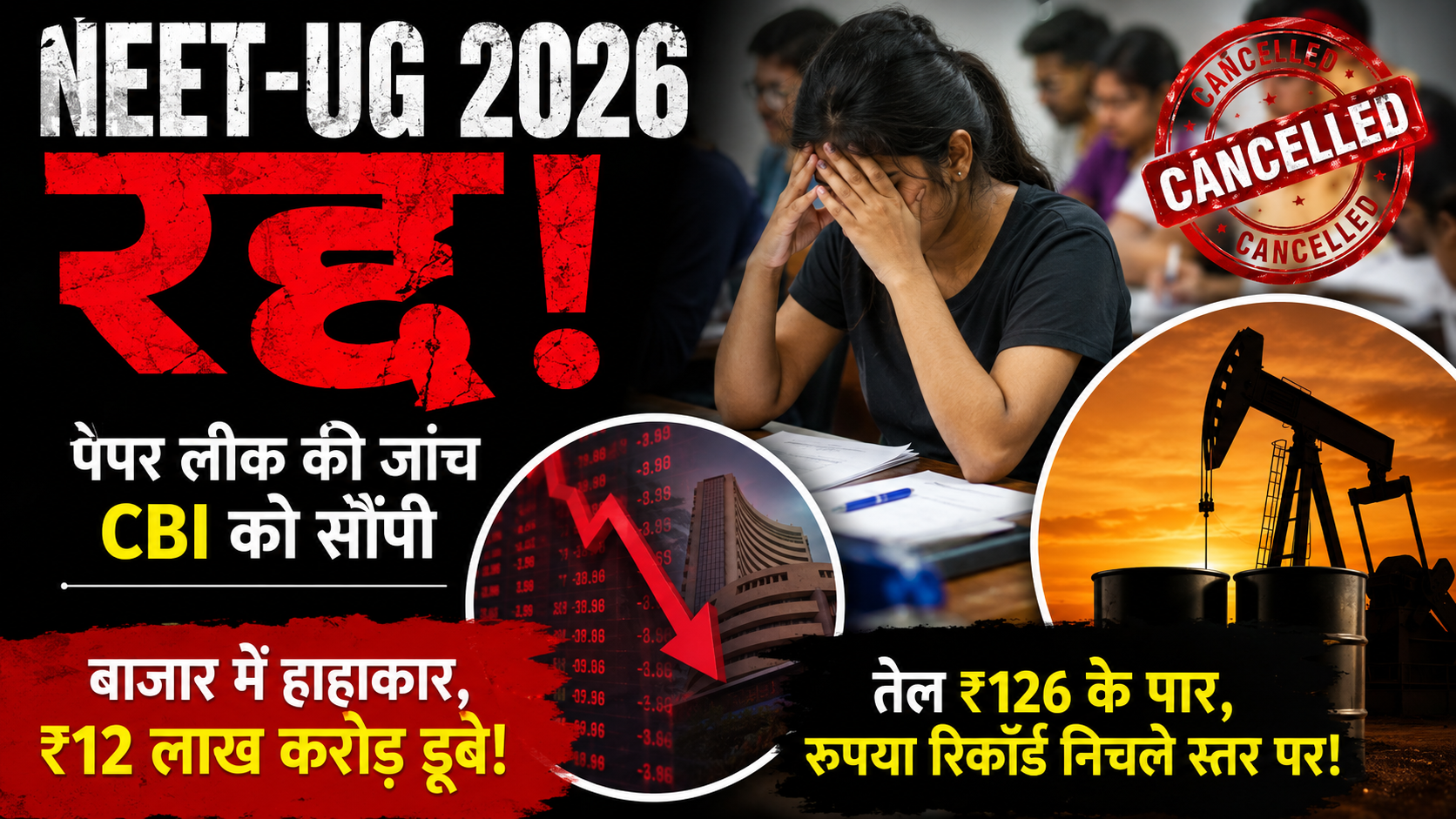
After the cancellation of NEET-UG 2026, the country’s biggest medical entrance exam, there is huge discontent across India. NTA took this big decision after paper leak and organized rigging in the examination was confirmed. Lakhs of students, who had given the exam after years of preparation, are now going through the uncertainty and mental pressure of re-exam. CBI has taken over the investigation of this case and raids have started in many states. Suspects have been detained from many cities including Nashik. The opposition is accusing the government of failing to protect the education system. Experts believe that this case will further intensify the demand for comprehensive reforms in India’s examination system.
2. Stock market collapsed due to fear of oil crisis and war
Rising tensions in West Asia and fears of a US-Iran conflict have caused huge turmoil in global financial markets. The Indian stock market recorded a historic fall, with the Sensex falling nearly 1,500 points. Investors’ wealth worth about ₹12 lakh crore was wiped out in a single day. Crude oil prices crossed $126 per barrel, putting additional pressure on the import-dependent Indian economy. The rupee also reached a record low against the dollar. Financial experts believe that if the Gulf crisis continues for a long time, it could have a serious impact on inflation, fuel costs and industrial production in India.
3. PM Modi’s appeal: Reduce expenditure, save the country
Prime Minister Narendra Modi has appealed to the countrymen to adopt financial discipline and urged them to reduce unnecessary expenditure. The government believes that the West Asia crisis may put serious pressure on foreign exchange reserves and balance of payments. The Prime Minister suggested re-implementing arrangements like work-from-home to avoid foreign trips, promote domestic tourism and reduce fuel consumption. The message of the Central Government is clear that in this era of global economic crisis, only collective restraint can maintain India’s economic stability.
4. Distance of China’s Foreign Minister from BRICS meeting
China’s Foreign Minister Wang Yi’s distance from the BRICS Foreign Ministers’ meeting to be held in New Delhi has become a new topic of discussion in international diplomacy. China has officially described it as a “scheduling problem” because US President Donald Trump is scheduled to visit Beijing during this time. Although China will be represented by its ambassador to India, experts consider it important in the context of India-China relations and the changing global balance of power. The presence of foreign ministers of many countries including Iran in this meeting will make the multilateral discussion on the West Asia crisis more important.
5. Pakistan accused of harboring Iranian planes
A new geopolitical controversy has arisen after Pakistan was accused of allowing Iranian military aircraft to stay safely at its airbase. According to reports, some of the aircraft were kept at Noor Khan airbase during the US-Iran tensions. Although Pakistan has completely rejected these claims, the issue has created a political reaction in America. US MP Lindsey Graham has demanded a review of Pakistan’s role. Experts say that if these allegations prove to be true, then major changes can be seen in the strategic politics of South Asia.
6. Pressure on Keir Starmer to resign in Britain
British Prime Minister Keir Starmer is facing serious opposition within his own party. After the Labor Party’s defeat in the local elections, more than 70 MPs have raised questions on his leadership and intensified demands for his resignation. However, Starmer has made it clear that he will not step down. He defended his policies and leadership, saying that the government was committed to economic recovery and social stability. This crisis in British politics may decide the direction of the coming general elections.
7. Supreme Court eyes on Vijay government in Tamil Nadu
There is instability in Tamil Nadu politics regarding the government of actor-turned-politician Chief Minister Joseph Vijay. The Supreme Court is going to hear the petition in which the voting rights of some MLAs have been challenged during the floor test. Meanwhile, the Vijay government has attracted public attention with decisions like removing liquor shops from schools and temples. The rebellion within AIADMK and unexpected support to the TVK government has changed the political equations. The court’s decision could affect the state’s balance of power.
8. Himanta Biswa Sarma took over for the second term
In Assam, Himanta Biswa Sarma demonstrated his political strength by taking oath as the Chief Minister for the second time. Many big leaders of NDA were present in the function organized in Guwahati. For BJP, this victory is being considered a sign of its strengthening influence in North-East India. The new government has announced to give priority to infrastructure expansion, digital governance and border security. Experts believe that Sarma’s second term could prove decisive for the BJP’s long-term strategy in the Northeast.
9. Global health agencies alerted by Hantavirus crisis
The World Health Organization (WHO) has issued a serious warning regarding Hantavirus infection. Several countries have stepped up health surveillance after the virus spread on an international cruise ship. The campaign to isolate infected passengers and trace contacts has been intensified. WHO chief Tedros Adhanom Ghebreyesus said “the work is not finished yet.” Surveillance has been increased in many countries including Spain and Netherlands. After the Covid pandemic, the world now seems to be extremely cautious about any new infection.
10. Confidence in India’s economy maintained amid global crisis
Despite global tensions, inflation and energy crisis, SBI Research has estimated India’s GDP growth rate to be 6.6%. According to the report, a sharp increase in private capital investment and strong domestic demand are boosting the Indian economy. Although food inflation and oil prices remain a concern, economists believe India’s strong fiscal discipline and free trade agreements hold it in a better position than Western economies. This estimate has come at a time when the entire world is struggling with economic uncertainty.