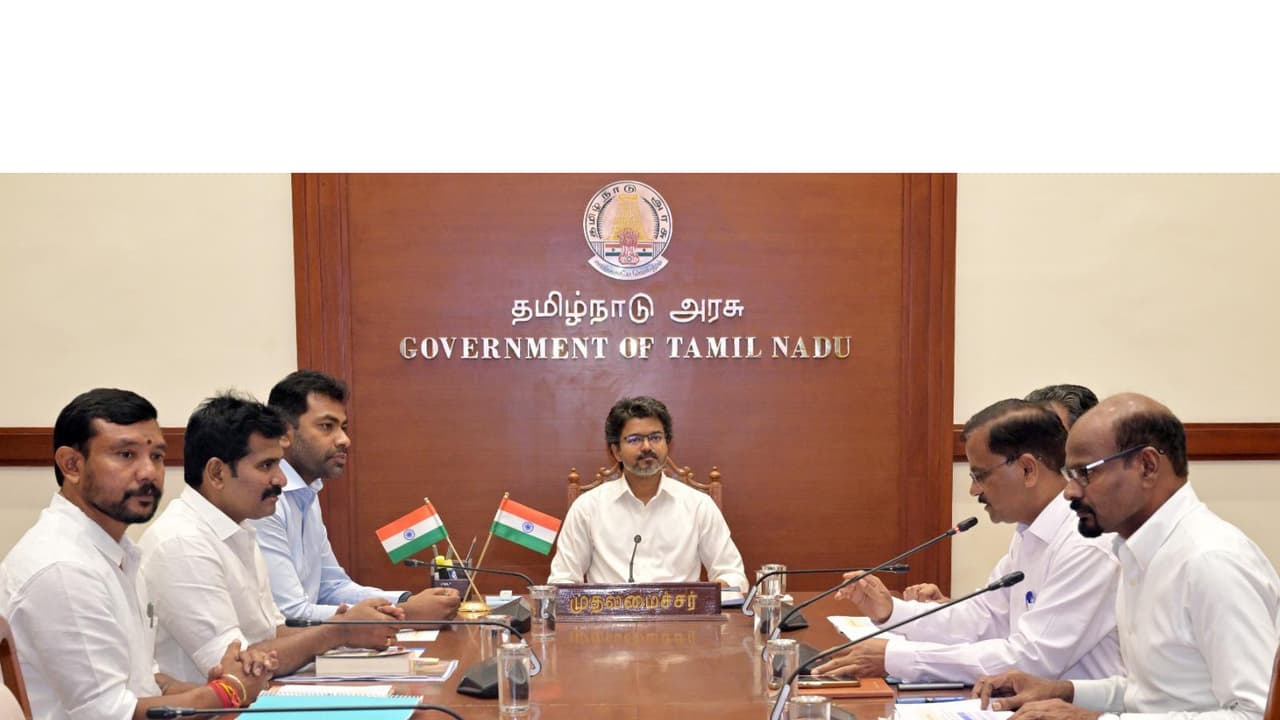
TN CM C Joseph Vijay chaired a meeting to review legal measures to protect the state’s 69% reservation policy in education and jobs. This policy, which exceeds the SC’s 50% cap, was enacted in 1993 and placed in the Ninth Schedule.
Tamil Nadu Chief Minister C Joseph Vijay on Tuesday chaired a review meeting regarding the initiation of appropriate legal measures to safeguard the 69 per cent reservation policy in educational institution admissions and government employment opportunities in the state.
Background of the Reservation Policy
The Tamil Nadu government provides 26.5 per cent reservation to Backward Classes, 20 per cent to Most Backward Classes and Denotified Communities, 18 per cent to Scheduled Castes, 3.5 per cent to Backward Class Muslims and 1 per cent to Scheduled Tribes.
The 69 per cent reservation policy exceeds the 50 per cent ceiling set by the Supreme Court in Indra Sawhney versus Union of India and Others, 1992. The 69 per cent reservation Tamil Nadu Backward Classes, Scheduled Castes and Scheduled Tribes (Reservation of Seats in Educational Institution and of appointments or posts in the Services under the State) Act, 1993. The Act was passed under the AIADMK government led by the then Chief Minister J Jayalalithaa.
The Act was included in the Ninth Schedule of the Indian Constitution, and according to Article 31B, the “Acts and Regulations specified in the Ninth Schedule nor any of the provisions thereof shall be deemed to be void, or ever to have become void, on the ground that such Act, Regulation or provision is inconsistent with, or takes away or abridges any of the rights conferred by any provisions of this Part, and notwithstanding any judgment, decree or order of any court or tribunal to the contrary, each of the said Acts and Regulations shall, subject to the power of any competent Legislature to repeal or amend it, continue in force.” In the landmark IR Coelho versus State of Tamil Nadu, 2007, case, however, the apex court held that all laws in the Ninth Schedule would be open to Judicial Review, citing the basic structure of the Constitution. (ANI)
(Except for the headline, this story has not been edited by Asianet Newsable English staff and is published from a syndicated feed.)