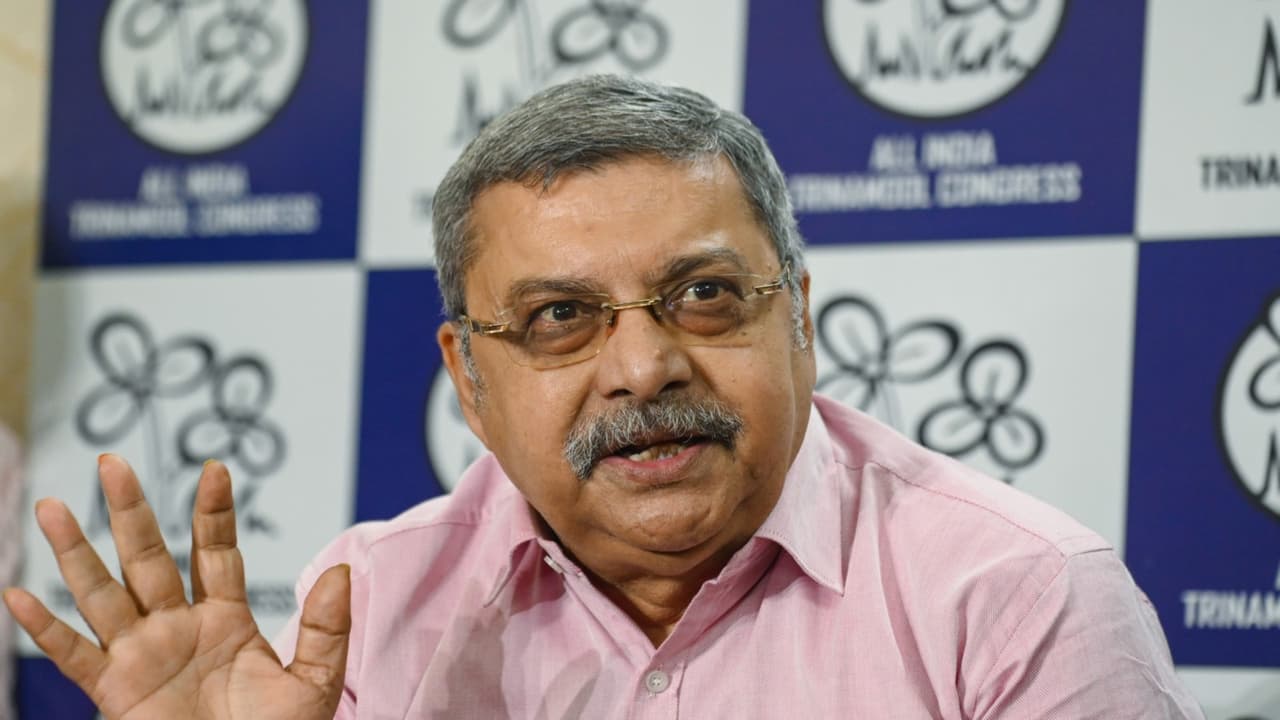
The TMC is in turmoil after a disappointing election, facing an internal crisis marked by a public feud between Kalyan Banerjee and Abhishek Banerjee, high-profile resignations, and a growing dissident faction of MPs and MLAs threatening to split.
The Trinamool Congress (TMC) is grappling with its most significant existential crisis in recent history. Following a disappointing performance in the recent West Bengal State Assembly elections, the party is witnessing a rapid internal fragmentation marked by high-profile resignations, a dissident faction in the Parliament and the state assembly, as a widening rift has emerged in public between party veterans and the central leadership.
Kalyan Banerjee’s Vocal Rebellion
The epicentre of the current unrest is the vocal rebellion of senior MP Kalyan Banerjee. His grievances escalated sharply on Thursday when he publicly accused National General Secretary Abhishek Banerjee of fostering a culture of arrogance and sidelining long-standing party loyalists. The immediate trigger for the outburst was a breach in legal protocol regarding a signature forgery case. Kalyan Banerjee, who had been managing the case for 45 years, discovered that a parallel writ petition had been filed by Abhishek Banerjee’s team without his consultation, which made him feel like an “employee” rather than a senior party pillar.
“It is better that one person handles the matter. If you think that I cannot handle, you take the matter and don’t treat me as a dustbin. Inform me within an hour. Today, I was informed by my son that I will not appear. Henceforth, I will not be appearing in any matter on behalf of Abhishek Banerjee. I don’t like this arrogant attitude. One must respect the seniors. How can he humiliate me?” the senior party leader said. In a dramatic ultimatum to Mamata Banerjee, he demanded she choose between her nephew and the veterans who built the party. “If you will remain dependent on Abhishek Banerjee, then stick with him–leave me,” he asserted, signalling that his continued association with the TMC is contingent on a structural overhaul that reduces Abhishek’s influence to that of an “ordinary worker.”
Growing Fragmentation and Resignations
The administrative stability of the party is also fraying with the resignation of Rajya Sabha MP Prakash Chik Baraik earlier today–the third such exit in a week following Sushmita Dev and Sukhendu Sekhar Ray–intensifying an exodus. Simultaneously, a dissident faction led by Ritabrata Banerjee claims to have consolidated the support of 64 MLAs.
Adding to the woes of the TMC, rebel MP Kakoli Ghosh Dastidar has alleged that a group of 20 TMC MPs has formally sought separate seating arrangements in the Lok Sabha, signalling a desire to break away from the official party whip. Regarding the scale of this dissent, Ghosh stated, “Till now, there are 20 (TMC) MPs, but the number can rise. People are in talks with us.”
Political Reactions and Damage Control
These developments have invited intense scrutiny, with the BJP alleging that the party’s “core team” has abandoned Mamata Banerjee. Meanwhile, TMC MP Babul Supriyo took to social media to clarify his position, stating, “I am neither joining any other Faction nor any Party… I am doing what I think is right.”
Despite the chaos, the TMC’s remaining leadership has attempted to project unity. TMC MP Kirti Azad dismissed merger rumours as “incorrect,” asserting that any electoral shifts would be part of a planned alliance rather than an organisational collapse. He characterised Kalyan Banerjee’s anger as a “valid” but emotional reaction to a procedural oversight, expressing confidence that Mamata Banerjee would resolve the personal rift.
Senior leader Kunal Ghosh also stepped in to defend the party’s ideological commitment to the INDIA bloc, while rejecting the legitimacy of the rebels. “These people won on the TMC symbol, and they should be asked to face the TMC workers in their constituencies,” Ghosh stated, criticising the lack of accountability among the dissenters.
Furthermore, MP Pratima Mondal forcefully debunked rumours that she had signed a letter of support for the NDA, labelling such reports as “absolutely fake news.” She challenged the rebel faction to produce the alleged list of 20 signatories, maintaining that she remains committed to the mandate provided by her constituents.
The political vacuum has also drawn reactions from across the spectrum. West Bengal Congress President Subhankar Sarkar opened the door for potential realignment, stating, “Politics is the art of the possible… the doors of the Congress are open to those who are willing to walk this path.” He framed joining the Congress as a “breath of fresh air” against the “dictatorship” of the BJP.
This was echoed by Congress leaders KC Venugopal and Ghulam Ahmed Mir, who, despite dismissing immediate merger rumours, reiterated the party’s goal of a unified front against the BJP. Conversely, Adhir Ranjan Chowdhury maintained a stance of distance, confirming he remains “in the dark” regarding formal merger negotiations.
Conversely, the BJP has seized the opportunity to narrate a decline of the TMC. Union Minister Piyush Goyal described the current situation as West Bengal’s “liberation” from what he termed Mamata Banerjee’s “cruel” and discriminatory governance. State minister Nisith Pramanik further intensified the rhetoric, claiming the TMC leadership is in a state of terminal desperation, attempting to cling to the Congress to ensure political survival.
Assam Congress president Gaurav Gogoi weighed in as well, criticising the BJP for its preoccupation with capturing power rather than solving the country’s core problems, even as the TMC struggles to hold its own.
West Bengal Minister Arjun Singh further launched a scathing critique, stating that the people of Bengal have “rejected” the TMC leadership and warning that any potential merger with the Congress would only serve to “finish” the Congress as well.
TMC at a Crossroads
As the standoff continues, the TMC finds itself at a crossroads. With Rajya Sabha seats falling vacant and an emboldened group of legislators challenging the party’s hierarchy, the next few days will be critical in determining whether Mamata Banerjee can quell the rebellion or if the party will face further splintering.
Over the past few days, TMC has been defined by a stark contrast, as the leadership struggles to maintain control and a vocal faction is determined to dismantle the current power structure within the party. (ANI)
(Except for the headline, this story has not been edited by Asianet Newsable English staff and is published from a syndicated feed.)